Guides for Use & Maintenance
How to Wash Period Panties So They Last for Years
“I washed them like any other underwear and within a few months they didn’t absorb the same”: it’s the number-one reason people are disappointed with


“I douche after every period to be cleaner inside.” Sentences like this still come up in consultations and forums — and gynecologists have been giving the same answer for decades: don’t do it. It isn’t a doctors’ obsession or a trend: it’s one of the most widely agreed recommendations in all of gynecology. In this article we explain exactly what vaginal douching is, why the scientific evidence advises against it so clearly, which myths keep it alive and — the most useful part — what intimate hygiene that actually works looks like.
Vaginal douching means any washing of the inside of the vagina: with water, with water and vinegar, with the bulb-type “douching” products that are still sold, or with homemade preparations of herbs, iodine or baking soda. The promise is always the same: to remove period remnants, prevent odor and feel “cleaner inside”.
The problem is that this promise is based on a huge misunderstanding of how your body works: the vagina doesn’t need cleaning — it cleans itself, through its own discharge, which carries dead cells, menstrual remnants and unwanted microorganisms out. It’s a self-cleaning system that has been working your whole life. Douching doesn’t help it: it sabotages it.
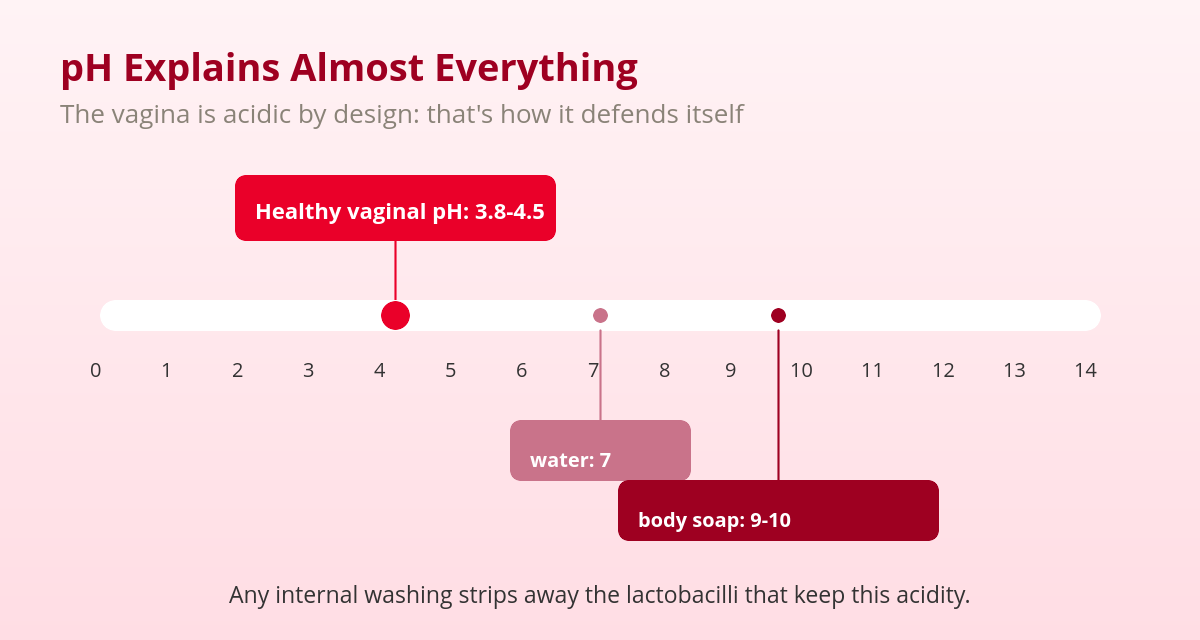
A healthy vagina keeps an acidic pH, between 3.8 and 4.5, thanks to lactobacilli: beneficial bacteria that produce lactic acid and work like a defensive army, stopping the microorganisms that cause infections from multiplying. Any internal washing — even with plain water, whose pH is 7 — washes away some of that protective flora and raises the pH. The result, documented again and again in the medical literature, is the opposite of what’s intended:
In short, and in line with the consensus reflected by health resources such as MedlinePlus on vaginal health: douching prevents nothing, cures nothing and increases the risk of several things. If you notice persistent odor, itching or unusual discharge, the answer isn’t in a douche bottle: it’s at your gynecologist’s office, because it’s usually an infection with simple, effective treatment.
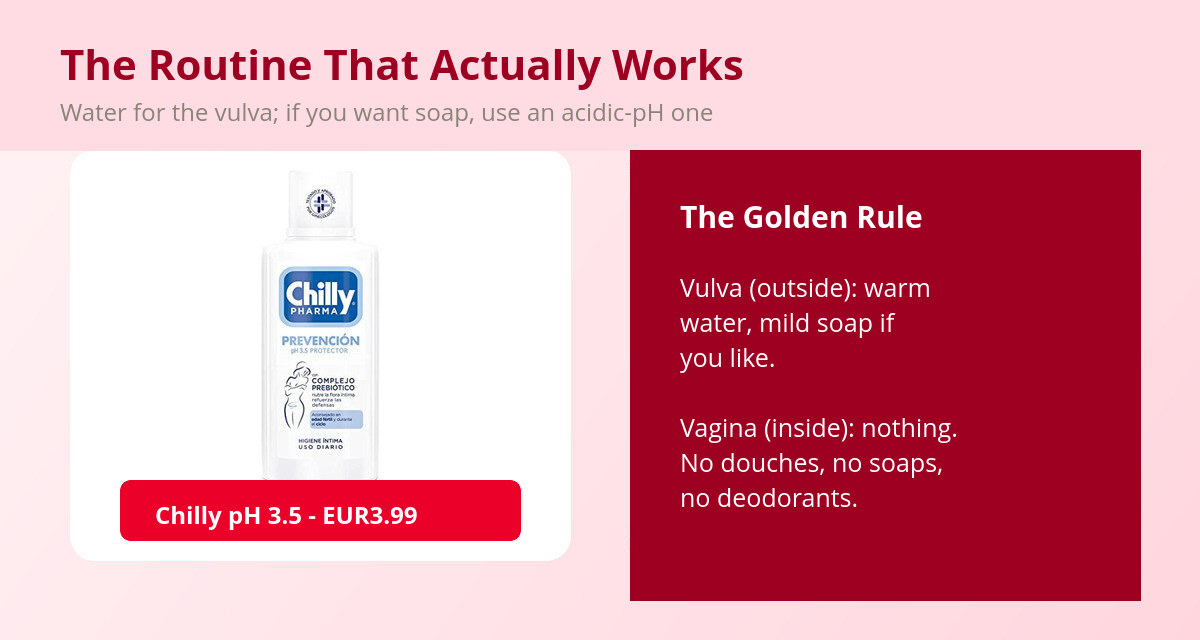
For the vulva (never inside): Chilly gel pH 3.5 — €3.99
Intimate gel with a prebiotic complex and pH 3.5 that respects the natural acidity of the area. 450 ml format for daily external use. Shipped from Spain in 24-72h.
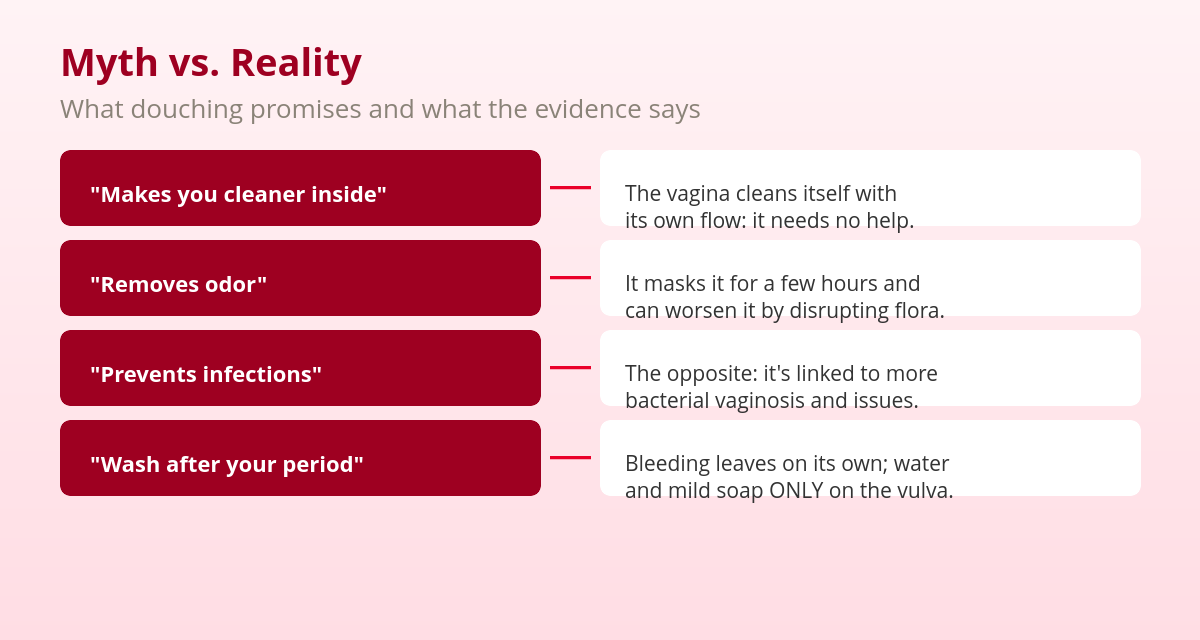
It’s worth pausing on the most persistent myth: the one about your period. No, after menstruating there’s no “blood built up inside” that needs washing out. Vaginal discharge expels the remnants on its own within a day or two, as it always has. Nor does douching “reset” anything after sex: it doesn’t prevent pregnancy (this matters: it isn’t a contraceptive, although one in three past users believed it was) or infections — on the contrary, it can push microorganisms upward, toward the uterus and fallopian tubes.
The good news is that the right routine is simpler and cheaper than any washing ritual:
An important nuance: the problem isn’t the specific ingredient, it’s the act of putting liquid into the vagina. It makes no difference whether it’s plain water, water with vinegar, a pharmacy preparation with a nice name or homemade chamomile or tea tree infusions: they all upset the pH and wash away protective flora by the same mechanism. Vinegar, in fact, has a pH even further from the vagina’s than water, so its reputation for “balancing” is the exact opposite of what it does. Essential oils (tea tree, lavender) also add their own risk of irritating the mucosa. No form of douching has scientific support as a hygiene practice — the only difference between them is how much irritation they cause.
It can happen: the body tolerates a lot. But being fine today doesn’t mean the practice is harmless — the increased risk of vaginosis and complications is well documented at population level, and stopping douching has no cost or rebound effect. The flora recovers on its own within a few weeks. If, when you stop, you notice a different odor or discharge that persists, don’t go back to the bulb: see a doctor, because there was probably a masked infection. And remember the universal warning signs: strong odor, itching, burning when you urinate or discharge of an unusual color or texture are reasons to see a doctor, not to wash more.
Because internal washing removes the lactobacilli that keep vaginal pH acidic (3.8-4.5), the vagina’s natural defense. With that barrier weakened, cases of bacterial vaginosis and thrush increase, and bodies such as the U.S. Office on Women’s Health also link it to a higher risk of pelvic inflammatory disease and problems in pregnancy.
It doesn’t need cleaning: the vagina cleans itself through its own discharge, which expels dead cells and menstrual remnants. Hygiene applies only to the vulva (the external part): lukewarm water daily and, if you like, a mild unscented soap or an acidic-pH intimate gel.
No. Leftover blood comes out on its own with vaginal discharge within a day or two. Washing inside after your period upsets the flora just when the pH is recovering its balance, and increases the risk of foul-smelling infections — the opposite of what you want.
No: a persistent odor isn’t a cleanliness problem but often bacterial vaginosis or another infection that needs medical diagnosis and treatment. Douching may mask it for a few days and make the cause worse. The right thing is to see a gynecologist, especially if it comes with itching, burning or unusual discharge.
Menstrual hygiene without extra chemicals: organic cotton period underwear — €9.99
Breathable, absorbent and certified to OEKO-TEX Standard 100: the underwear your vaginal flora will thank you for, with or without your period. Shipped from Spain in 24-72h.
Keep reading:
“I washed them like any other underwear and within a few months they didn’t absorb the same”: it’s the number-one reason people are disappointed with
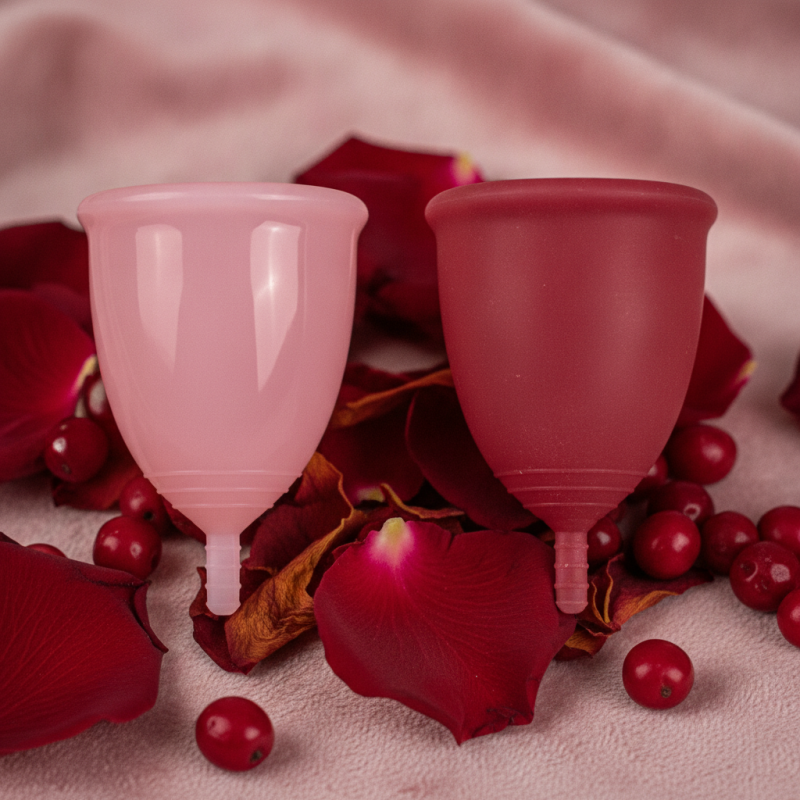
“I’ve had the same cup for three years, should I replace it now?” It’s a question we get often, and the honest answer is: it
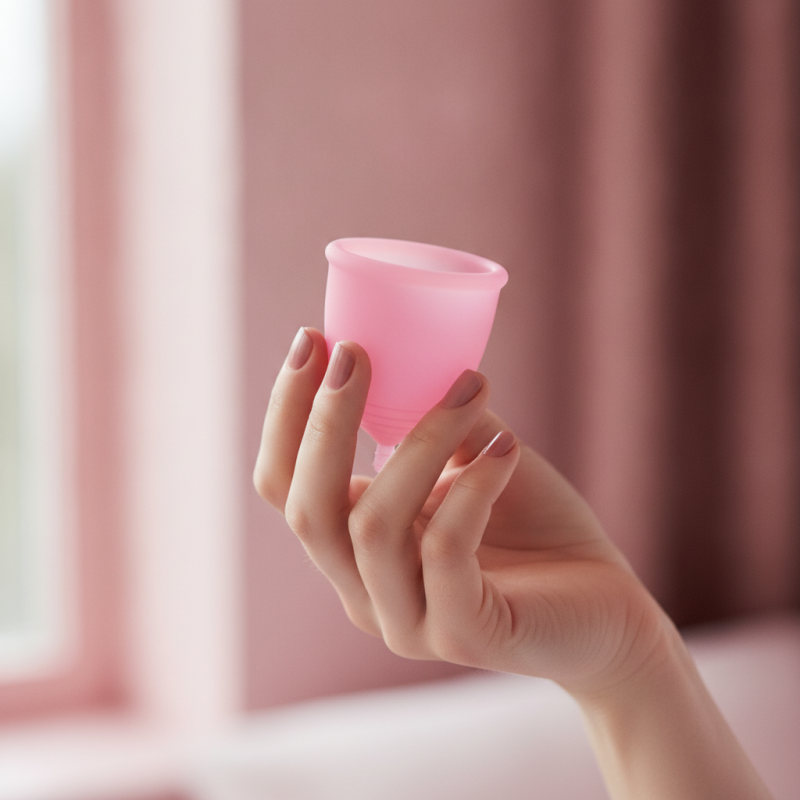
We sell menstrual cups, so you’d expect this article to tell you the cup is perfect for everyone. It isn’t, and we’d rather tell you

