Guides for Use & Maintenance
How to Wash Period Panties So They Last for Years
“I washed them like any other underwear and within a few months they didn’t absorb the same”: it’s the number-one reason people are disappointed with


Why can the same certified silicone cup cost you €26.50 at a pharmacy and €14.99 on the manufacturer’s website? If you’re wondering where to buy a menstrual cup in Spain, that €11 difference has an explanation — and it isn’t quality. The useful answer is this: each channel has real advantages and limitations that affect the price you pay, the certifications you’re guaranteed and the advice you get before and after buying. Here’s the honest comparison of every option, with verifiable data, so you can buy wherever suits you best.
| Channel | Typical price | The best part | The worst part |
|---|---|---|---|
| Pharmacy | €26.50 (Enna) | Trust; you can see it in person | The highest price; little choice of models |
| Supermarket | approx. €9-15 | Low price, buy it in passing | Own brands, practically one size, zero advice |
| Amazon | approx. €15-25 | Huge choice, fast delivery | No advice; serious brands sit alongside others without clear certifications |
| Brand website | from €14.99 (Sileu) | Factory-direct price, manufacturer support, the whole range | You wait for delivery (24-72h in Sileu’s case) |
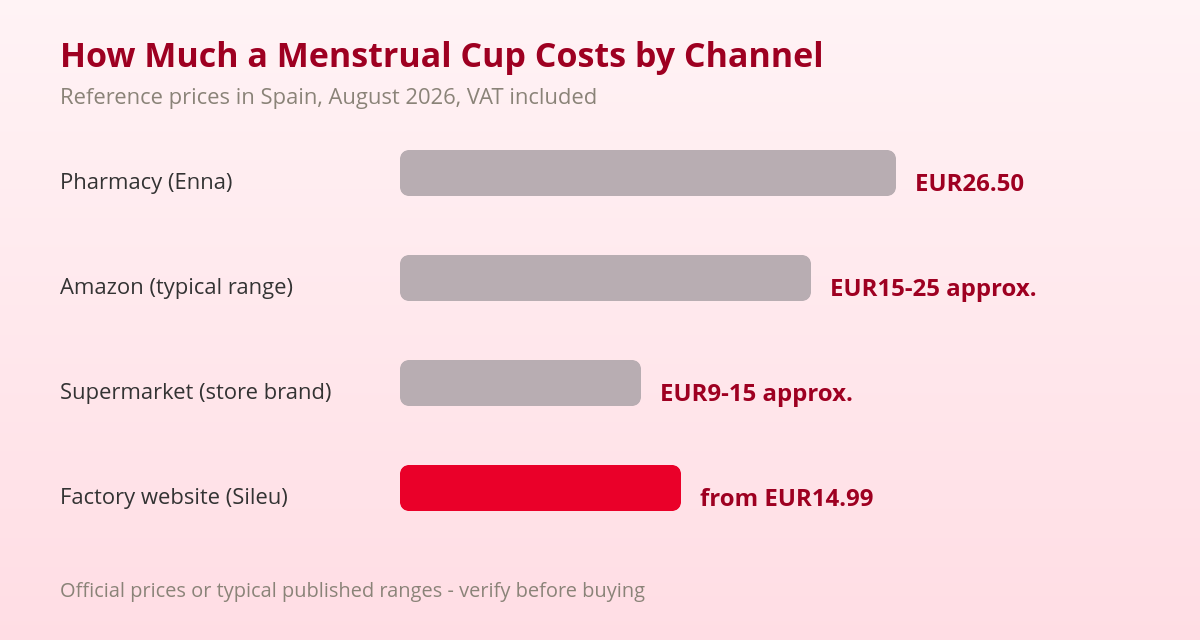
Prices are the official published prices or usual ranges in each channel in August 2026. They may vary: always check before deciding.
The pharmacy is the channel that inspires the most confidence, and rightly so: nothing reaches a pharmacy without its paperwork in order. In Spain the reference brand in this channel is Enna, with its cup at €26.50. It’s a good cup — we analyze it in depth in our Enna vs Sileu comparison — but you’re paying for the channel’s structure: distributor, pharmacy and retail margin are all in the price. And the choice is limited: two models, compared with the seven different models that the real diversity of bodies may need. We cover this channel in more detail in menstrual cup at pharmacies: prices and online alternatives.
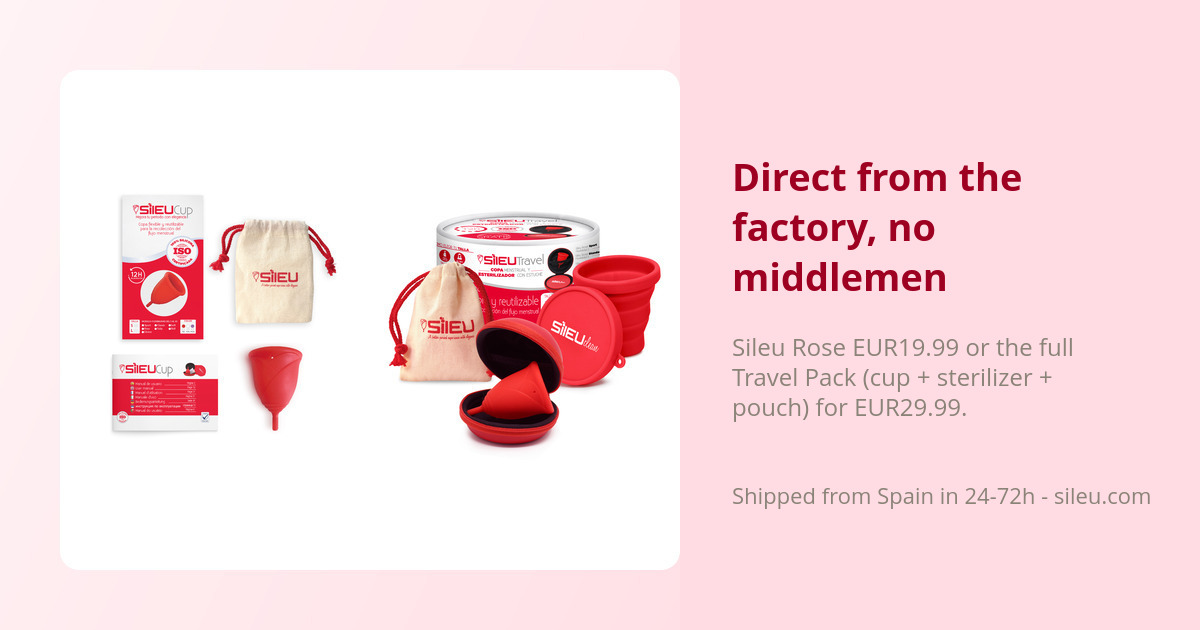
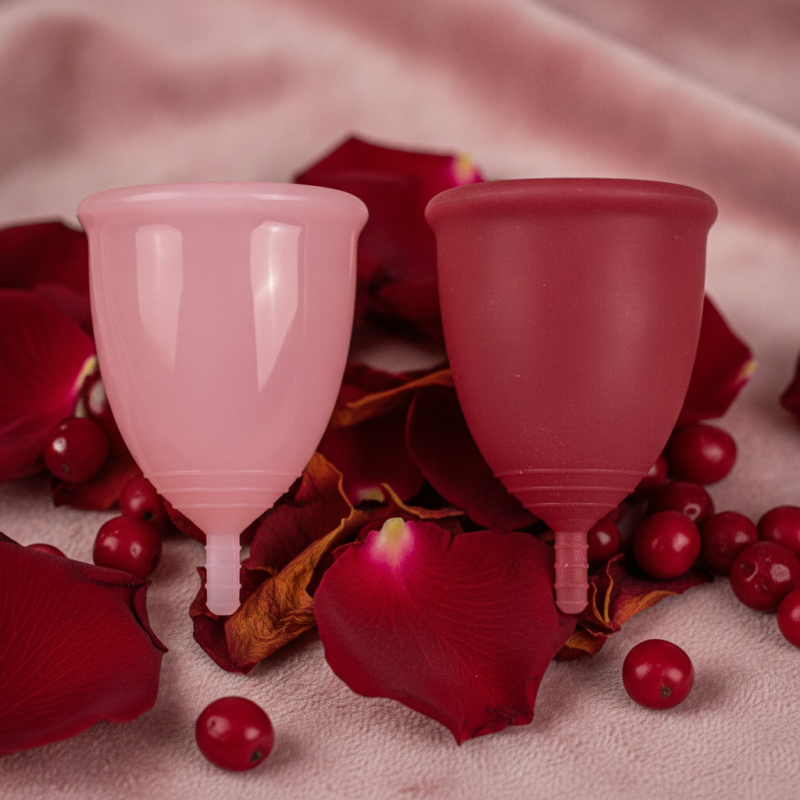
🌹 Factory-direct: Sileu Rose — €19.99
The only rose-shaped cup, designed in Spain, in German Wacker silicone certified to ISO 10993 (medical and surgical grade), with a cotton pouch. No intermediaries pushing up the price. Shipped from Spain in 24-72h.
Some supermarket chains sell own-brand cups for €9-15. They can work for trying out the concept, and we won’t tell you otherwise. Their honest limitations: they usually offer a single model in one or two sizes, the information about the material and its certifications on the packaging is scant, and if the cup doesn’t suit you there’s nobody to ask. Since fit is exactly what decides whether a cup works — hence the importance of locating your cervix and knowing your size before buying — it’s a channel with a higher chance of ending in “the cup isn’t for me” when that isn’t true. We look at it in menstrual cups at Mercadona or Carrefour.
Amazon has everything, and that’s both its strength and its weakness. You’ll find serious European brands next to €6 cups of vague origin, with no verifiable mention of medical-grade silicone or biocompatibility certification. This isn’t scaremongering: it’s a product that will be inside your body for up to 12 hours, and the reference standard exists precisely for that — ISO 10993 for the biological evaluation of medical devices. If you buy on Amazon, do it with judgment: a recognizable brand, certified material and a listing with clear measurements. And bear in mind that you’ll have to solve usage questions (which size? why is it leaking?) on your own: the marketplace sells, it doesn’t advise.
Buying on the manufacturer’s website — ours or any other — has three structural advantages. The first is price: without intermediaries, a Sileu Classic costs €14.99 in medical-grade silicone certified to ISO 10993, like cups that cost twice as much. The second is the full range: all seven models and every size, not just the selection that fit on the shelf. The third, and the one our users value most, is support: we help you choose your size and model before you buy and solve any problem afterwards, with a FAQ guide and analyses such as the quality certifications of our cups published for everyone to see.
The catch? You don’t take it home with you: delivery takes 24-72h from Spain. If your period starts tomorrow, the pharmacy wins that round. For everything else, buying factory-direct is hard to beat.
Let’s do the full math for the first year, because the price of the cup alone is misleading. You’ll need the cup and, practically speaking, a way to sterilize it (a few euros more if the pack doesn’t include it) and perhaps a discreet case for your bag. At the pharmacy: an Enna cup €26.50 + its sanitizing cup in a €39.50 pack. On Amazon: a €15-25 cup + a separate sterilizer, and fingers crossed on the advice. Factory-direct: the Sileu Travel Pack brings together a Rose cup + foldable sterilizer + case for €29.99 — and it’s no coincidence it’s the best-selling product in our store, with more than 640 units sold. From the second year on, spending in any channel is zero: that’s the beauty of the cup compared with the €60-90 a year, every year, on tampons and pads.
And if you’re unsure about size, the direct channel has another advantage no shelf can offer: the Starter Pack with sizes S and L (€21.99) to try both, something unthinkable buying individual cups at €26.50.
An honest note that explains much of the above: the disposables industry lives on you coming back every month. A pad and tampon user spends in the order of €60-90 a year, every year; a €15-20 cup that lasts years breaks that model, so don’t expect to see it in big advertising campaigns. There’s no conspiracy, just incentives: a product nobody repurchases has nobody to advertise it. That’s why the cup’s natural channel has always been word of mouth — and why people who switch to the cup often ask themselves the same question: “how did I not discover this sooner?” (we talk about it in why didn’t anyone tell you about the menstrual cup sooner). The medical evidence, by the way, agrees: a review of 43 studies published in The Lancet Public Health (2019) concluded that the cup is safe, with leakage equal to or lower than tampons and pads.
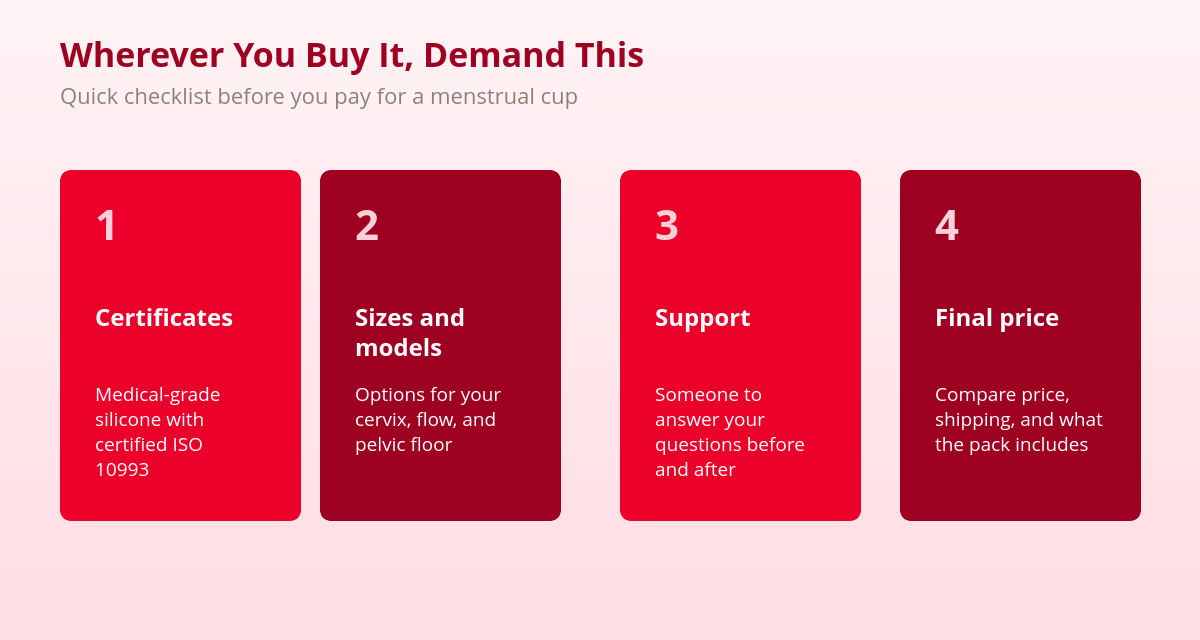
And two final common-sense warnings. First: a menstrual cup isn’t bought second-hand or inherited, however well sterilized — it’s a personal-use product, like a toothbrush, and the saving doesn’t justify the risk. Second: be wary of unusual bargains on marketplaces (“brand-name” cups at a third of their official price): counterfeits exist in this sector too, and in a product for internal use they’re a real risk, not a bargain.
If it’s your first cup, complement this guide with our guide to choosing your first menstrual cup: choose the channel and model well, and success is almost guaranteed.
On the manufacturer’s website or in supermarkets. The difference is that on the brand’s website (for example, Sileu from €14.99) you get verifiable certifications, every model and size, and advice from the manufacturer; in the supermarket you usually find a single own-brand model with no support.
It can be if you choose well: on Amazon serious brands sit alongside very cheap cups without clear biocompatibility certifications. Check that the brand is recognizable, that it states medical-grade silicone with ISO 10993 and that the listing includes measurements. Bear in mind there’s no usage advice.
The reference brand in pharmacies is Enna, with its cup at €26.50. It’s a reliable channel but with the highest price and little choice of models, because the distributor’s and pharmacy’s margins are included in the final price.
Three: a factory-direct price without intermediaries (Sileu from €14.99), access to the full range of models and sizes, and support from the manufacturer itself before and after purchase, with shipping from Spain in 24-72 hours.
Everything sorted in one purchase: Sileu Travel Pack — €29.99
Rose cup + foldable sterilizer + case: the best-selling pack in our store (more than 600 units), for less than a single cup costs in other channels. Shipped from Spain in 24-72h.
Keep reading:
“I washed them like any other underwear and within a few months they didn’t absorb the same”: it’s the number-one reason people are disappointed with
“I’ve had the same cup for three years, should I replace it now?” It’s a question we get often, and the honest answer is: it
We sell menstrual cups, so you’d expect this article to tell you the cup is perfect for everyone. It isn’t, and we’d rather tell you

