Guides for Use & Maintenance
How to Wash Period Panties So They Last for Years
“I washed them like any other underwear and within a few months they didn’t absorb the same”: it’s the number-one reason people are disappointed with


There’s a sentence we’ve been reading in emails and on the Sileu forum for years, almost always after the second or third cycle with a cup: “why didn’t anyone tell me about the menstrual cup sooner?” It’s written by women who’d spent 10, 15, or 20 years buying tampons every month, who’ve just discovered that a more comfortable, cheaper, and cleaner alternative had existed for decades. The answer to that question is uncomfortable, but it isn’t a mystery: it’s plain economics. Today we’re going to do the math with you.
First, the phenomenon. We’re not the ones saying it, and we sell cups: the systematic review published in The Lancet Public Health, covering 43 studies and over 3,300 participants, says it: about 70% of women who try the cup want to keep using it. That’s a loyalty rate any consumer product would envy — achieved without a single TV ad.
We know the experience behind that number well: the first two or three periods are a learning curve (inserting it, removing it, trusting it), and from there comes the wow moment: up to 12 hours without thinking about your period, sleeping without accidents, swimming, working out, traveling with a 25-gram object in your bag. And the inevitable question: why did nobody tell me?
On our own forum, the most-read question in our history is about allergies and safety; the second, how to insert it. Neither is “does it work?” Anyone who reaches the cup already suspects it works — what they need is someone to walk them through the practical doubts advertising never answered. That’s what we do here every week, guide by guide.
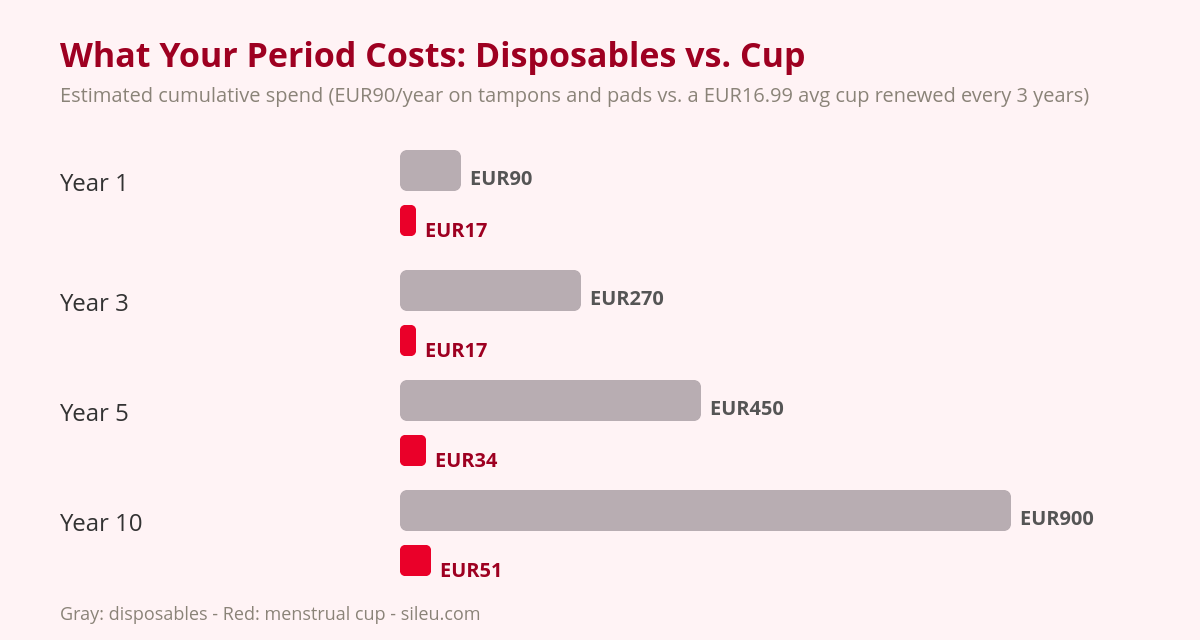
A tampon-and-pad user spends an average of €60-120 a year. Multiply that by roughly 40 years of menstrual life and you get €2,400-4,800 per person. Now look at the cup: from €14.99 and a useful life of years. Even if you replaced it every three years out of caution and hygiene, we’re talking about roughly €50 a decade.
With those figures in front of you, the question changes shape: it’s no longer “why didn’t anyone tell me about the cup?” but “who benefited from not telling me?”
🌹 The first step costs less than two boxes of tampons
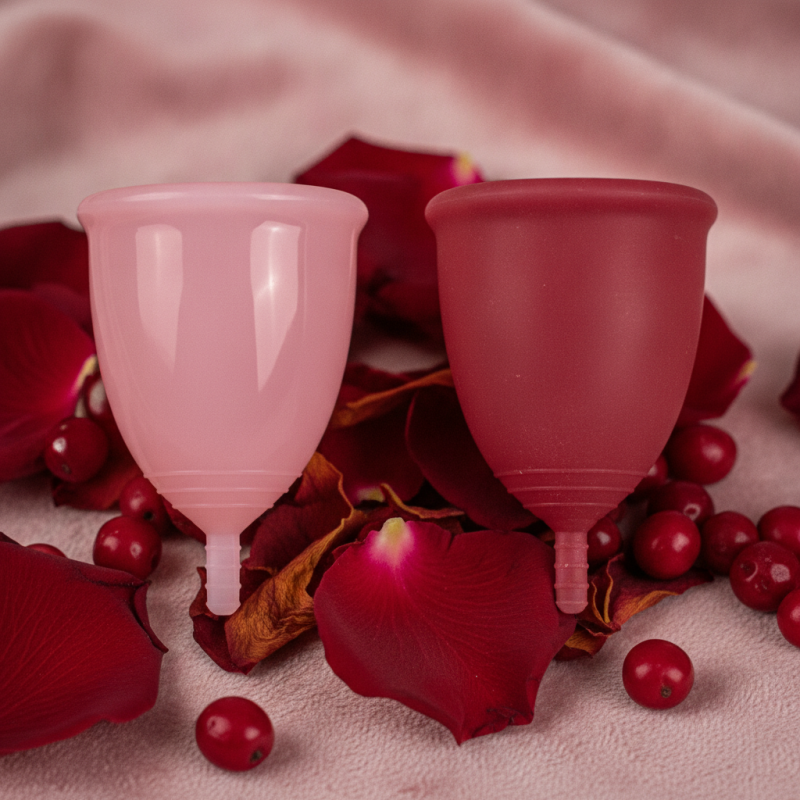
The Sileu Rose (€19.99) is the cup most beginners make the switch with: flower shape, three flexibility levels, cotton pouch, and shipped from Spain in 24-72h.
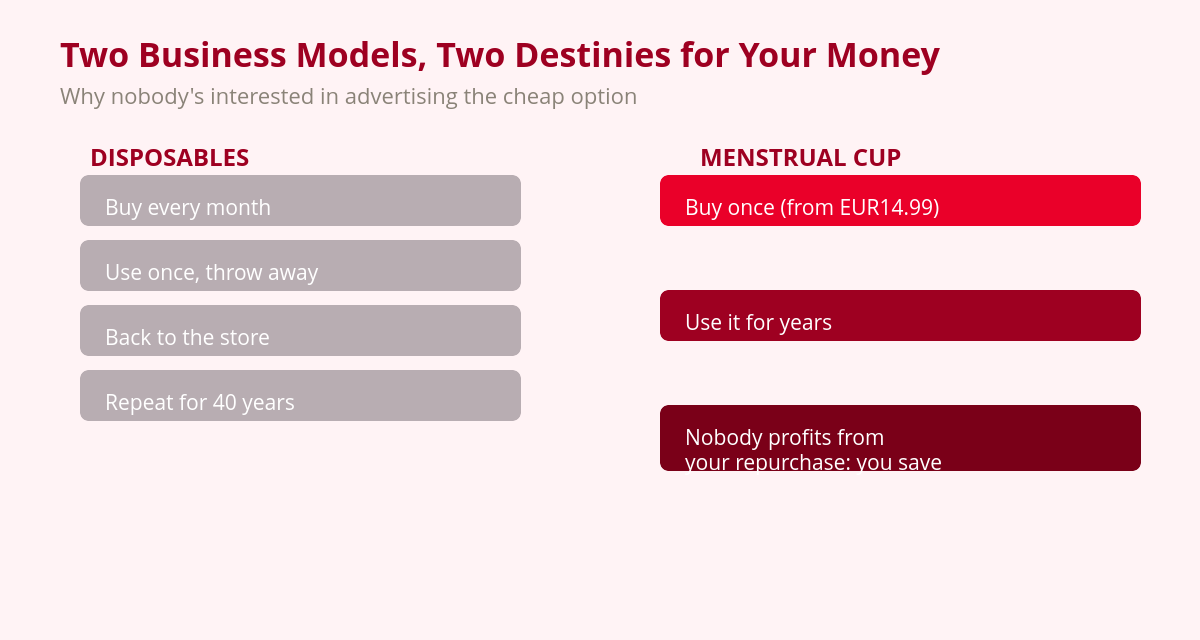
There’s no villain twirling a mustache in an office here. There’s something simpler and more powerful: incentives. The disposable menstrual hygiene industry brings in billions worldwide every year, and its model depends on one thing: that you buy every single month. That constant cash flow is what pays for the TV ads, the sponsorships, and the prime supermarket shelf space you’ve been seeing since you were a teenager.
A product that costs €15-20 and lasts for years can’t fund that machine. That’s why the cup reached you (if it did) through word of mouth from a friend, a sister, or a forum — never through a primetime ad. It’s not that the cup was a secret: it’s that nobody had a reason to advertise it. We break this down in depth in our article on what pad and tampon marketing doesn’t tell you.
Commercial silence was joined by cultural silence. For decades periods were advertised with blue liquid, euphemisms, and the promise that “nobody will notice” — as if the goal were to hide it, not to manage it well. In that climate, a product that asks you to get to know your body (finding your cervix, choosing your size, inserting and emptying with your own hands) started with everything stacked against it. It was “weird.” We saw this ourselves while designing our cup: the resistance was almost never functional, it was emotional. That research is what led to the Sileu Rose and its flower shape, designed specifically to defuse that prejudice through design itself.
For years, the standard objection was “there aren’t any studies.” That no longer holds: the Lancet Public Health review (2019) concluded the menstrual cup is safe, with leakage rates equal to or lower than tampons and pads, and with no effects on vaginal flora. On the feared toxic shock syndrome, cases linked to the cup are exceptional — we cover what the evidence says about TSS and the cup without alarmism and without downplaying it. And if you want to go straight to the source, the scientific evidence behind the menstrual cup has the detail.
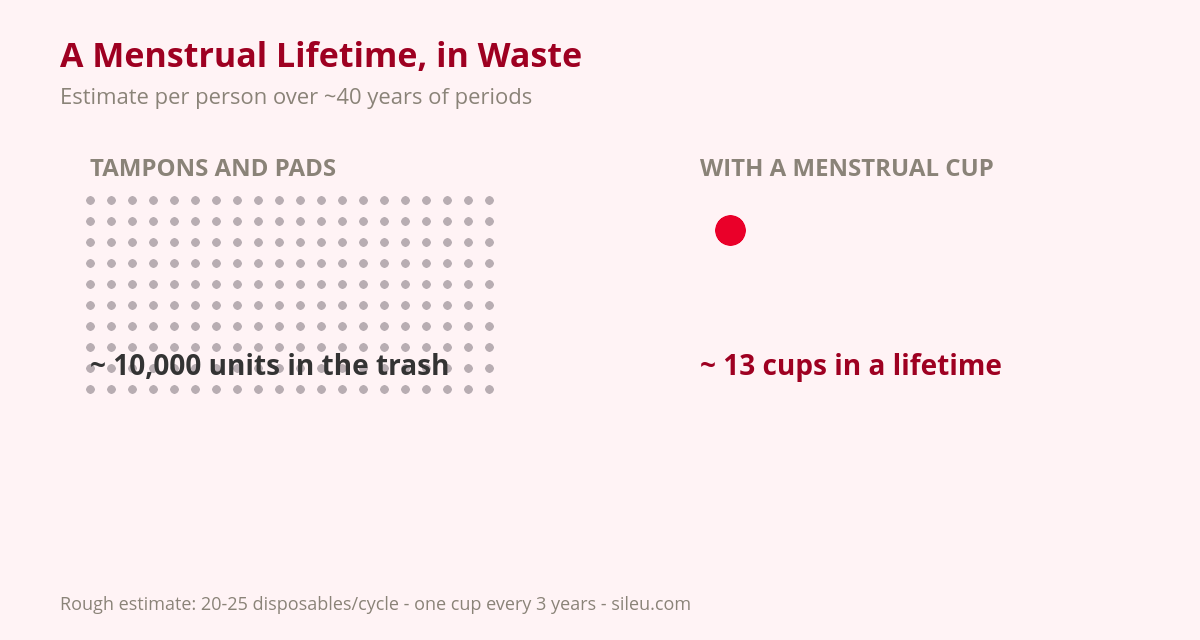
There’s a second calculation that never makes it into the ads either. At a typical rate of 20-25 disposables per cycle, a person generates on the order of 10,000 tampons and pads of waste over their menstruating lifetime — most of it plastic that takes centuries to break down. The reusable alternative shrinks that mountain down to a handful of cups. If this part hits home, we have two deeper reads: your period’s carbon footprint and menstruating without plastic.
Comfort, money, and the planet all pulling in the same direction: that’s why, when someone gets through the learning curve, the feeling isn’t just relief. It’s a bit of retrospective frustration — over all those years paying more for something worse. Our work, and the reason for this blog, is so the next generation never has to ask the question in this article’s title.
For the wow to arrive, you have to get through a learning curve that disposables advertising never mentions about its own products either (nobody’s born knowing how to insert a tampon). With the cup it’s two or three cycles: the folds, checking that it’s opened properly, emptying it calmly. Our guide to choosing your first cup and our transition plan from tampons and pads are written exactly for those weeks. And if you’d rather have a safety net, the cup + period underwear combo eliminates the one fear that’s left: “what if something leaks?”
Because a cup costs €15-20 and lasts for years: it doesn’t generate the recurring monthly purchase that funds major ad campaigns. Disposables, repurchased every month for decades, can fund that machine. The cup has spread through word of mouth and scientific evidence, not advertising.
Yes. The systematic review in The Lancet Public Health (2019), covering 43 studies and over 3,300 participants, concluded that the menstrual cup is safe, with leakage rates equal to or lower than tampons and pads. As with any menstrual hygiene product, wear time and cleaning need to be respected.
Against an average spend of €60-120 a year on disposables, a cup costs from €14.99 and lasts for years. Over a decade, the estimated savings are around €850, even replacing the cup every 3 years.
Most people need two or three cycles to master insertion, removal, and confidence. From there, according to studies, around 70% of those who try it want to keep using it.
Break the repurchase cycle this very month
Unsure about size? The Starter Pack S+L (€21.99) settles it by letting you try both. And if you want a safety net from day one, the underwear + Rose cup pack (€26.99) is the complete leak-free duo.
Keep reading:
“I washed them like any other underwear and within a few months they didn’t absorb the same”: it’s the number-one reason people are disappointed with
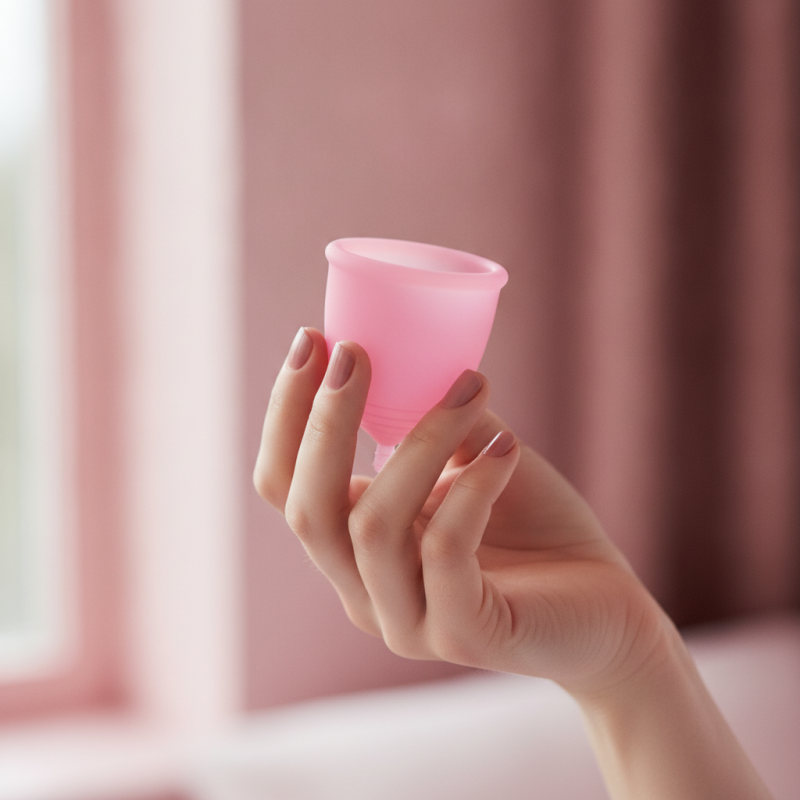
“I’ve had the same cup for three years, should I replace it now?” It’s a question we get often, and the honest answer is: it
We sell menstrual cups, so you’d expect this article to tell you the cup is perfect for everyone. It isn’t, and we’d rather tell you

