Guides for Use & Maintenance
How to Wash Period Panties So They Last for Years
“I washed them like any other underwear and within a few months they didn’t absorb the same”: it’s the number-one reason people are disappointed with


Here’s a fact almost nobody knows: the lubricant hospitals use for gynecological exams is, practically always, a water-based lubricant. It isn’t chance or fashion: it’s the only base that gets along with everything — mucous membranes, condoms, menstrual cups and toys — and the one that washes off without a trace. In this guide we explain why water-based has become the standard for intimate use, how it differs from silicone and oil bases, which ingredients to avoid and how to use it well (there’s a technique to it, even if a minimal one).
It’s a gel whose main ingredient is water, thickened with cellulose derivatives or glycerin, that mimics the mucosa’s natural lubrication. Being made mostly of water, it doesn’t stain sheets, rinses off easily, doesn’t clog pores or leave a film and, if well formulated, respects the pH of the intimate area. Its only honest drawback: it dries sooner than a silicone one, so sometimes you need to reapply. With one difference in its favor — you can reapply as often as you like with no problem.
When does it make sense to use it? More often than people say out loud: occasional dryness (stress, medication, breastfeeding, perimenopause), discomfort during sex, to make it easier to insert your first menstrual cup or a stringless tampon, or simply because everything goes better with lubricant. It isn’t a product “for when something’s wrong”: it’s basic intimate care, just like a good gel with the right pH for the vulva.
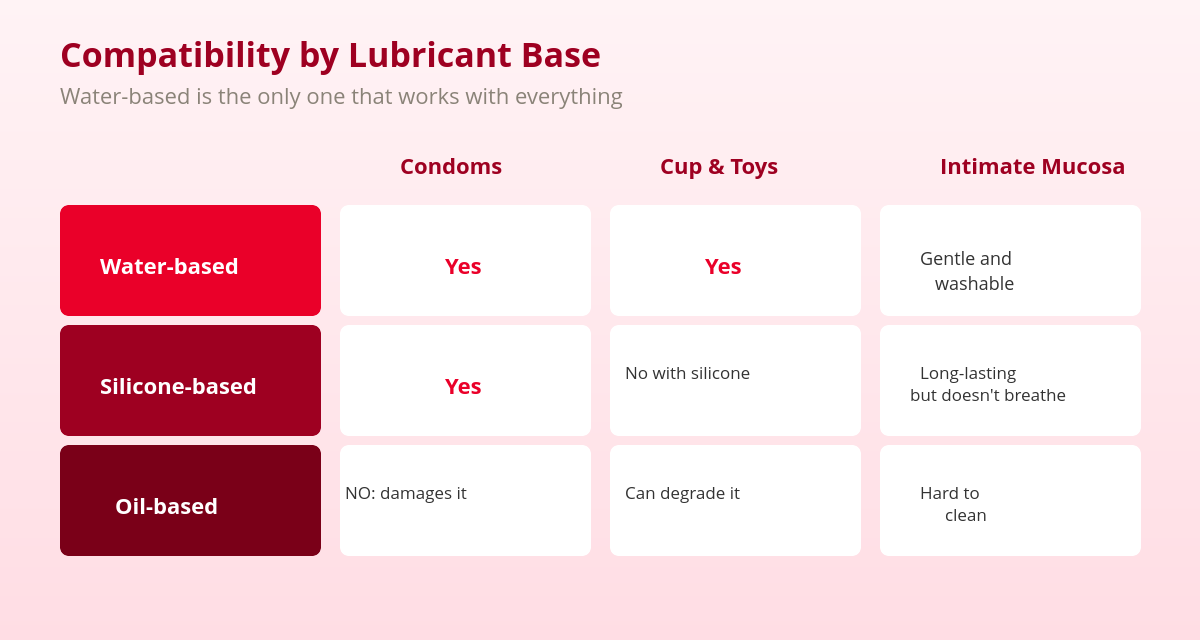
If you use a menstrual cup, this detail matters more than it seems: the silicone of your cup is an excellent material but it isn’t immune to everything. With a water-based lubricant you can lubricate the rim to make insertion easier with no risk to the cup — a particularly useful trick if you’re just starting out and still wrestling with the folds.
Sileu Lub: medical-grade water-based lubricant — €4.99
Hypoallergenic, long-lasting and designed for sensitive skin. Compatible with condoms, toys and your menstrual cup. Shipped from Spain in 24-72h.
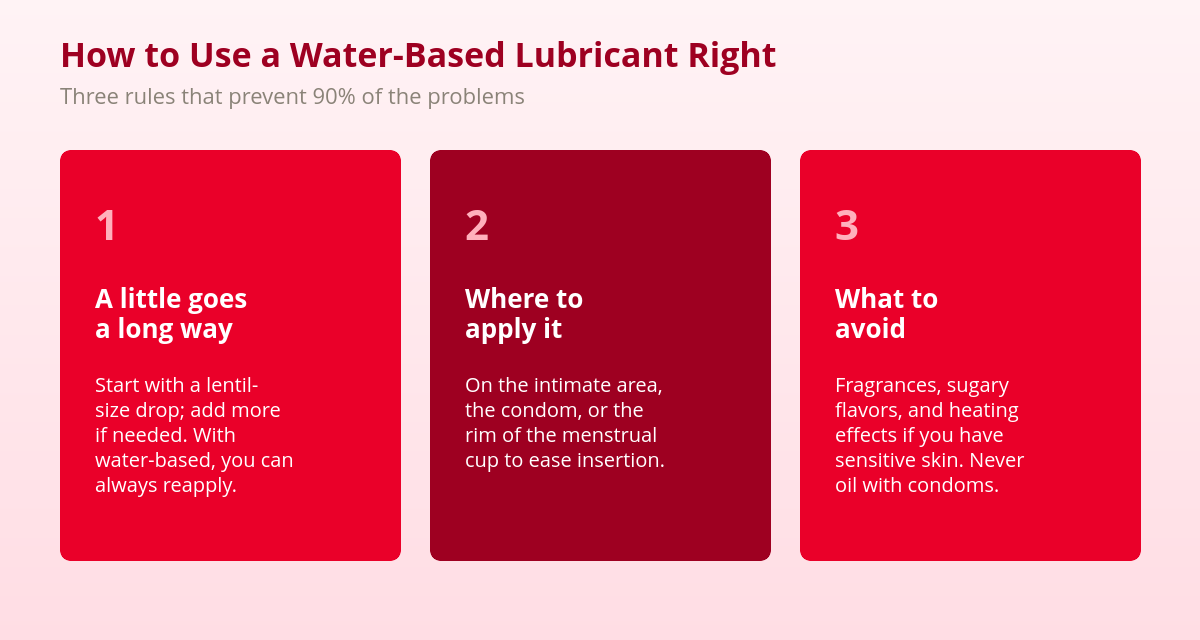
Not all water-based lubricants are the same. Before you buy, turn the bottle over and be wary of:
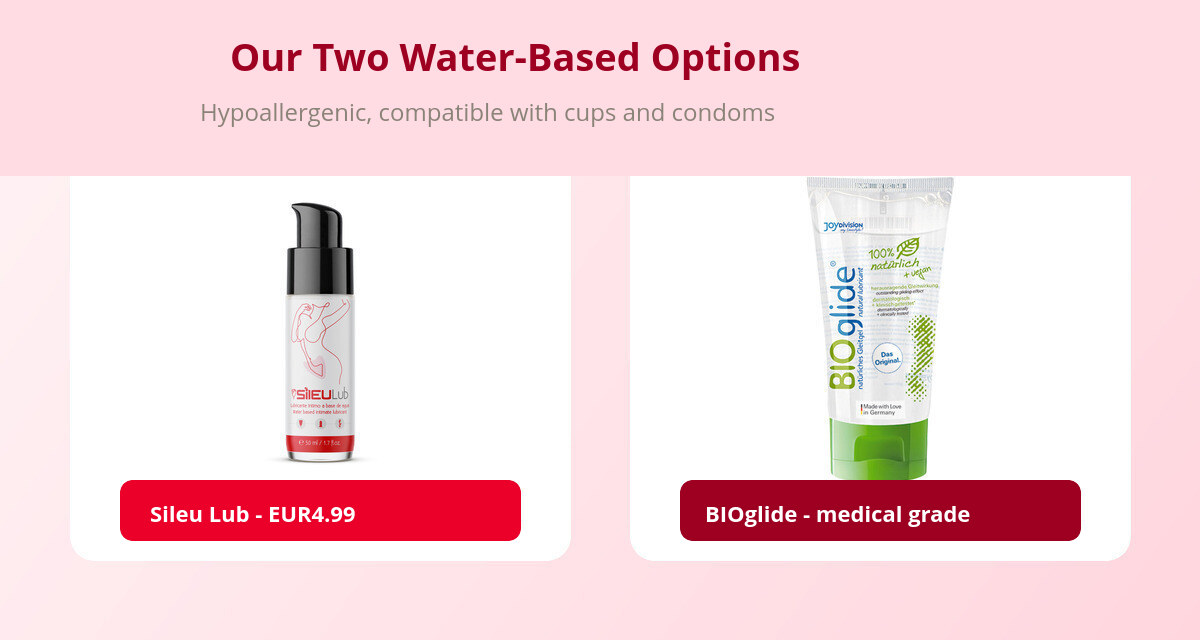
In our shop it’s easy because we only carry two, both water-based and medical grade: Sileu Lub (€4.99), hypoallergenic and long-lasting, and BIOglide, certified organic, vegan, odorless and tasteless with an optimal pH. Neither contains perfumes, sugars or special effects. Boring on purpose — which is exactly what you want down there.
A word of caution, because we’re talking about intimate health: lubricant relieves occasional dryness, but it doesn’t treat its cause. If dryness is persistent, or comes with itching, burning or pain during sex that doesn’t improve, see your gynecologist. And if you use a cup, remember that its safety is well studied — the systematic review in The Lancet Public Health (43 studies, more than 3,300 participants) backs it as a safe option — but neither the cup nor lubricant replaces a check-up when something isn’t right.
If you’re in your first periods with a cup, this is the trick beginners appreciate most: moisten the rim of the cup with water or a drop of water-based lubricant just before inserting it. The difference in comfort is noticeable, especially on light-flow days, when the mucosa is less naturally lubricated. With the Sileu Rose (€19.99), designed for beginners, the pair turns the learning curve into a formality — we explain the steps in how to insert the menstrual cup step by step. It also helps with increased sensitivity or mild vaginismus — always calmly, and with professional support when there’s pain.
The question you ask us most: Sileu Lub or BIOglide? There’s no single answer, but there is a simple logic. Sileu Lub (€4.99) comes in a long-lasting bottle, designed for everyday use: bedside table, frequent use, good value for money. BIOglide is also sold in single-dose sachets as well as the large bottle, so it’s the convenient option to carry in your bag or travel kit, or to try before committing to a whole bottle — and its organic certification and vegan profile make it the first choice if your skin reacts to almost everything. Neither needs a prescription or is limited to one situation: both are suitable for daily or occasional use, solo or with a partner.
A nuance that isn’t always well explained: water-based is also the safest choice if there’s any doubt about compatibility with barrier contraceptives (diaphragm, cervical cap) or with toys made of mixed materials. When you don’t know which lubricant to use in a particular situation, water-based is almost always the right bet — and if you have specific health questions, your pharmacist or gynecologist can answer in two minutes what no article can guarantee 100%.
Water-based is compatible with everything: condoms, silicone toys and menstrual cups, and it washes off with a simple rinse. Silicone lasts longer but can degrade silicone toys and cups and is harder to remove. For general intimate use, water-based is the recommended standard.
Yes, it’s the only type of lubricant recommended with a menstrual cup. A drop on the rim of the cup makes insertion easier, especially at first or on light-flow days. Silicone or oil lubricants can damage the cup’s silicone with repeated use.
Perfumes and scents (the main cause of irritation), flavors with sugars (they encourage yeast infections), warming or cooling effects if you have sensitive skin, and formulas very concentrated in glycerin that can dehydrate the mucosa. A good medical-grade intimate lubricant is deliberately simple.
No. Natural lubrication varies with the time of your cycle, stress, medication, breastfeeding or perimenopause, and using lubricant is as normal as using moisturizer. However, if dryness is persistent or there’s pain that doesn’t improve, it’s advisable to see a gynecologist to treat the cause, not just the symptom.
The organic option: BIOglide — medical grade, vegan and fragrance-free
Water-based with an optimal pH, odorless and tasteless, certified organic. The natural choice if your skin complains about everything. Shipped from Spain in 24-72h.
Keep reading:
“I washed them like any other underwear and within a few months they didn’t absorb the same”: it’s the number-one reason people are disappointed with
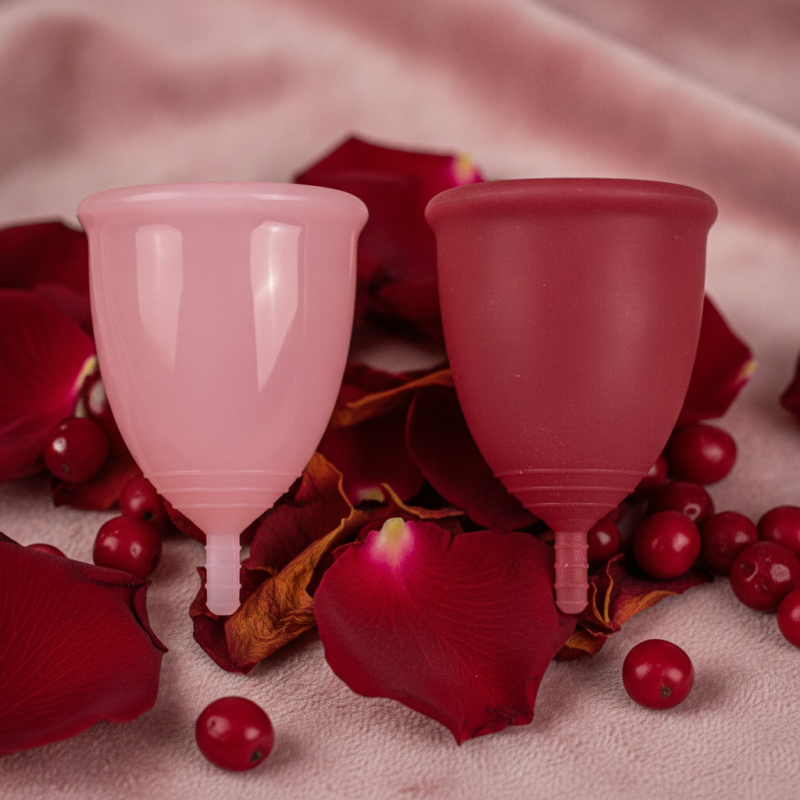
“I’ve had the same cup for three years, should I replace it now?” It’s a question we get often, and the honest answer is: it
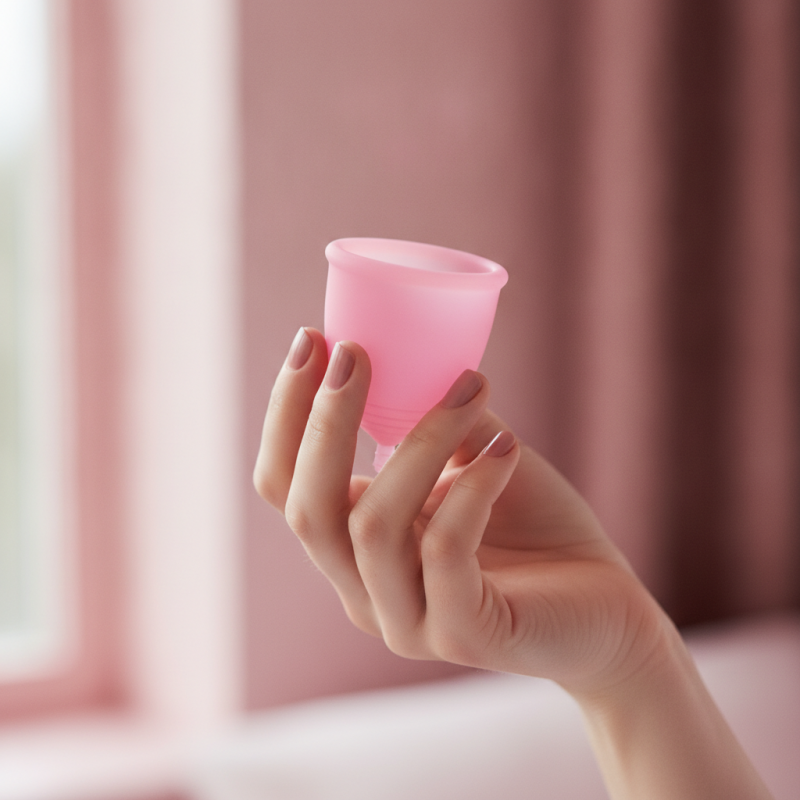
We sell menstrual cups, so you’d expect this article to tell you the cup is perfect for everyone. It isn’t, and we’d rather tell you

