Guides for Use & Maintenance
How to Wash Period Panties So They Last for Years
“I washed them like any other underwear and within a few months they didn’t absorb the same”: it’s the number-one reason people are disappointed with


We’re going to do something unusual for the website of a brand that sells cups: tell you the bad things too. If you’re looking for menstrual cup reviews, you’ll find two extremes — the fanaticism of “it changed my life” and the drama of “I hated it and went back to tampons” — and both are real experiences. After years of selling cups, reading reviews and answering hundreds of questions on our forum, we have a fairly complete picture of what real users think. This is the honest version: the good, the bad and what almost no advert tells you.
Before the anecdotes, the science. The largest scientific review of menstrual cups, published in The Lancet Public Health (43 studies, more than 3,300 participants), found two things that sum it up: leakage with a cup is equal to or lower than with tampons and pads, and around 70% of people who try it want to keep using it afterwards.
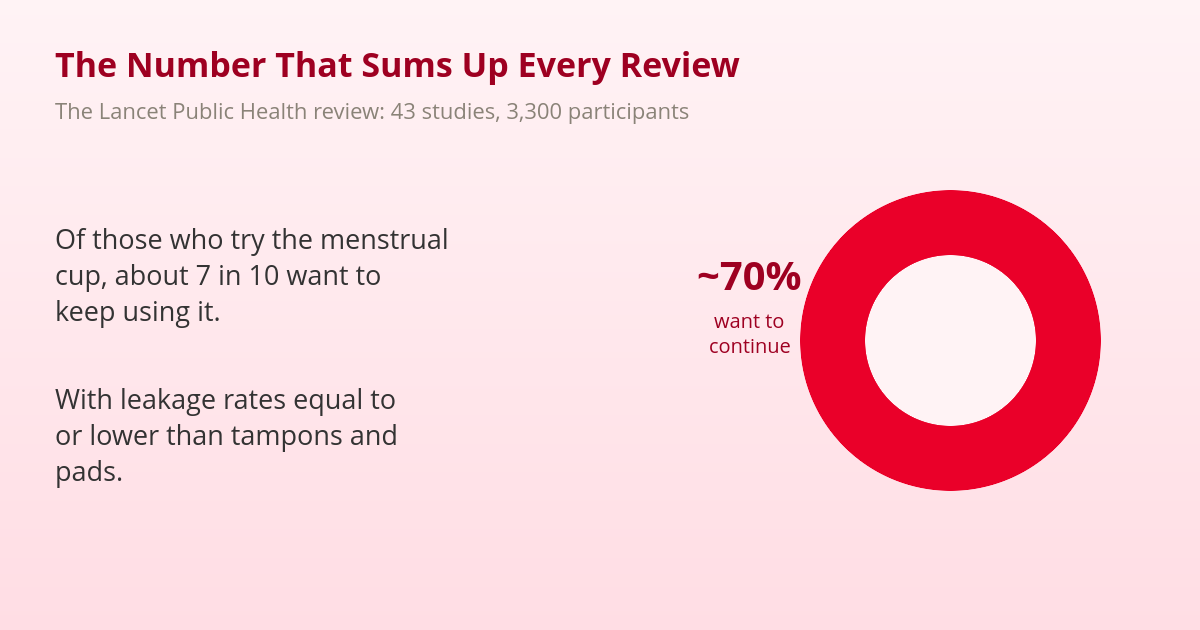
Think about it the other way round: 30% don’t continue. The cup isn’t for everyone, and anyone who tells you otherwise is selling you something. But 70% loyalty after trying something so different from what we’d used all our lives is a figure no disposable product can show. The scientific basis of the cup is, in short, more than well established.
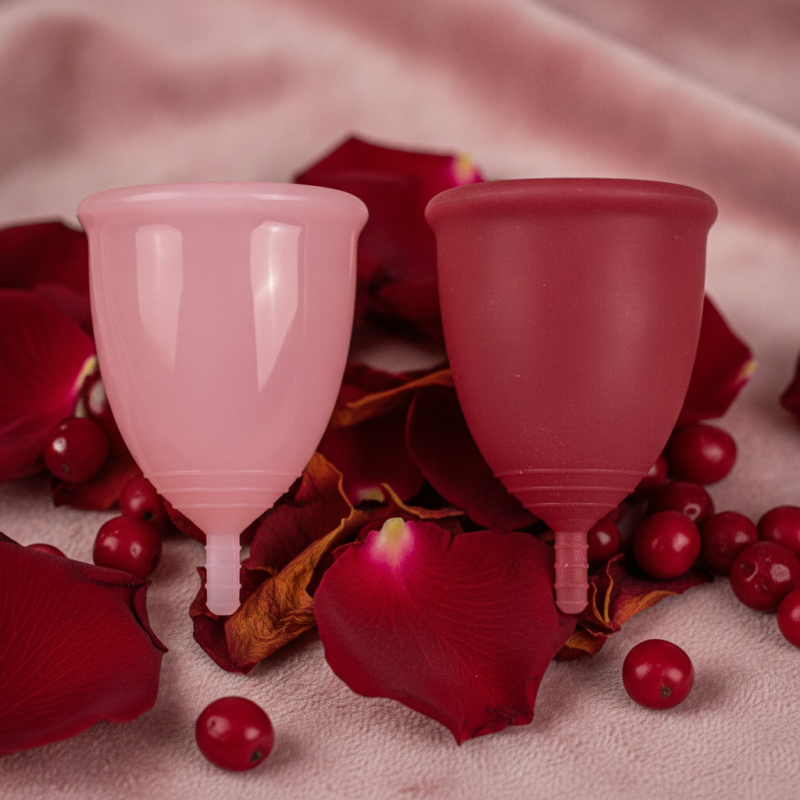
The cup with the best beginner reviews: Sileu Rose — €19.99
A rose shape designed in Spain, a soft feel and a size designed for starting out. Medical-grade silicone certified to ISO 10993. Shipped from Spain in 24-72h.
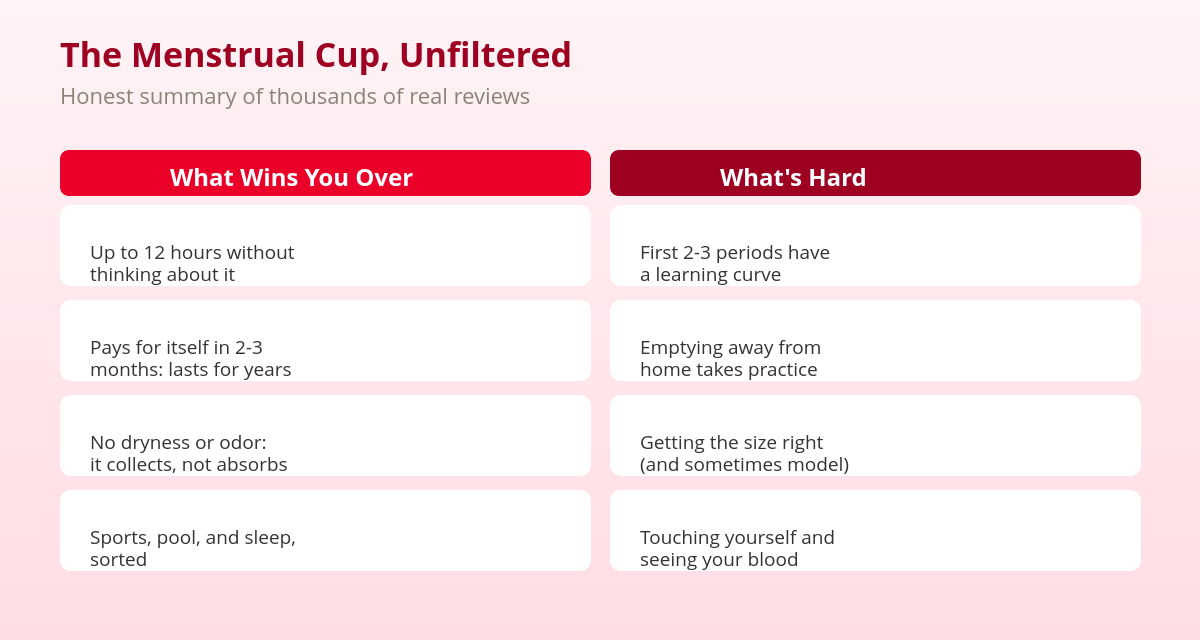
Three things that almost never appear in reviews and should:
And a manufacturer’s reflection, with data and no conspiracy theories: why do menstrual cup reviews spread by word of mouth rather than advertising? Because a product that ends monthly repurchasing doesn’t fund campaigns. The disposables industry makes money from you every month; the cup, once. Guess which of the two business models pays for TV ads.
We’ve been answering questions on our support forum for years, and there’s a very clear pattern: almost nobody doubts whether the cup “works” — they doubt whether it works for their particular case. The most repeated questions, with our honest opinion:
That pattern, more than any five-star review, is the opinion that counts most: most initial doubts have a clear answer and aren’t a reason to rule out the cup before trying it.
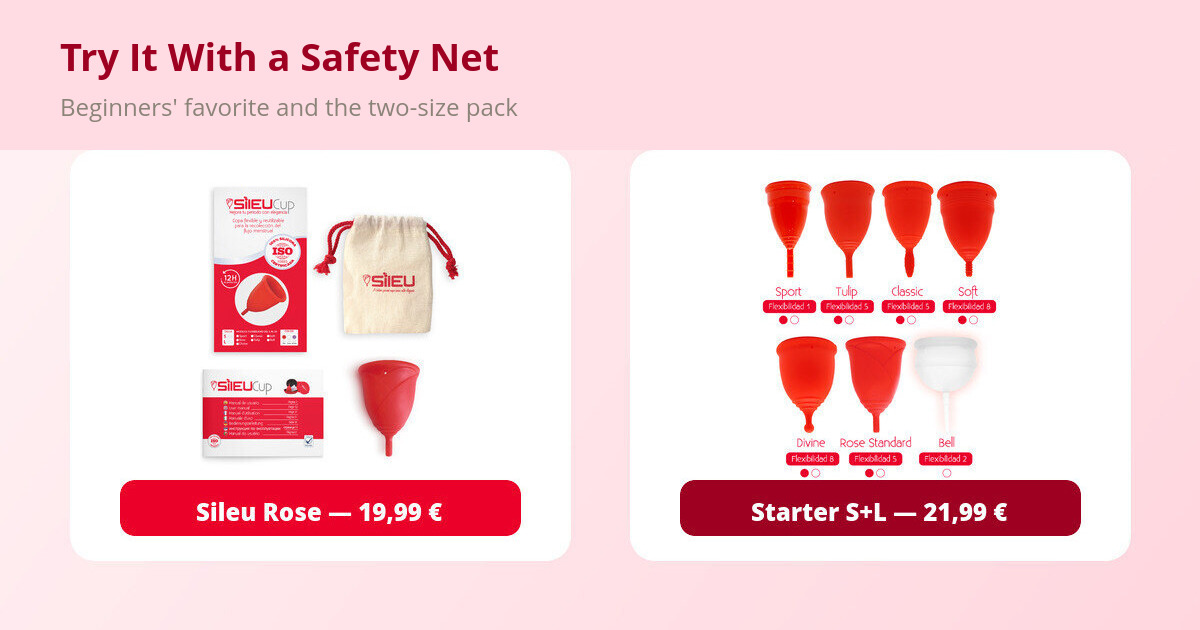
Our honest advice: give it three cycles before deciding, because your opinion on day one and in month three are often opposite. Start at home, without rushing, following our guide to choosing your first menstrual cup. If you’re unsure about size, the Starter pack (€21.99) includes S and L of the model you choose: it costs less than two cups and takes the lottery out of it. And if in the end the cup isn’t for you, that’s fine: period underwear (€9.99) is the reusable alternative with no learning curve. What matters is that the decision is yours and well informed — that’s why we wrote this.
The strongest evidence (a review in The Lancet Public Health of 43 studies) indicates that around 70% of people who try the menstrual cup want to keep using it. Positive reviews highlight the 12 hours of wear, the savings and the comfort; negative ones focus on the learning curve in the first periods and the hassle of emptying it away from home.
According to the systematic review published in The Lancet Public Health, leakage with a menstrual cup is equal to or lower than with tampons and pads. That said, during the initial learning period (2-3 cycles), leaks from poor placement or the wrong size are normal until you get the hang of it.
Most users need between one and three cycles for inserting and removing it to become automatic. That’s why the honest recommendation is not to judge the cup on day one: your opinion in month three is usually radically better than on your first try.
If you’re not sure of your size, a pack with two sizes such as the Sileu Starter (S + L for €21.99) removes the risk of getting it wrong and costs less than buying two cups. If you’d rather have just one, the Sileu Rose (€19.99) is designed for beginners because of its size and soft feel.
No size lottery: Starter pack S + L — €21.99
Both sizes of the model you choose, for less than two cups cost. The safest way to form your own opinion of the menstrual cup. Shipped from Spain in 24-72h.
Keep reading:
“I washed them like any other underwear and within a few months they didn’t absorb the same”: it’s the number-one reason people are disappointed with
“I’ve had the same cup for three years, should I replace it now?” It’s a question we get often, and the honest answer is: it
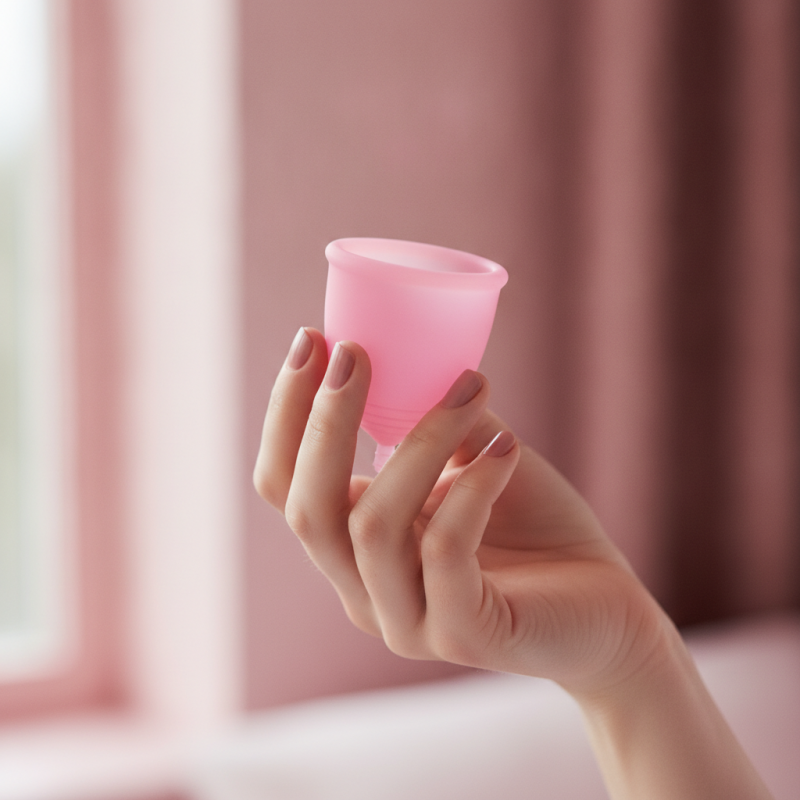
We sell menstrual cups, so you’d expect this article to tell you the cup is perfect for everyone. It isn’t, and we’d rather tell you

