Guides for Use & Maintenance
How to Wash Period Panties So They Last for Years
“I washed them like any other underwear and within a few months they didn’t absorb the same”: it’s the number-one reason people are disappointed with


You’re at a festival, in a gas station restroom or a train toilet with no sink in the stall, and it’s time to empty your menstrual cup. Now what? It’s the question that holds people back most from trying the cup away from home, and the answer is reassuring: you don’t need running water every time, just to know what to do in each situation. With a little planning, traveling or going to a festival with a cup is simpler than carrying a pack of pads for the whole weekend.
Many people believe every time you empty the cup it needs a full wash with soap and water, and that myth is exactly what causes the most anxiety about using it away from home. In fact, between emptyings within the same cycle, it’s enough to dry it well with clean toilet paper (or a tissue) before reinserting it. Washing with water and mild soap is recommended when you can, but it isn’t required every time if you don’t have a sink to hand. At the end of the cycle, though, a more thorough clean is a good idea, plus sterilizing if you want to be extra safe.
This is probably the point that most holds back people thinking about switching from tampons or pads to a cup: the idea that away from home “you won’t be able to clean it properly”. In practice, compared with changing a tampon in a festival restroom with no paper or soap, the cup takes fewer steps, not more. We go over other common questions comparing both methods in our guide menstrual cup vs tampons: an honest comparison.
It’s the most common situation and the most stressful: gas stations, bars, airports with individual stalls and no basin. Follow these steps:
This method is enough for an occasional emptying; it doesn’t replace cleaning with water when you have it available, but it lets you carry on with your day without desperately searching for a free sink.
A couple of common mistakes worth avoiding: using perfumed or alcohol-based wet wipes to clean the cup (they can irritate the vaginal mucosa when you reinsert it) and using regular soaps with strong fragrance, which, as with the rest of intimate hygiene, upset your pH unnecessarily. If you’re unsure which products suit the intimate area in general, we cover it in more detail in our guide to intimate hygiene during your period.
And if one day you really have no water, spray or paper to hand —it happens, if rarely—, empty the cup and reinsert it directly: it isn’t ideal, but it’s not a serious risk for a single emptying, as long as you clean it more thoroughly with water and mild soap or sterilize it as soon as you can. What you should avoid is leaving it in unemptied for many extra hours just because you can’t find somewhere to clean it.
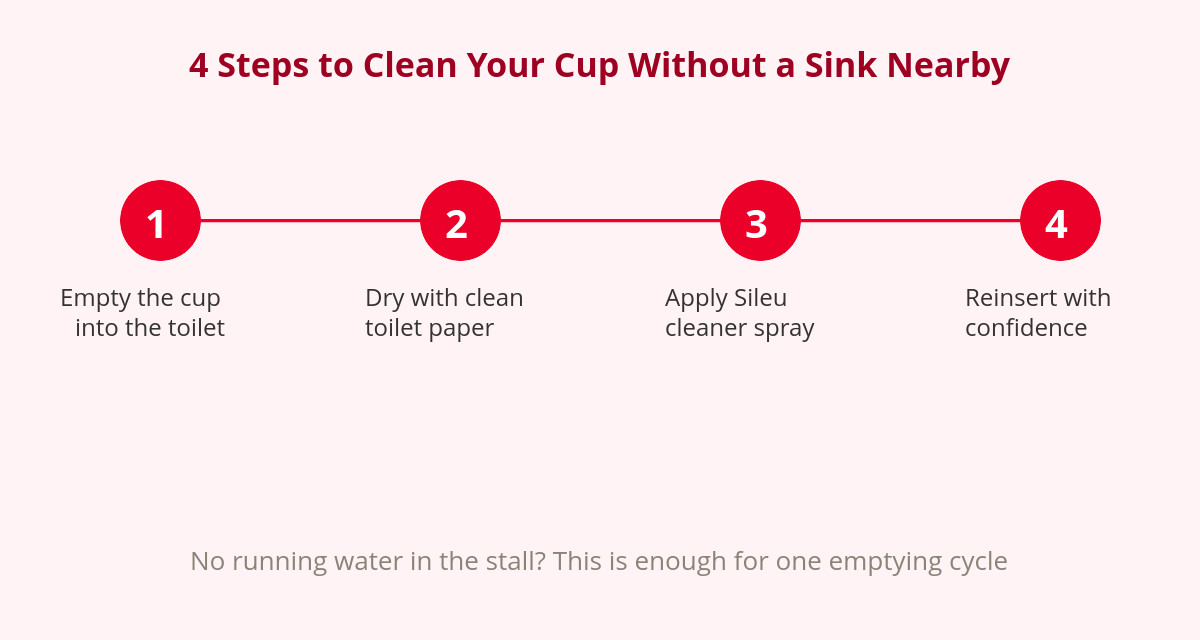
The Sileu Cleaner Spray (€5.99) fits in any toiletry bag or fanny pack and is designed for exactly these moments: it cleans with no need to rinse with water, leaving no residue or strong fragrance. Shipped from Spain in 24-72h.
At festivals, portable toilets rarely have a usable sink, and queuing to reach one with water can take 20 minutes you don’t have. The strategy that works best is to have ready, in a small pocket, your own toilet paper, the cleaning spray and hand sanitizer, so you don’t depend on what’s available. If your period is heavy that day, plan to empty the cup every 8-10 hours as a general guide and make the most of moments when you do find a sink with water to clean it more thoroughly.
At multi-day festivals, also plan where you’ll sleep that night: if you have access to a campsite with showers, take the chance to clean it with water and mild soap before bed, although it isn’t essential. If you sleep with the cup in during the festival, there’s no extra problem: it lasts the whole night as long as you respect the manufacturer’s maximum recommended wear time, just as at home (more in sleeping with a menstrual cup).
The safety of the menstrual cup in these conditions is backed by evidence: a systematic review published in The Lancet Public Health (van Eijk et al., 2019), with 43 studies and more than 3,300 participants, concluded that the cup is a safe method, with leakage rates equal to or lower than tampons and pads, even under the variable hygiene conditions of real-world use (source: PubMed).
On long journeys without frequent stops, the key is having everything organized and within reach without rummaging through your big suitcase. A small, discreet toiletry bag makes the difference between sorting out the emptying in two minutes or turning it into an awkward operation in front of other passengers. If you’ll be away for several days —a weekend break or a longer trip—, it’s worth taking the full kit: cup, sterilizer and case, all in one place. We cover this in more detail in our guide to traveling on your period: a travel kit with a menstrual cup.
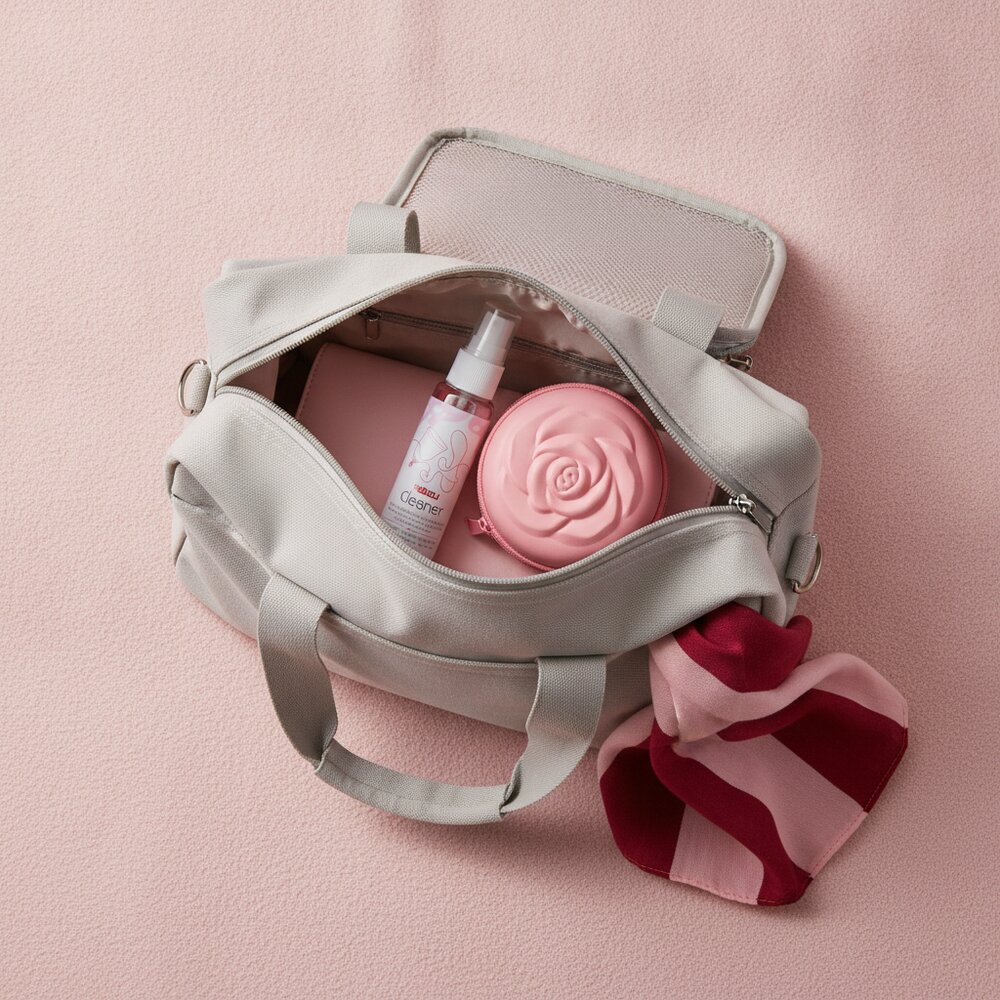
That’s what the Sileu Travel pack (€29.99, our best-selling pack) is for: it includes the Sileu Rose cup, a foldable sterilizer and a flower-shaped case, all in one pack designed so you don’t forget anything. And to carry your cup loose in your bag day to day, the SileuCase (€3.99) keeps it discreet and protected. Shipped from Spain in 24-72h.
If you’re traveling somewhere tap water isn’t safe to drink, apply the same principle as with your toothbrush: avoid rinsing the cup directly with that water. Use bottled water if you need to rinse it, or rely on the cleaning spray and toilet paper as a safe alternative while you’re away. It’s a small detail many travel guides forget to mention, but it avoids unnecessary trouble on a trip that, otherwise, the cup makes much lighter to pack for: no packs of pads taking up space in your suitcase.
Away from home, drying it and an occasional spray is enough, but at the end of your cycle (or at the start of a new one) a full sterilization is a good idea: boil the cup for 5-10 minutes, use a foldable sterilizer with hot water, or specific sterilizing tablets. We go over all the methods —including whether it’s safe to use the microwave— in our guide on how to sterilize a menstrual cup. If you’re not sure which sterilizer suits you, we compare the types available in menstrual cup sterilizer: types and which to choose.
If you’re wary of trying the cup precisely because of this kind of logistics away from home, you’re not alone: it’s one of the most common objections before trying it, and also one that holds up least once you’ve used it for a couple of cycles. We go over other real doubts and objections, honestly about what really is a drawback, in our guide on the disadvantages of the menstrual cup: when it’s not your best option.
New cup users often worry a lot about the logistics of cleaning away from home, and then discover that in practice it’s simpler than changing a tampon every few hours in a festival restroom with no paper. It’s another of those details the disposables industry doesn’t tell you: a well-cared-for cup lasts for years, while buying pads and tampons month after month needs someone constantly reminding you.
With practice, the whole process —empty, dry, spray if needed, reinsert— takes less than a minute, quicker than unwrapping, inserting and wrapping up a used tampon to throw away discreetly. The learning curve is mostly in the first cycles: once you get the hang of it, you stop thinking of it as “complicated logistics” and it becomes just another automatic habit, like washing your hands.
Empty the cup into the toilet, dry it with clean toilet paper and, if you want an extra clean, apply a cleaning spray made for menstrual cups before reinserting it. You don’t need soap and water every time you empty it if there’s no sink available.
Yes, it’s safe if you bring your own toilet paper, a cleaning spray and hand sanitizer. Scientific evidence confirms that the menstrual cup is a safe method even under variable hygiene conditions.
As a general guide, every 8-12 hours depending on your flow, just as at home. At festivals or on very active days, plan to empty it a bit more often if your bleeding is heavy.
No. Drying it or using a cleaning spray between emptyings is enough. Full sterilization (boiling, a sterilizer or tablets) is kept for the end or start of each cycle, not for every time you empty it away from home.
A basic kit includes the cup, a no-rinse cleaning spray, a discreet case to store it, toilet paper and hand sanitizer. For longer trips, a foldable sterilizer completes the kit.
Keep reading:
“I washed them like any other underwear and within a few months they didn’t absorb the same”: it’s the number-one reason people are disappointed with
“I’ve had the same cup for three years, should I replace it now?” It’s a question we get often, and the honest answer is: it
We sell menstrual cups, so you’d expect this article to tell you the cup is perfect for everyone. It isn’t, and we’d rather tell you

