Guides for Use & Maintenance
How to Wash Period Panties So They Last for Years
“I washed them like any other underwear and within a few months they didn’t absorb the same”: it’s the number-one reason people are disappointed with

Did you know you can sterilize your menstrual cup in just 3 minutes without watching a pan on the stove? Many users still boil their cup “by eye” in the same pot they cook with, when there are faster methods that are gentler on the silicone and perfect for traveling without a kitchen. Here are the three real methods —microwave, pot and tablets— explained step by step, with exact times and no myths.
A menstrual cup doesn’t need sterilizing every time you empty it during the day: rinsing it with water and, if you have some, a little mild intimate soap is enough. Thorough sterilization is kept for two moments: the start and the end of each cycle. It’s a preventive hygiene step, not a daily obligation, and that’s also what manufacturers’ and health professionals’ usage guides say.
Scientific evidence shows that a well-cared-for menstrual cup is a safe option: the systematic review and meta-analysis published in The Lancet Public Health (van Eijk et al., 2019), with 43 studies and more than 3,300 participants, concludes that the menstrual cup has an adequate safety profile and leakage rates equal to or lower than tampons and pads. That safety profile depends largely on proper hygiene: washing after each emptying and sterilizing between cycles.
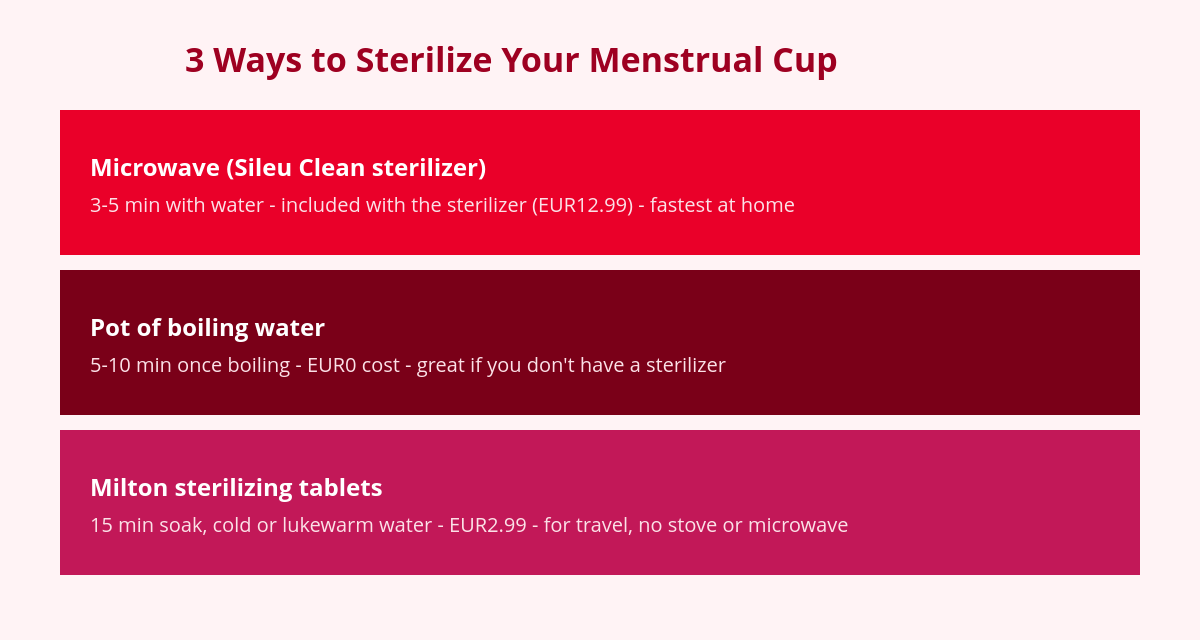
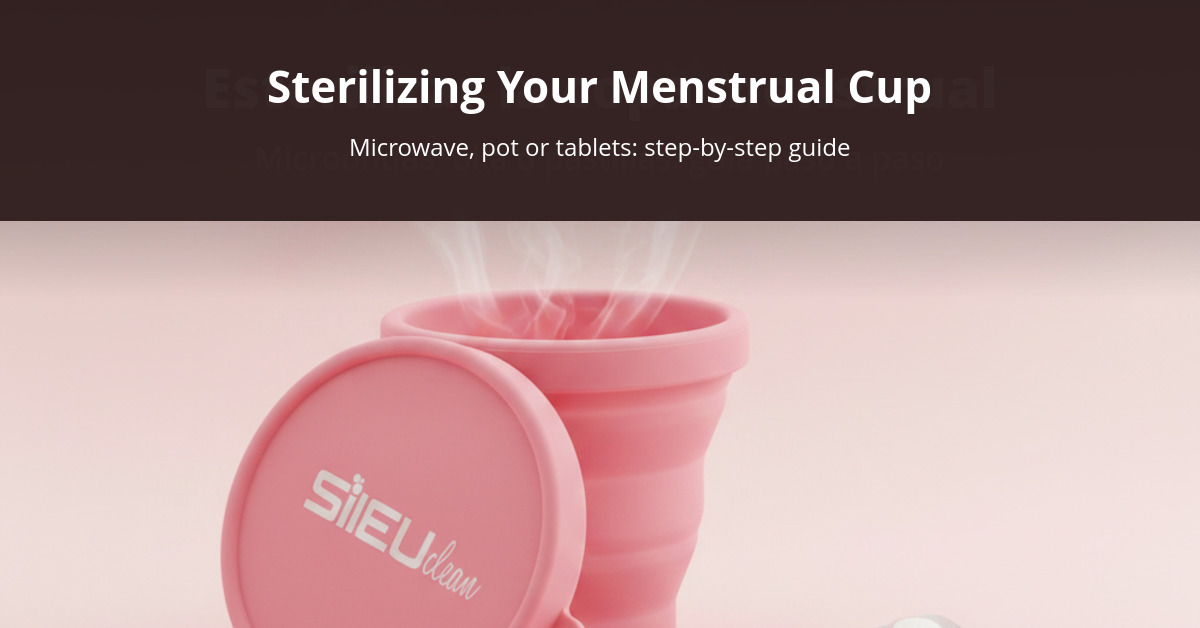
It’s the fastest method if you have a foldable sterilizer like the Sileu Clean (€12.99) at home. Being made of medical-grade silicone, it withstands microwave heat perfectly without deforming. The process:
Never put the cup in the microwave on its own, without water: the silicone can burn or degrade through direct contact with the metal of some turntables or through localized overheating. Always use a microwave-safe container with water in it, like the Sileu Clean sterilizer, designed precisely for this.
🌸 Sileu Clean foldable sterilizer — €12.99
Medical-grade silicone, microwave-safe, and it folds flat to take up the space of a coin purse in your bag. Shipped from Spain in 24-72h.
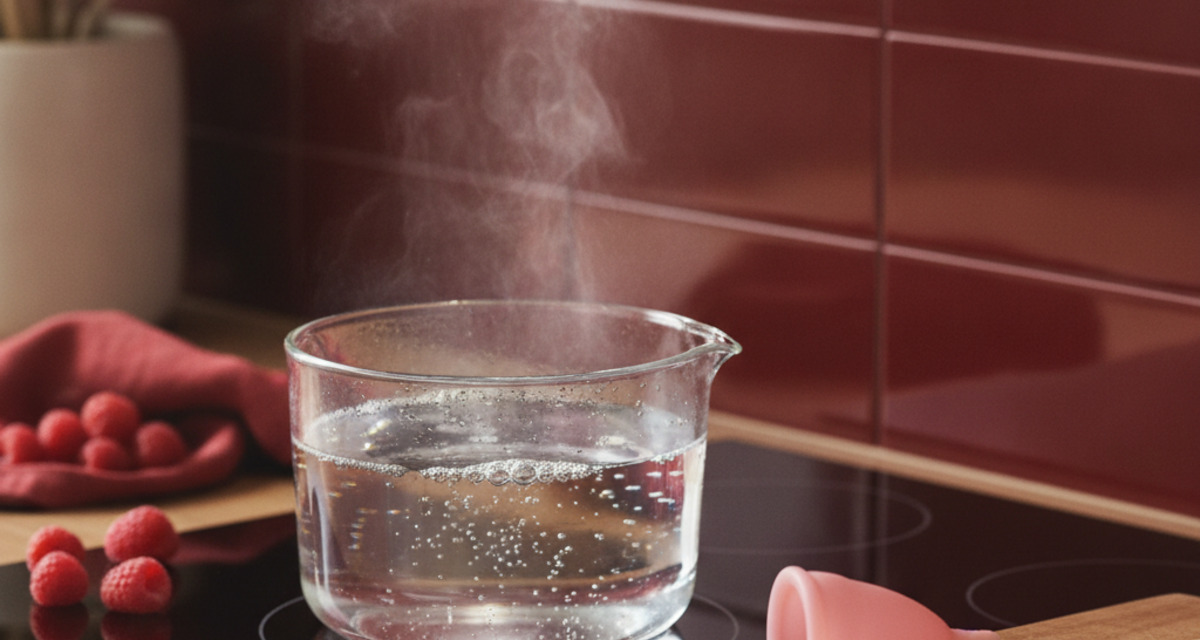
It’s the cheapest method and doesn’t require buying anything. You need a pot you keep just for this (for hygiene, it’s better not to use your cooking pot on the same day) and enough water for the cup to be fully submerged without touching the bottom directly:
Watch out for two common mistakes: letting the cup touch the bottom of the pot directly (it can burn at the point of contact) and boiling it longer “just in case”. More than 10-15 minutes adds no extra hygiene and does speed up silicone wear in the long run.
When you have no access to a stove or microwave —camping, on a night train, in a shared office bathroom— Milton sterilizing tablets (€2.99) are the most practical alternative. They work by cold chemical disinfection:
It’s the ideal method for traveling with your menstrual cup, because a box of tablets takes up the same space as a blister pack of ordinary pills and doesn’t depend on finding a plug or an available kitchen.
| Microwave | Pot | Milton tablets | |
|---|---|---|---|
| Time | 3-5 min | 5-10 min | 15 min soaking |
| Cost | Sterilizer €12.99 | €0 (just water) | €2.99 for the tablets |
| Best for | Home, a quick routine | No sterilizer to hand | Travel, no stove or microwave |
| You need | Microwave + sterilizer | Stove + dedicated pot | Just cold or lukewarm water |
If we had to pick just one method for everyday use, it would be the microwave with the Sileu Clean: it’s the fastest and uses the least energy and water. But carrying some Milton tablets in your travel bag too is the lightest backup solution there is. In fact, the Sileu Travel Pack brings together the cup, the foldable sterilizer and a case in one pack for €29.99.
After years of answering our customers’ questions, these are the mistakes we see most often:
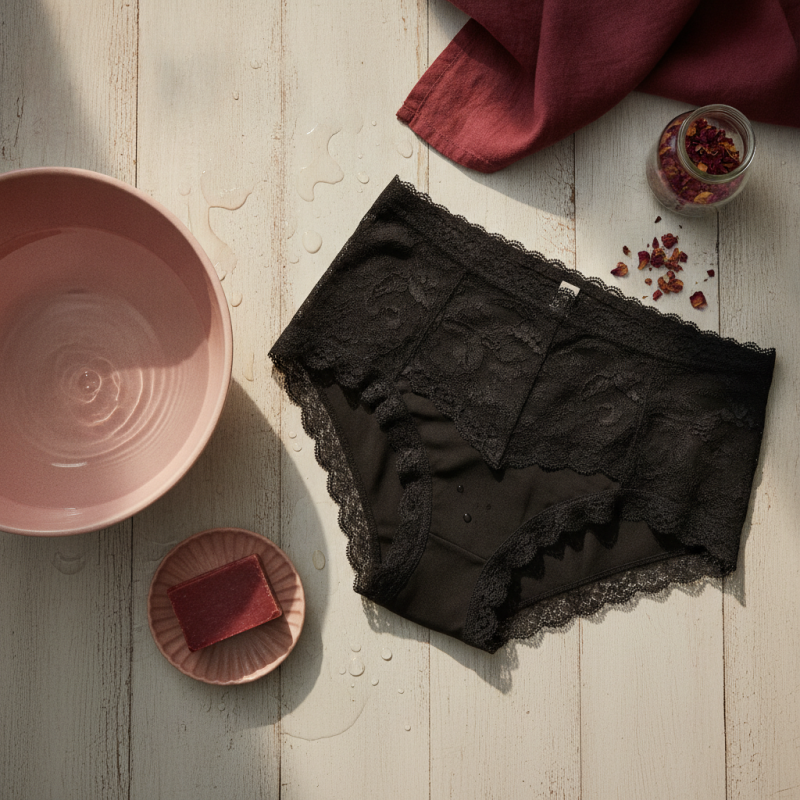
If you use organic cotton period underwear certified to OEKO-TEX Standard 100 (free from harmful substances) alongside the cup, remember that its care is different: it goes in the washing machine, and is never boiled or microwaved.
Proper sterilization is also your first line of defense against worries such as toxic shock syndrome (TSS) associated with menstrual cup use, an extremely rare condition but one whose warning signs are worth knowing (sudden high fever, rash, severe dizziness) so you can go to the emergency room if they appear. Keeping the cup clean, sterilizing it at the start and end of each cycle, and not leaving it in longer than the manufacturer’s recommended hours are the most effective preventive measures you can control yourself. If you have any symptom that worries you, see your gynecologist: this article is not a substitute for a medical assessment.
All in one pack: Sileu Travel — €29.99
Sileu Rose cup + foldable silicone sterilizer + case. The best-selling pack in our store. Shipped from Spain in 24-72h.
It’s a reasonable question, especially if you’re coming from disposable products where “heat” sounds like a bad idea. With medical-grade silicone the opposite is true: it’s designed to tolerate repeated sterilization temperatures without losing elasticity or changing color, as long as you don’t expose it to direct heat without water (for example, resting it on a hot pan) or to abrasive products. What does wear out any silicone over time, however you sterilize it, is normal use: years of folding, inserting and washing. That’s why it’s recommended to check the cup’s condition every few cycles —a sticky texture, fine cracks or persistent changes in smell are signs it’s time to replace it, not a failure of the sterilization method.
Something similar applies to Milton tablets: they’re a low-concentration chlorine solution designed specifically for medical equipment and baby bottles, so they respect the silicone if you follow the ratio on the pack and rinse the cup well with clean water before using it. The mistake isn’t the method, but leaving the cup soaking for hours “to be sure” or using a higher concentration than recommended.
If this is your first cup and you still have general questions about using it, start with our guide to choosing your first menstrual cup, and if you want to compare the different Sileu menstrual cup models before deciding, we have a full comparison. And if the daily cleaning routine (not sterilization) still raises questions, our guide on how to clean your menstrual cup explains it step by step.
Between 3 and 5 minutes at medium power, always inside a microwave-safe container with water, like the Sileu Clean foldable sterilizer. Never put the cup in the microwave on its own, without water.
Yes. Milton sterilizing tablets, dissolved in cold or lukewarm water, disinfect the menstrual cup in 15 minutes of soaking with no need for a stove or appliance. It’s the most practical option for travel.
Sterilizing it at the start and end of each cycle is enough. During your period, rinsing it with water (and mild intimate soap if you have access to it) is sufficient; sterilizing it every day wears out the silicone without adding hygiene.
No. Bleach and alcohol damage medical-grade silicone and can leave residues that irritate the vaginal mucosa. Water, mild intimate soap and heat (microwave or pot), or specific sterilizing tablets, are all you need.
Yes. The systematic review in The Lancet Public Health (van Eijk et al., 2019), with 43 studies and more than 3,300 participants, concludes that the menstrual cup is a safe option, with leakage equal to or lower than tampons and pads, when proper hygiene is maintained.
Keep reading:
“I washed them like any other underwear and within a few months they didn’t absorb the same”: it’s the number-one reason people are disappointed with
“I’ve had the same cup for three years, should I replace it now?” It’s a question we get often, and the honest answer is: it
We sell menstrual cups, so you’d expect this article to tell you the cup is perfect for everyone. It isn’t, and we’d rather tell you

