Guides for Use & Maintenance
How to Wash Period Panties So They Last for Years
“I washed them like any other underwear and within a few months they didn’t absorb the same”: it’s the number-one reason people are disappointed with

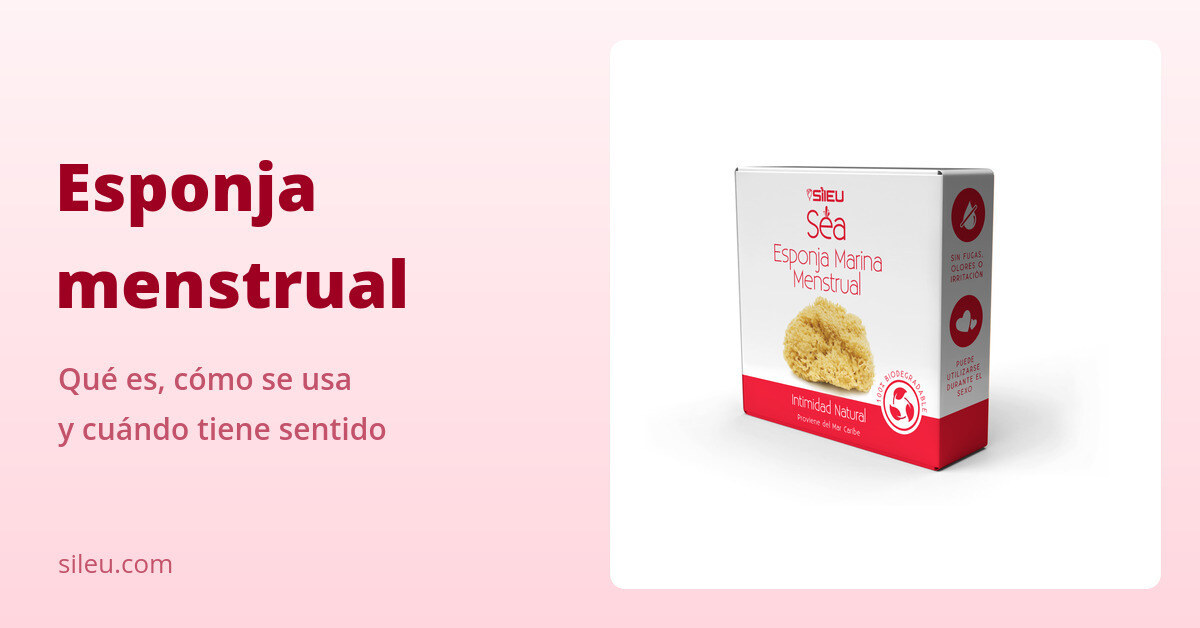
“Can you have sex during your period with no mess and nothing noticeable?” Yes — and the method that makes it possible has been around for centuries, even though almost nobody knows about it. The menstrual sponge is probably the oldest intimate hygiene method still in use, and at the same time the most overlooked: a soft, reusable natural sponge that’s inserted into the vagina to absorb flow. It’s not the perfect solution for everyone — nothing is — but in certain cases it makes a lot of sense: sensitive skin and mucous membranes, sex during your period, or for anyone looking for a naturally-sourced alternative to tampons. Here’s what it is, how to use it step by step, its real advantages and limits, and when a cup is the better choice.
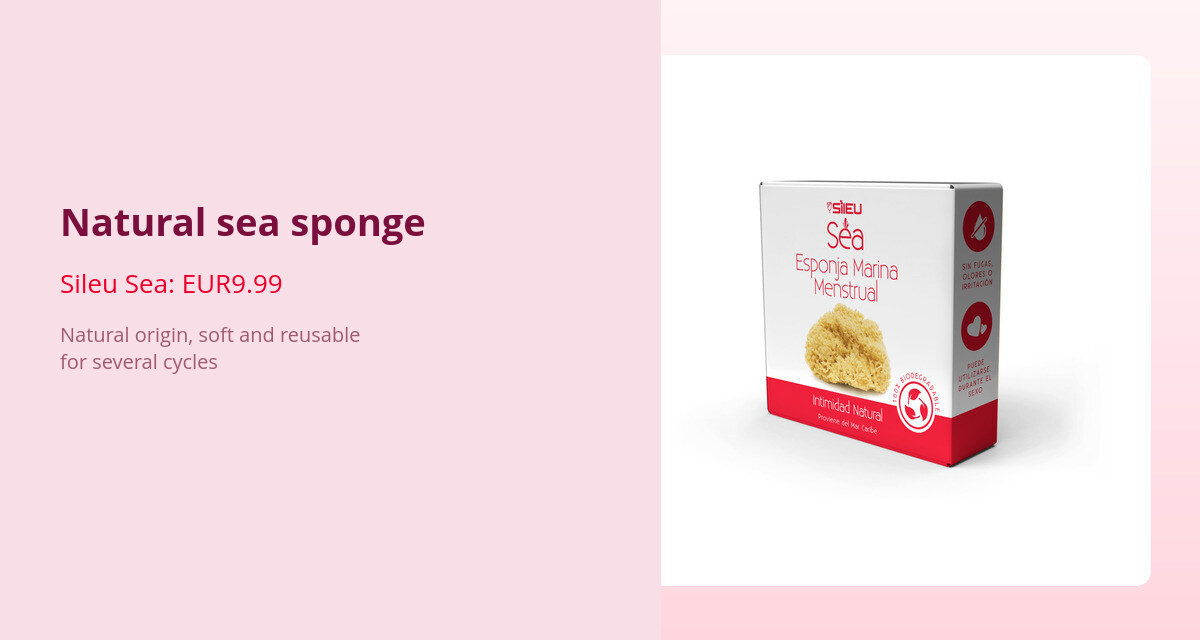
It’s a natural sea sponge, with no strings or plastic, that you compress between your fingers and place inside the vagina, where it springs back into shape and absorbs flow. Unlike conventional tampons, it contains no rayon, fragrances, or chlorine bleach, and leaves no loose fibers behind: it’s simply the porous structure of a marine organism, sustainably harvested, washed and sorted by size. Ours, the Sileu Sea (€9.99), comes from the Caribbean Sea and is reusable for several cycles.
It’s worth not confusing it with the synthetic, single-use sponges sold in some sex shops: here we’re talking about a reusable natural sea sponge, a menstrual hygiene product with centuries of history behind it.
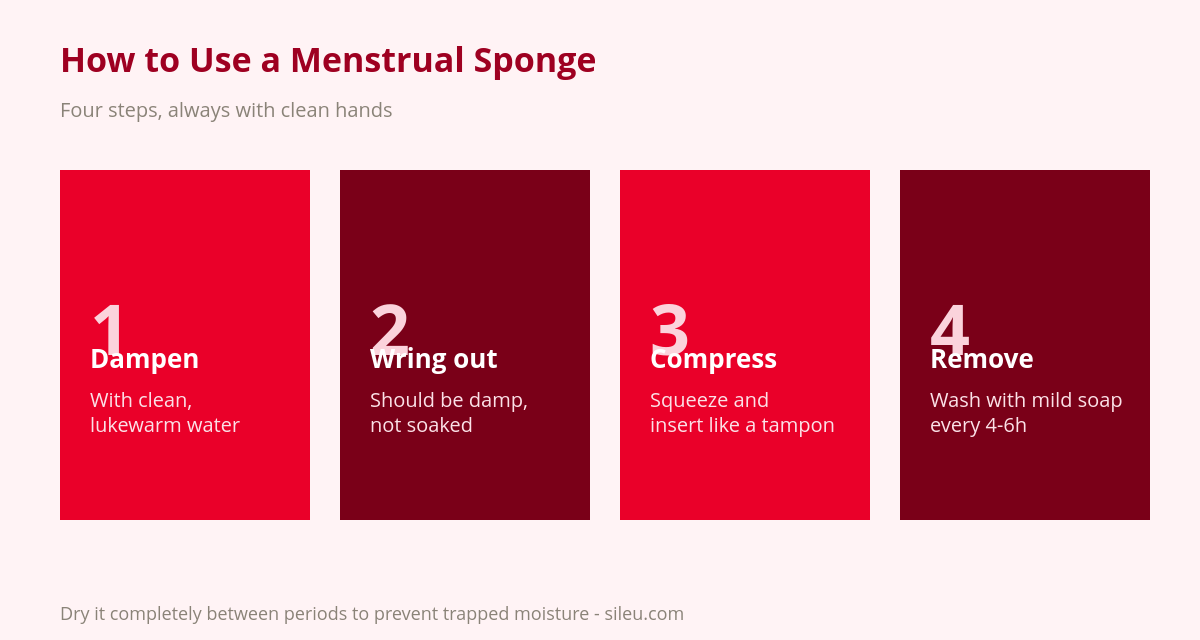
At the end of your period, wash it well, let it air dry completely, and store it in a breathable pouch, never in a sealed, damp container. With that care, it lasts 3 to 6 months; once it loses its sponginess or starts falling apart at the edges, it’s time to replace it.
Nature in its purest form: Sileu Sea — €9.99
Natural, reusable sea sponge, gentle on sensitive tissue and compatible with sex during your period. Shipped from Spain 24-72h.
Here’s the honest part, because we also sell cups and know how to compare:
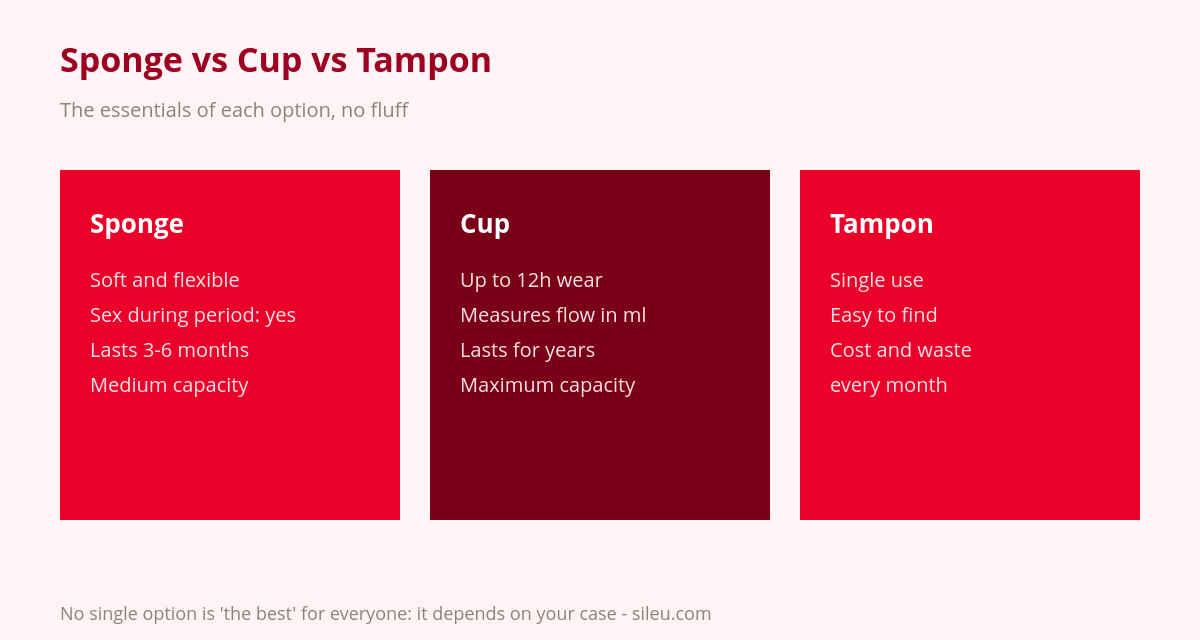
| Menstrual sponge | Menstrual cup | Tampon | |
|---|---|---|---|
| Mechanism | Absorbs | Collects (doesn’t absorb) | Absorbs |
| Max wear time | 4-6 hours | Up to 12 hours | 4-8 hours |
| Capacity with heavy flow | Medium | High (and measurable in ml) | Medium |
| Sex with penetration | Yes | No | No |
| Lifespan | 3-6 months | Years | Single use |
| Price | €9.99 | from €14.99 | €3-5/month, forever |
| Cleaning | Washed at every change | Rinse + sterilizing between cycles | None (waste) |
Our take? They’re not rivals, they’re tools. The cup is the most complete main method for everyday use: more hours, more capacity, years of use and scientific backing — the systematic review in The Lancet Public Health (43 studies, over 3,300 participants) considers it safe, with leakage rates equal to or lower than tampons and pads. The tampon, on the other hand, is the only one of the three that forces you to keep buying every month: the disposables industry runs precisely on that repurchase, which is exactly why neither the sponge nor the cup has anyone advertising them. The sponge shines as a complement: for intimacy, for light flow days, or for anyone who can’t tolerate the feel of a cup. In fact, many Sileu Rose customers add a Sea to their order for exactly that reason.
Three situations worth knowing how to handle. At the pool or beach, the sponge works: no visible string and it holds up well in water, though it does absorb some, so it’s best to wring it out and reposition it once you’re out. For sport, it’s comfortable for gentle activities like yoga or walking; for high-impact activity and long workouts, the cup remains the more reliable choice because it doesn’t get saturated. While traveling, the sponge takes up almost no space or weight, but remember its non-negotiable requirement: you’ll need clean water to wash it at every change. If you’re going to spend the day out with no guarantee of a decent restroom, that’s a cup day — it empties and goes back in, in a moment. As you can see, the honest answer is almost never “sponge or cup,” but “each one has its moment.”
Inside the body, 4 to 6 hours per use. As a product, 3 to 6 months with good care: washing with mild soap at each change, drying completely between periods, and storing in a breathable pouch. Once it loses its sponginess or falls apart, it needs replacing.
Yes, it’s the only internal method that allows it: the sponge compresses against the back of the vagina, and your partner usually can’t feel it. It’s its big advantage over the cup and the tampon, which have to be removed before penetration.
They’re complementary. The cup collects more flow, lasts up to 12 hours, and lasts years, making it the better main method. The sponge wins on softness and intimacy (sex during your period), but absorbs less, needs washing at every change, and lasts 3-6 months.
At every change: clean water and mild soap, with freshly washed hands, and a thorough rinse. Between periods: a full wash and complete air drying before storing it. It shouldn’t be boiled, since heat hardens and degrades the natural sponge.
The complete duo: Sileu Sea (€9.99) + Sileu cup from €14.99
The cup as your main everyday method and the sponge for intimacy and lighter days. For under €25 you cover every scenario your period brings, shipped from Spain 24-72h.
Keep reading:
“I washed them like any other underwear and within a few months they didn’t absorb the same”: it’s the number-one reason people are disappointed with
“I’ve had the same cup for three years, should I replace it now?” It’s a question we get often, and the honest answer is: it
We sell menstrual cups, so you’d expect this article to tell you the cup is perfect for everyone. It isn’t, and we’d rather tell you

