Guides for Use & Maintenance
How to Wash Period Panties So They Last for Years
“I washed them like any other underwear and within a few months they didn’t absorb the same”: it’s the number-one reason people are disappointed with

“Is there any way to stop my period right now, today, because I have a wedding tomorrow?” It’s one of the most repeated menstruation searches, and the honest answer is the one almost nobody wants to read: once bleeding has started, there’s no safe, proven way to stop it overnight. There are, however, real ways to reduce the volume, plan ahead, or make those days more bearable — and that’s what this article is about, with no myths or impossible promises.
No, not immediately or safely. Menstrual bleeding is the result of progesterone levels falling at the end of the cycle, which causes the endometrium (the lining of the uterus) to shed. That process is already under way when the first spot appears, and no over-the-counter medicine or home remedy “switches it off” within hours. Anyone promising to stop your period in a day is usually selling something that doesn’t work or that may be downright harmful.
What does exist are two medically backed routes: reducing the volume of bleeding while it lasts (so it’s more manageable) and planning a period-free cycle in advance with hormonal contraception. Both require, to different degrees, talking to your family doctor or gynecologist — they aren’t decisions to make on your own, especially if the underlying reason is bleeding that worries you.
Understanding why it happens helps put the urgency into perspective. During the cycle, the endometrium thickens in preparation for a possible pregnancy; if there isn’t one, progesterone levels fall, the blood vessels in the endometrium contract and that lining is shed along with some blood. It’s a hormonal and mechanical process that usually lasts 3 to 7 days on average and can’t be “switched off” with a one-off action without medical intervention. The sooner this is understood, the less time is wasted searching for remedies that won’t work.
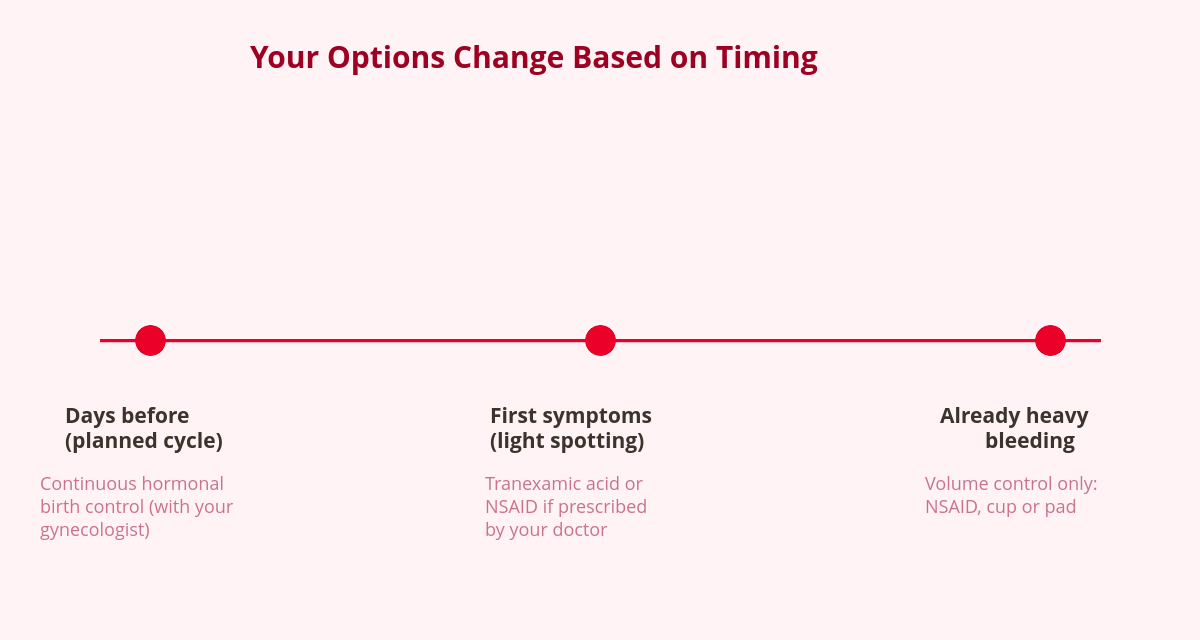
If your goal is to make your period lighter on those days, there are two options with studies behind them:
Neither option “stops” your period in the sense of halting it completely: they shorten it or make it lighter. If what you want is for it to disappear entirely for a one-off event, the only real route is the next one.
An important point about ibuprofen: it works better if you start taking it as soon as you notice the first symptoms or first spotting, not halfway through your period, and always within the dose on the leaflet or the one your pharmacist recommends. It isn’t harmless for everyone — it’s contraindicated with an active stomach ulcer, some kidney diseases or an allergy to anti-inflammatories—, so if you take it routinely every month, mention it at your next check-up.
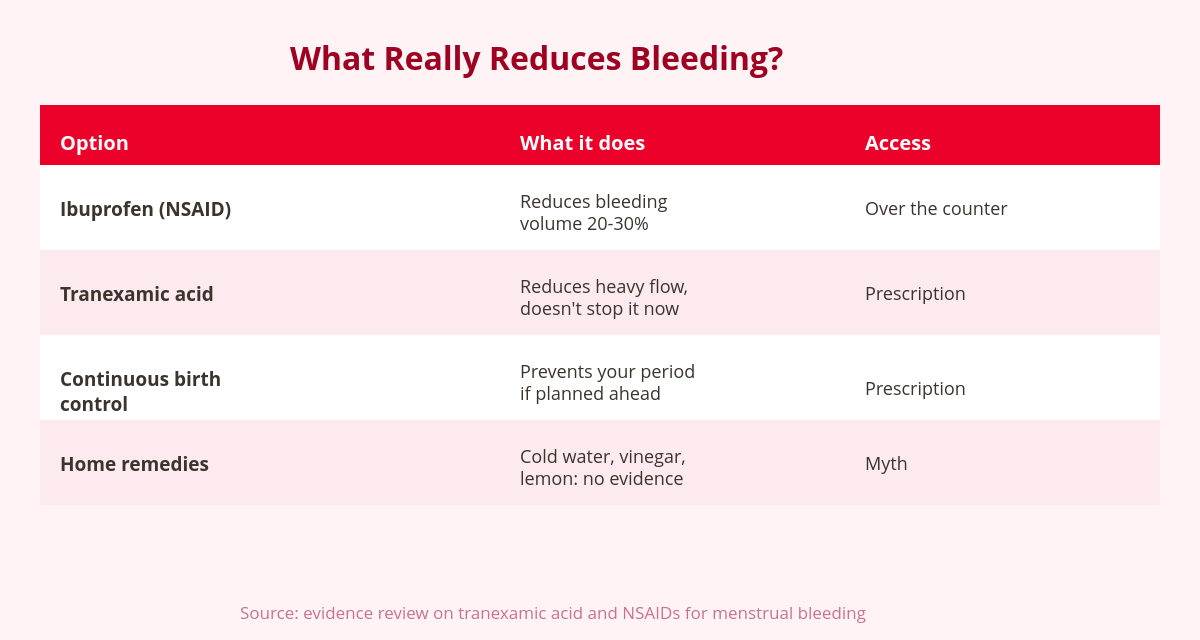
If you take the combined pill, use the vaginal ring or have a hormonal IUD, your gynecologist can tell you how to take your medication continuously (without the usual break) to delay or suppress bleeding in a particular cycle. It’s a real, frequently used strategy before weddings, long trips or sports competitions, but it has one unavoidable condition: it has to be planned at least several days in advance, before bleeding starts. If you already have your period, this option won’t work for that cycle.
We go into more detail about which medicines affect the cycle and how to use them safely in our guide to medicines that delay your period. And if what worries you is exactly the opposite —your period not arriving when it should—, this other article on late periods and their causes will be useful.
While you decide which medical option suits you, there’s something you can control today: how you get through those days. The Sileu Rose menstrual cup (€19.99) lasts up to 12 hours without changing and holds far more than a tampon, so if your bleeding is heavy you’ll notice the discomfort less. Made of German Wacker medical-grade silicone certified to ISO 10993. Shipped from Spain in 24-72h.
Searching “how to stop your period”, it’s easy to come across remedies with no basis at all: very cold water, vinegar, lemon juice, “miracle” herbal teas or even vaginal douches. None has scientific backing, and some, like douching, can upset your intimate flora and increase the risk of infection rather than help — we explain it in detail in our article on why gynecologists advise against vaginal douching. If something sounds like an instant fix with no side effects, be wary.
What can help you feel better, even though it doesn’t “stop” anything, is looking after the basics: getting enough sleep, moving gently (walking or stretching usually relieves more than staying still), applying local heat to your lower abdomen and staying well hydrated. They don’t change the bleeding, but they do reduce the general feeling of malaise, which is often what really makes those days hard going.
Searching for how to stop your period for a one-off event is one thing; having periods that are consistently so heavy you need to change your protection every hour, last more than 7 days or come with large clots is quite another, and deserves a gynecological check-up. Clinically, bleeding is usually considered heavy when it exceeds 80 ml per cycle or clearly interferes with daily life, although in practice the best indicator is still how you experience it: if it makes you change your plans, it’s worth getting checked. It may be heavy menstrual bleeding with no serious cause, but it may also be fibroids, polyps or hormonal imbalances worth ruling out. Go over the warning signs in our guide to menstrual cups for heavy flow and their real capacity, and if you notice the discomfort is concentrated in the days before, you may also be interested in our article on premenstrual syndrome.
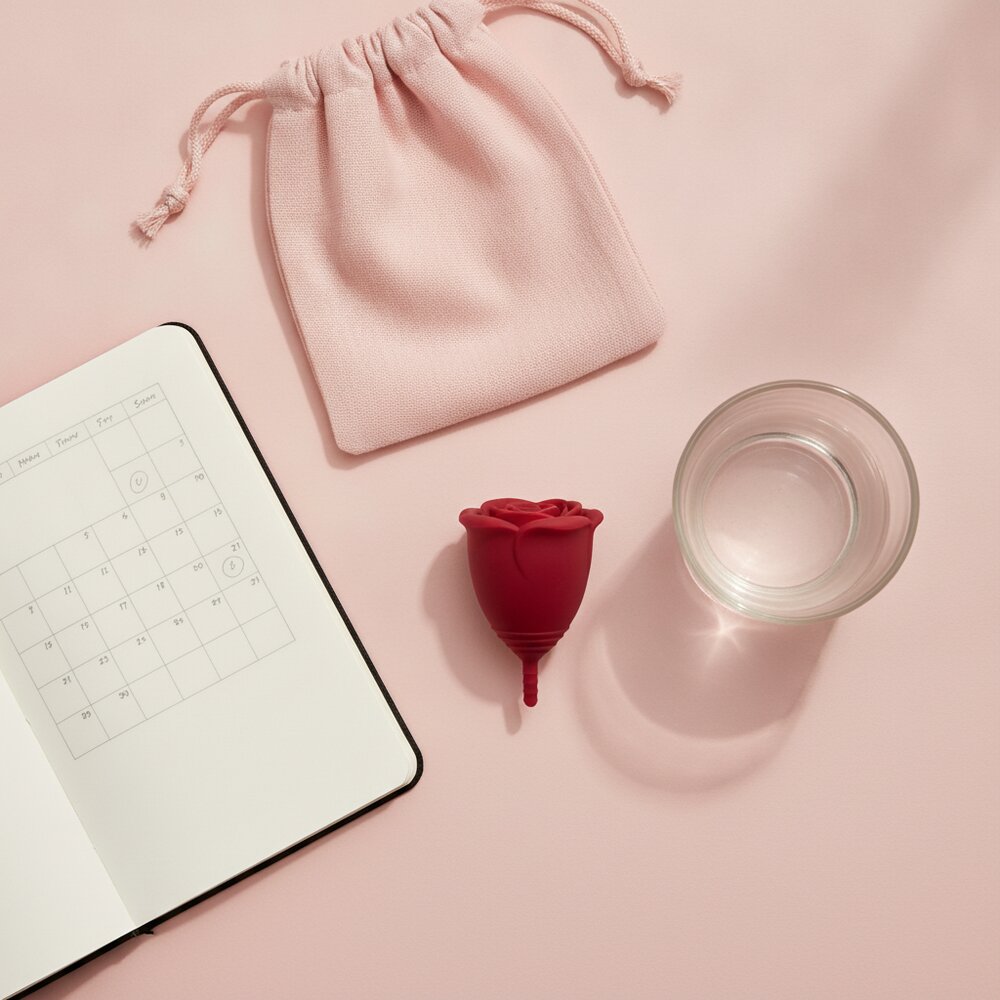
If the event doesn’t leave time to plan contraception in advance and doesn’t justify a prescription for tranexamic acid, the most realistic strategy is to reduce the impact of bleeding on your day: ibuprofen if your doctor recommends it, local heat for pain, and protection that gives you a real margin of hours without surprises. Many women who switch to a menstrual cup say the same thing: they wonder why they didn’t try it sooner, because on heavy days a pad or tampon needs changing every 3-4 hours, while a well-chosen cup lasts two or three times as long. It’s also one of the reasons the disposables industry —which lives on monthly repurchases— has never been very keen to recommend a €15-20 cup that lasts for years.
If the event you’re worried about involves traveling (a wedding out of town, a weekend with friends), taking a Travel Pack (€29.99, with a cup, foldable sterilizer and case) saves you depending on finding an open pharmacy or pads somewhere unfamiliar. And to keep a spare cup discreetly in your bag, the SileuCase (€3.99) does a better job than a plastic bag.
Get to know the whole cycle with our guide to the key to the menstrual cycle and how to calculate yours, useful for anticipating when your period will come and deciding in good time which medical option suits you if you need to plan around an event.
If your period is heavy or irregular and you want longer-lasting protection while you decide with your gynecologist which medical option suits you, the Sileu Starter (size S+L, €21.99) lets you try both sizes and keep the one that best fits your body. Shipped from Spain in 24-72h, with no monthly repurchase.
There’s no safe way to stop it overnight. You can reduce the volume with ibuprofen or, with a prescription, tranexamic acid, but the bleeding runs its natural course. The only way to avoid your period on a specific date is to plan continuous hormonal contraception in advance, before the cycle starts.
No. Tranexamic acid reduces heavy bleeding while you take it, but it doesn’t stop your period abruptly or eliminate it. It’s a prescription medicine and must be prescribed by a professional, taking into account any history of thrombosis or other hormonal treatments.
There’s no scientific evidence that cold water, vinegar, lemon or herbal teas stop or reduce your period. They’re myths with no medical backing, and some remedies such as vaginal douching can increase the risk of intimate infection.
Yes, many combined pills can be taken continuously to delay or suppress bleeding in a particular cycle, but it has to be planned with your gynecologist before your period starts; once it has started, it won’t work for that cycle.
If you need to change your protection every hour, your period lasts more than 7 days or large clots appear repeatedly, a gynecological check-up is advisable to rule out fibroids, polyps or other causes that need specific treatment.
Keep reading:
“I washed them like any other underwear and within a few months they didn’t absorb the same”: it’s the number-one reason people are disappointed with
“I’ve had the same cup for three years, should I replace it now?” It’s a question we get often, and the honest answer is: it
We sell menstrual cups, so you’d expect this article to tell you the cup is perfect for everyone. It isn’t, and we’d rather tell you

