Guides for Use & Maintenance
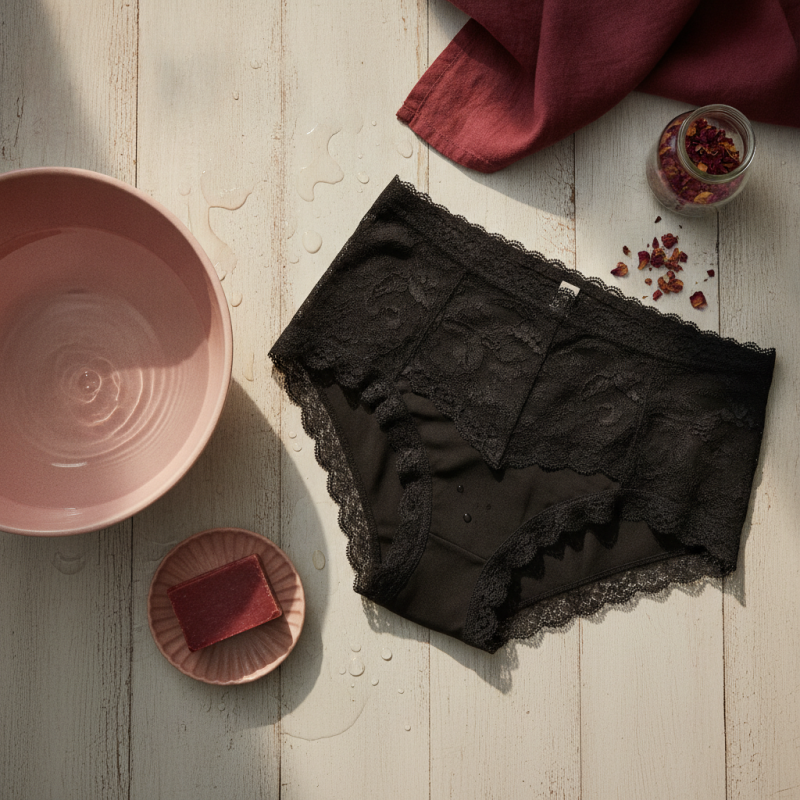
How to Wash Period Panties So They Last for Years
“I washed them like any other underwear and within a few months they didn’t absorb the same”: it’s the number-one reason people are disappointed with

Does your cup fill up before 12 hours and you don’t know whether that’s normal or you need a different model? You’re not alone: it’s the number-one question for anyone looking at a menstrual cup for heavy flow. The good news is that capacity isn’t a marketing mystery — it’s measured in milliliters, just like a glass, and here are the real figures so you can choose based on data rather than guesswork.
Before comparing cups, you need to know what amounts we’re dealing with. In a normal cycle, a woman loses on average 30 to 40 ml of blood in total over 4-5 days, although the range considered physiological goes up to about 80 ml. Menorrhagia, or heavy bleeding, is when you lose more than 80 ml per cycle or when large, persistent clots appear: if that’s your case, talk to your gynecologist, because it can have treatable causes (fibroids, hormonal imbalances) and a cup alone doesn’t replace that diagnosis.
That said, most people searching for a “menstrual cup for heavy flow” don’t have menorrhagia: they simply have an intense day 2-3 in their cycle when the cup fills up sooner than they’d like, and they want one that lasts longer without emergency emptying in a public restroom.
For heavy days: Sileu Sport L — €14.99
Our firmest cup, 30 ml up to the air holes and 34 ml to the rim, designed for intense physical activity and very heavy flow. Medical-grade silicone certified to ISO 10993. Shipped from Spain in 24-72h.
These are the real capacities of the models in the Sileu cup range most often considered for heavy flow. The useful figure is the capacity up to the air holes: the capacity to the rim is the theoretical maximum, and in normal use it’s best to empty the cup before reaching it.
| Model and size | Up to the air holes | To the rim | Recommended for |
|---|---|---|---|
| Sileu Bell L | 20 ml | 25 ml | Light-moderate flow, low cervix |
| Sileu Classic S | 25 ml | 29 ml | Moderate flow |
| Sileu Classic L | 30 ml | 34 ml | Heavy flow |
| Sileu Sport S | 28 ml | 32 ml | Heavy flow without a vaginal birth, sport |
| Sileu Sport L | 30 ml | 34 ml | Very heavy flow or intense sport |
For context: if your heaviest day is around 15-20 ml in 12 hours (typical even with heavy periods), a Sileu Classic L, with 30 ml up to the air holes, gives you plenty of margin. If you also play sports or your cycle is especially intense, the Sileu Sport L offers the same capacity with a firmer silicone that holds its seal under effort. And if you haven’t had a vaginal birth, the Sport S is worth a look: with 28 ml, it’s the size S with the most capacity in the range.
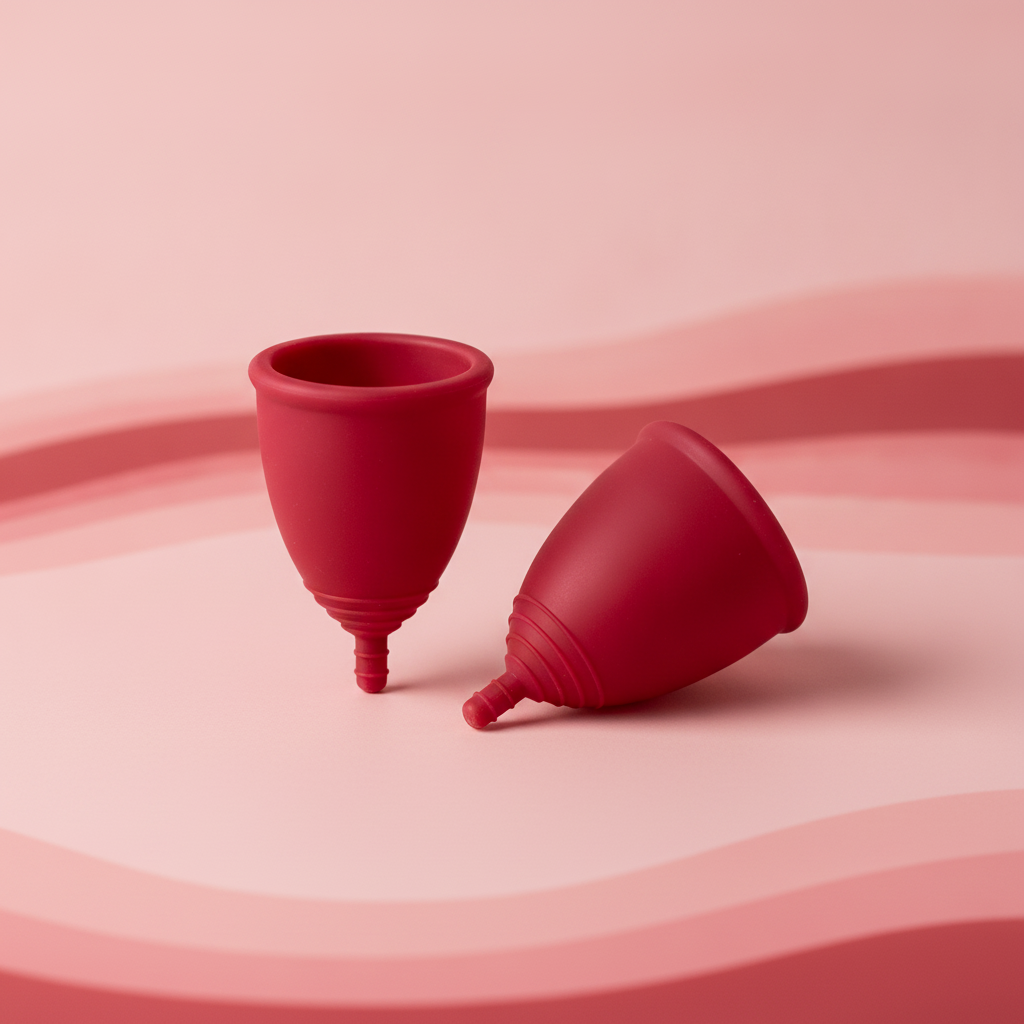
It’s not just about ml: firmness matters too. The Sileu Classic has medium flexibility that suits most bodies and is the default choice if you have no particular reason to choose something else. The Sileu Sport is the firmest in the range: being less flexible, it opens with more force inside the vagina and seals better during intense movement, which reduces the risk of leaks when you run, swim or train on your heaviest days.
If you have a trained pelvic floor or haven’t had a vaginal birth, size S may be enough even with heavy flow; if you’ve had a vaginal birth or notice the cup moving, size L usually fits better. Our guide to menstrual cup sizes explains it in more detail if you’re still torn between S and L.
Scientific evidence shows that the menstrual cup, used correctly, is a safe option with leakage equal to or lower than tampons and pads: this is confirmed by the systematic review in The Lancet Public Health (2019), which analyzed 43 studies and more than 3,300 participants. The key to making that true in your case is choosing the capacity and firmness that suit your flow, not settling for the first cup you find.
Torn between size S and L? Sileu Starter Pack — €21.99
Includes a size S and a size L cup (model and color of your choice) so you can see for yourself which one handles your heavy days best, without buying twice.
Two cups with the same nominal capacity in ml don’t always perform the same in practice. The shape of the body affects how that volume is distributed and how easily the cup opens fully after insertion. The Sileu Classic has a classic bell-shaped body, stable, that makes good use of its whole volume. The Sileu Sport is the longest in the range (80 mm in both sizes), which makes it easy to reach if your cervix sits high.
If your cervix is low and your flow is heavy, the answer isn’t always “the biggest cup”: a long cup like the Sport may press against the cervix. In that case a shorter model such as the Sileu Bell is usually more comfortable, emptying it more often on your heaviest days. Our article on the differences between Sileu cup models compares the shape, firmness and sizing of all seven models in the range so you don’t have to guess which one fits you.
With heavy flow, the cup spends more time close to its maximum capacity, and that’s where material quality shows: low-quality silicone can deform slightly or lose its airtight seal when very full, encouraging leaks at the sides. All Sileu cups are made of medical-grade silicone certified to ISO 10993, which keeps its shape and elasticity even at full capacity. You can read in detail what this certification guarantees in our article on ISO 10993, USP and FDA biocompatibility.
This also answers a common question: many people associate “more capacity” with “more discomfort”, but it doesn’t have to be that way. Quality silicone with the right firmness for your body lets you wear a 30 ml cup as comfortably as a poorly fitted 20 ml one. Capacity in ml is only one part of the equation; the other is the right size and flexibility for your anatomy.
If you find that even the Sport L repeatedly fills up in less than 4-5 hours, or your bleeding includes clots larger than 2-3 cm, it’s time to talk to your gynecologist: there may be a medical cause (fibroids, polyps, clotting disorders) worth ruling out. The menstrual cup is an excellent tool for managing flow, but it doesn’t diagnose or treat menorrhagia. You can read more in our article on heavy menstrual flow with clots or check reliable general information on MedlinePlus on menstruation.
For most “normal” heavy periods, however, the fix is much simpler than it seems: the right capacity + the right firmness + slightly more frequent emptying on those 2-3 heavy days. And once you find your combination, the difference compared with changing a tampon every 2 hours is huge.
In the Sileu range, the Classic L and the Sport L hold 30 ml up to the air holes and 34 ml to the rim, the highest capacities we make. Both are recommended for heavy or very heavy flow; the Sport, being firmer, also holds its seal better during intense exercise.
Menorrhagia (heavy bleeding) is defined as losing more than 80 ml over a full cycle, compared with 30-40 ml in an average period. If you suspect your bleeding exceeds that threshold or you regularly see large clots, see your gynecologist.
The Classic (medium flexibility) suits most bodies; the Sport (the firmest) seals better during intense physical activity. For very heavy flow without intense exercise, the Classic L is usually enough; if you also train hard, the Sport L adds extra security.
Although the cup can be worn for up to 12 hours with light flow, on heavy-flow days it’s recommended to empty it every 6-8 hours so it doesn’t fill up completely too soon.
The complete combination: Sileu Travel Pack — €29.99
Rose cup + foldable sterilizer + case, ideal if you want to start with everything you need to manage any flow, at home or away. The best-selling pack in our store. Shipped from Spain in 24-72h.
Keep reading:
“I washed them like any other underwear and within a few months they didn’t absorb the same”: it’s the number-one reason people are disappointed with
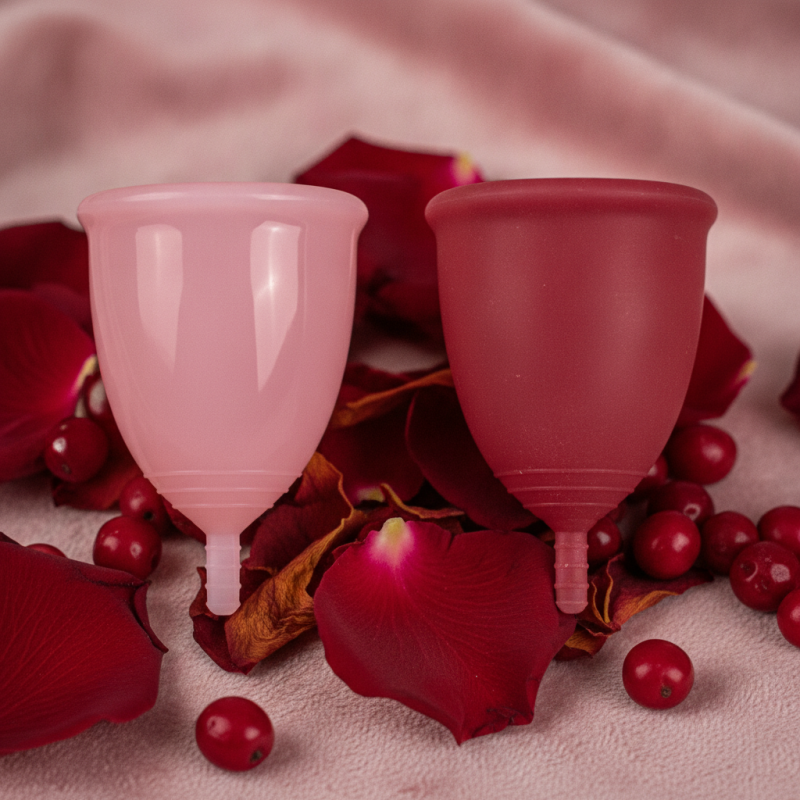
“I’ve had the same cup for three years, should I replace it now?” It’s a question we get often, and the honest answer is: it
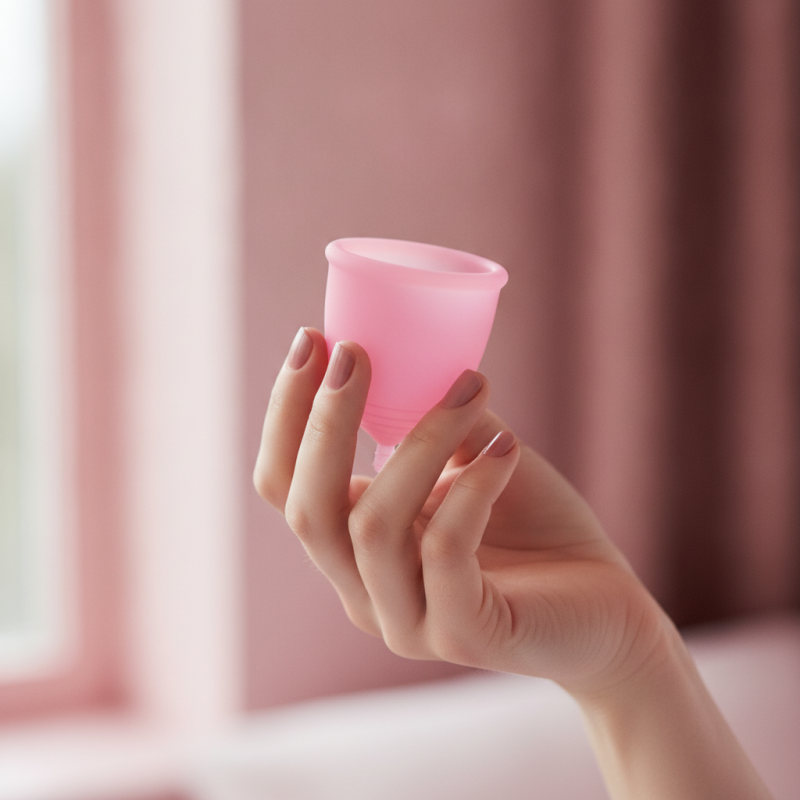
We sell menstrual cups, so you’d expect this article to tell you the cup is perfect for everyone. It isn’t, and we’d rather tell you

