Guides for Use & Maintenance
How to Wash Period Panties So They Last for Years
“I washed them like any other underwear and within a few months they didn’t absorb the same”: it’s the number-one reason people are disappointed with


“Can you have sex on your period without it being chaos with stained sheets?” It’s a question many couples ask and one that’s rarely answered with clear information. The menstrual sponge is one of the options that allow penetrative sex during your period with less mess, because unlike a cup, it sits right in front of the cervix, leaving the vaginal canal free. We’ll explain how to use it safely and, above all, what its real limits are, without exaggerating its advantages or setting aside the caution any intimate product deserves.
The menstrual sponge is a soft, porous natural sponge that you moisten with water before inserting it into the vagina, where it absorbs menstrual flow. Unlike the menstrual cup, which creates a suction seal, the sponge simply absorbs, which makes it compatible with penetration: being soft and porous, it isn’t a rigid barrier. That’s the main reason many couples choose it for sex with less mess during their period, rather than as everyday menstrual protection.
It isn’t the only option for this: the menstrual disc, which also sits near the cervix, serves a similar purpose, and some women find it easier to insert and remove because of its shape. The sponge, on the other hand, has the advantage of being softer to the touch and cheaper. If you’re torn between the two, we compare both in depth in our guide to sex on your period: mess-free options, where we cover not just the sponge but all the available alternatives with their real pros and cons.
An important point: the sponge isn’t a contraceptive or a barrier against sexually transmitted infections. If you don’t use a condom, you’re exposed to the same risk of pregnancy and STIs as without the sponge. If that concerns you, the general sexual health recommendation, according to MedlinePlus, is that condoms (male or female) are still necessary to reduce the risk of sexually transmitted infections in any kind of sex, whether or not you’re on your period (source: MedlinePlus).
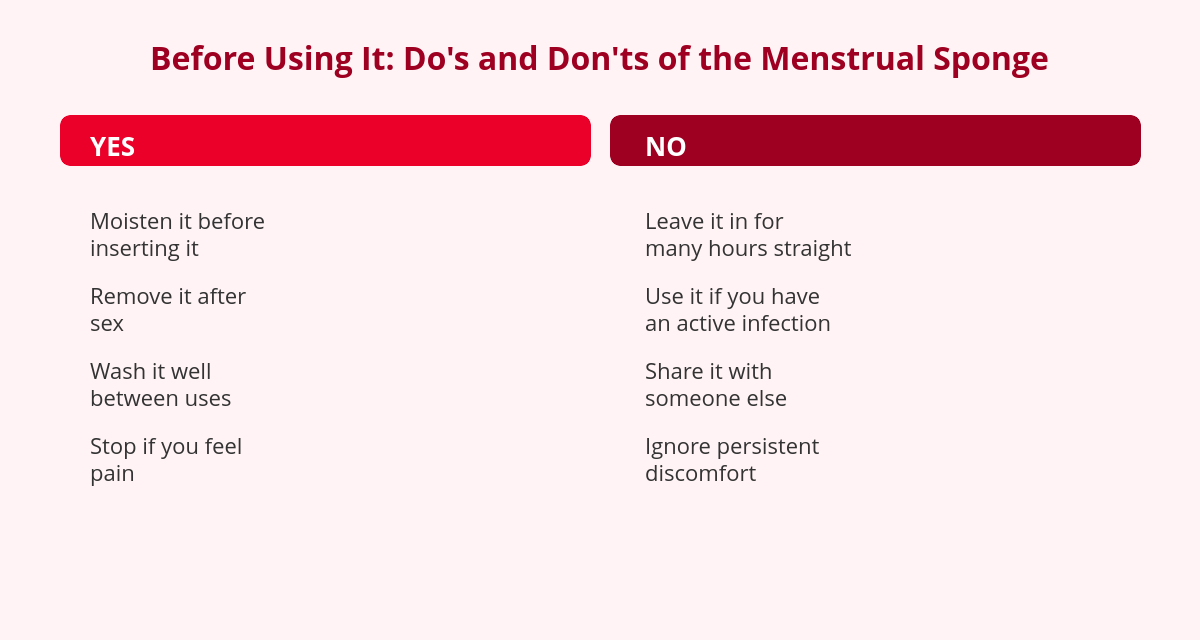
With caution, there are situations where it’s best to avoid the menstrual sponge:
As with any internal intimate hygiene product, there isn’t enough evidence to make categorical claims about long-term risks of the material itself; what is clear is that hygiene between uses and respecting the maximum wear time are the factors that depend most on you and do the most to reduce any avoidable risk.
An additional word of caution: if it’s your first time using a menstrual sponge (for sex or for everyday use), try it first at a calm moment, with no rush, to get familiar with inserting and removing it before bringing it into an intimate moment. As with the menstrual cup, there’s a small learning curve that’s best dealt with beforehand, not in the moment.
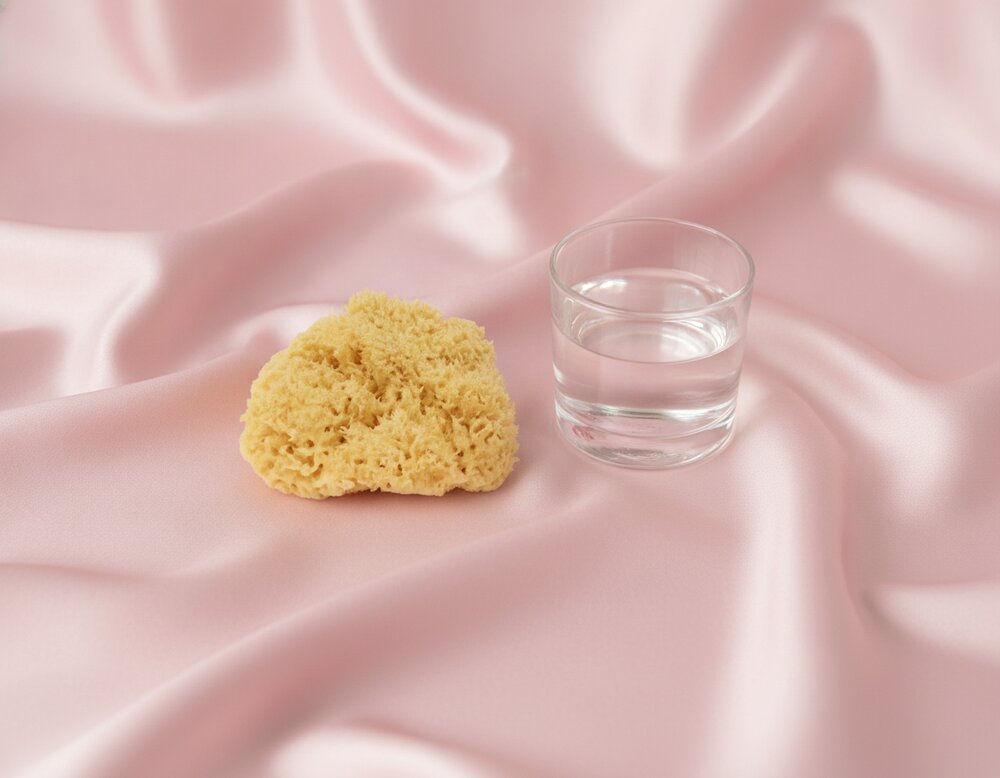
The Sileu Sea menstrual sea sponge (€9.99) is reusable and a gentle alternative for anyone who wants to have sex on their period without giving up comfort. As with any reusable product, hygiene is key: wash it well with water after each use and let it dry completely between cycles. Shipped from Spain in 24-72h.
After each use, rinse the sponge with lukewarm water until the water runs clear; you can occasionally use a mild, unscented soap, rinsing well afterwards. Let it air-dry in a ventilated place before storing it. At the end of the cycle, many women give it a more thorough clean before putting it away until the following month, making sure it’s completely dry before placing it in its pouch or storage case, to avoid residual moisture while it’s not in use. As with any reusable intimate hygiene product, replace it when you notice it losing elasticity, fraying or developing a persistent odor that doesn’t go away with washing.
If you’re also interested in it as everyday menstrual protection, our complete guide to the natural menstrual sea sponge: origin, hygiene and care has more detail on routine maintenance, and if you’d rather buy it in a physical shop, in where to buy a menstrual sponge we compare the available options.
If you’re looking for other ways to have mess-free sex during your period —the menstrual disc, planning around the phases of your cycle— we compare them all in our guide to sex on your period: mess-free options. Shipped from Spain in 24-72h on any order.
Although menstrual blood acts as a natural lubricant in itself, some women notice more dryness at certain times of the cycle or simply prefer extra comfort. If that’s you, always choose a water-based lubricant: it’s compatible with latex condoms and with porous materials like the sponge itself, unlike silicone-based lubricants, which can degrade certain materials over time. Sileu Lub (€4.99) is hypoallergenic and medical grade, designed for sensitive skin. We explain why in water-based lubricant: why it’s the standard.
After sex, simple hygiene with water or an acidic-pH gel is enough; avoid regular soap, which can irritate an area that’s already more sensitive during your period. Chilly intimate gel with pH 3.5 (€3.99) respects that balance better than a conventional shower gel.
Beyond the logistics, sex during your period —with or without a sponge— works best when there’s open communication with your partner about what you both feel like doing and what you don’t. There’s no obligation to do it if you don’t want to, and nothing “weird” about wanting to: it’s a personal preference, not a test of anything. If it’s your first time trying it, a dark towel on the bed and talking about it beforehand usually takes most of the tension out of the moment.
It’s also common for the same person to have different days: at some points in the cycle sexual desire may be higher (often around ovulation) and at others, especially the first days of your period with more discomfort, what you want is simply to rest. Neither is a fixed “normal”: what’s normal is that it varies, and paying attention to what your body is asking for at each moment —without forcing anything to please the other person— is part of a healthy sex life throughout the cycle, not just during your period.
If, besides the sponge, you try other forms of protection during period sex, remember that none of them replaces a condom if what you want is to prevent pregnancy or STIs: they’re different goals (avoiding mess versus real protection) and it’s best not to confuse them, for caution’s sake and for your sexual health.
Moisten it with water, insert it near the cervix leaving the vaginal canal free for penetration, and remove it afterwards to rinse it. It shouldn’t be left in longer than the manufacturer’s recommended hours.
No. The menstrual sponge is neither a barrier method nor a contraceptive. If you don’t use a condom, the risk of STIs and pregnancy is the same as with any unprotected sex.
It shouldn’t be used if you have an active vaginal infection, sores or sensitivity in the area, if you feel pain while using it, or if you’ve just given birth and haven’t had your postpartum check-up yet.
Rinse it with lukewarm water until it runs clear, occasionally use a mild, unscented soap and rinse well afterwards, and let it air-dry in a ventilated place before storing it.
Yes, with good hygiene it can be reused for several cycles. It should be replaced when it loses elasticity, frays or develops a persistent odor that doesn’t go away with washing.
Keep reading:
“I washed them like any other underwear and within a few months they didn’t absorb the same”: it’s the number-one reason people are disappointed with
“I’ve had the same cup for three years, should I replace it now?” It’s a question we get often, and the honest answer is: it
We sell menstrual cups, so you’d expect this article to tell you the cup is perfect for everyone. It isn’t, and we’d rather tell you

