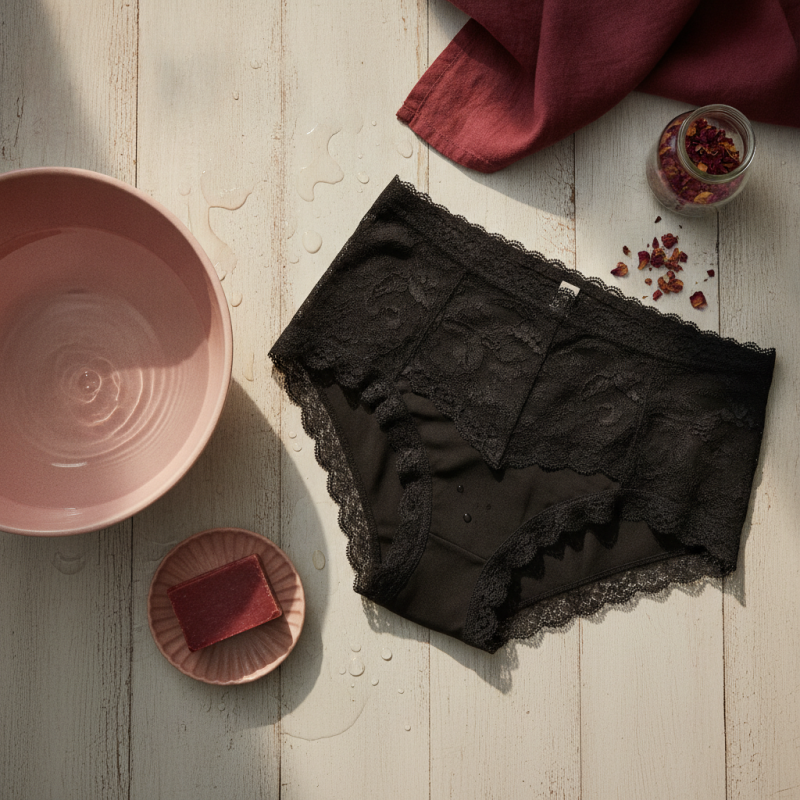
Guides for Use & Maintenance
How to Wash Period Panties So They Last for Years
“Las lavé como cualquier ropa interior y a los pocos meses ya no absorbían igual”: es el motivo número uno por el que alguien se


“I’m 5’1″, will size L be too big for me?” This real question from a user on our forum sums up the #1 mistake when searching “menstrual cup sizes”: believing that size follows your outward body shape. It doesn’t: height and weight have nothing to do with it, and the four factors that actually decide your size might not be what you’d imagine. In this guide we give you the real reference measurements for Sileu cups, the four criteria that genuinely decide your size, and a backup plan if you’re still unsure.
Almost every brand uses two basic sizes. For our seven Sileu menstrual cup models (Classic, Soft, Sport, Rose, Tulip, Bell, and Divine), the logic is the same across all of them: size changes the dimensions, and the model changes the shape and firmness.
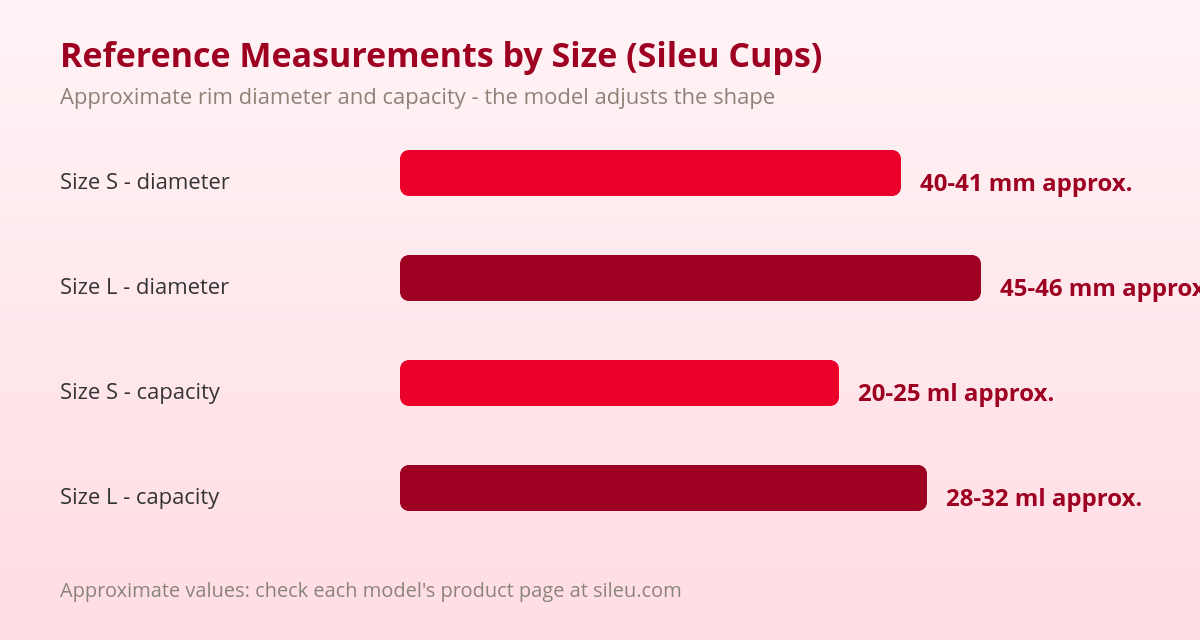
| Size | Rim diameter | Capacity | Designed for |
|---|---|---|---|
| S | ~40-41 mm | ~20-25 ml | No vaginal births, light to medium flow, toned pelvic floor |
| L | ~45-46 mm | ~28-32 ml | Previous vaginal birth, heavy flow, less toned pelvic floor |
| XS (Sileu Rose only) | slightly smaller than S | under ~20 ml | Teens, very low cervix, or very light flow |
The figures are approximate and common to all seven models: what varies from one model to another is body length, rim shape, and silicone flexibility (always German Wacker silicone, ISO 10993 certified, surgical-medical grade; you can read more about biocompatibility certifications). Check each model’s product page if you need the exact figure before buying.
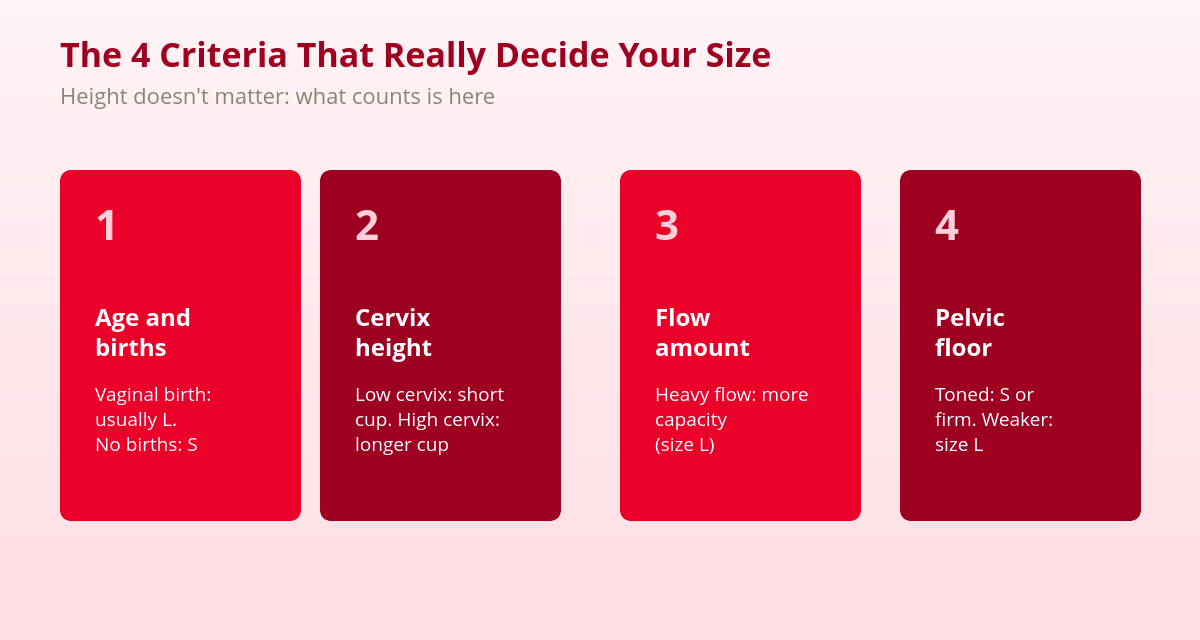
1. Age and births. This is the classic criterion: if you’ve had a vaginal birth, the muscles and tissues have loosened and size L tends to seal better. If you haven’t had a vaginal birth (or had a C-section), S is usually your size. More detail in our guide to the menstrual cup after childbirth.
2. Your cervix height. The cervix is the neck of the uterus, and its height determines how much room there is for the cup. Finding it is easy, and we walk you through it step by step in our guide to finding your cervix and choosing a size. With a low cervix, you’ll want a short cup (and maybe the Rose’s XS size); with a high cervix, an elongated model like the Divine or Sport. Vaginal length also affects which model will feel most comfortable.
3. Flow amount. If your period is heavy, the extra capacity of size L (about 28-32 ml) will give you more hours of peace of mind. With light or medium flow, S is enough: remember the cup can be worn for up to 12 hours and that average blood loss over a full cycle is around 30-40 ml, as we explain in how much blood you actually lose during your period.
4. Pelvic floor tone. A very toned pelvic floor (athletes, for example) holds an S size or a firm model like the Sport well; a weaker one benefits from size L, which rests better against the vaginal walls. If you’re not sure about yours, here’s how to know if your pelvic floor is weak and exercises to strengthen it.
Torn between S and L? Sileu Starter Pack — €21.99
Both sizes of the model and color you choose, so you can try them calmly and keep whichever seals best. Cheaper than getting it wrong on the second try. Shipped from Spain in 24-72h.
It’s one of the most repeated questions among our users: “I’m 5’1″, will the L be too big for me?” The answer is no: height doesn’t matter. The vagina isn’t proportional to body height; a tall woman can have a low cervix, and a short woman a high one. The same goes for weight or build: neither helps you choose a size. Trust only the four criteria above.
Age alone doesn’t decide it either. A teenager usually starts with the S (or the Rose’s XS) not because of her age, but because she hasn’t given birth and her flow tends to be moderate. If you’re very young or have questions about the hymen, our article on the menstrual cup for virgins should put your mind at ease.
And an important health note: if you feel pain inserting any size, persistent discomfort, or pressure on your bladder, don’t normalize it. Try a softer model, review your cup folding technique, and if the pain continues, see your gynecologist. You can find more information on the cycle and menstruation at MedlinePlus, the medical encyclopedia from the U.S. National Library of Medicine.
Once your size is clear, the model comes down to shape and firmness. Quick summary: Rose (€19.99) for a gentle start, with its flower shape and an available XS size; Classic (€14.99), the all-rounder; Soft, for sensitive bladders; Sport, firm for athletes; Tulip, for a low cervix; Bell and Divine, for those who need longer or flared shapes. If it’s your first cup, our beginner’s guide walks you through it step by step.
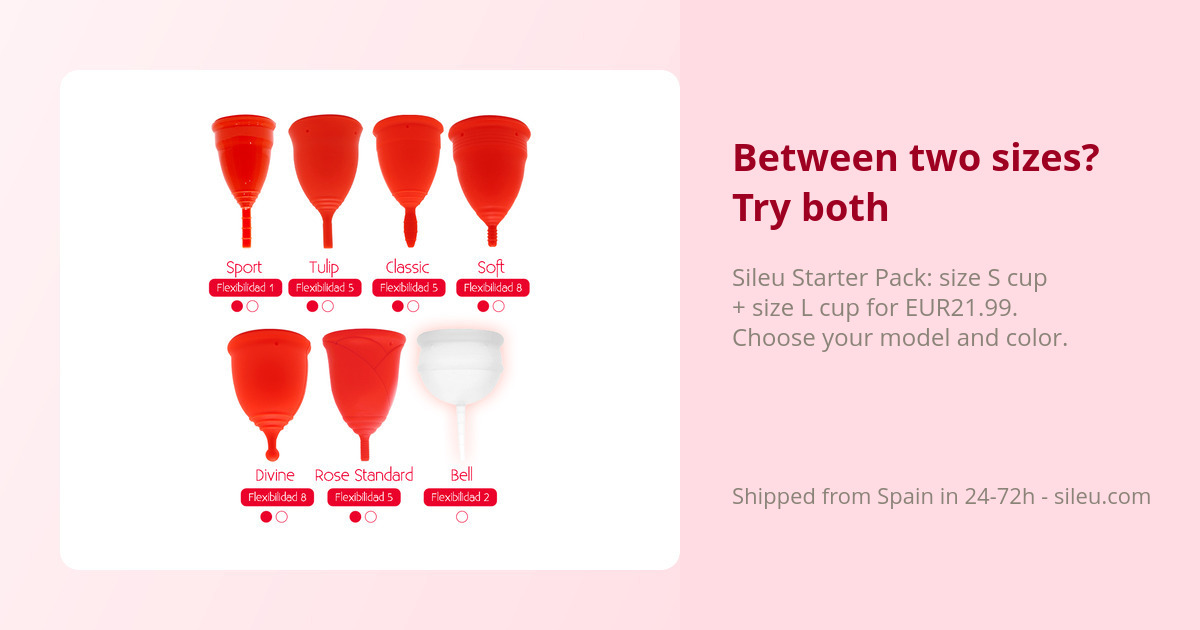
Why so much variety when other brands sell a single model? Because the four criteria above combine in very different ways: an athlete with no births and a high cervix needs a different cup than a recent mother with a low cervix, even though both use “an L.” Size solves the diameter; the model solves everything else. That’s why our advice — free, before you buy — always starts by asking about these criteria, not your age.
An honest tip we repeat often: your first period with the cup is a learning curve, whether you got the size right or not. Give it two or three cycles before judging, and lean on period underwear the first few days so you can try it without fear of staining.
Recent postpartum. After a vaginal birth, it’s best to wait for your midwife or gynecologist to give the go-ahead to resume using the cup (as a general guideline, after your six-week checkup and once lochia has stopped). When you return to it, you’ll typically need size L even if you used S before — and if you notice that neither seals well, work on your pelvic floor for a few weeks before deciding: Kegel exercises, with or without the help of the Sileu Kegel trainer, make a real difference within a few weeks.
Teens and first periods. The Rose’s XS size or an S from a soft model (Soft or Rose) are the natural starting point. More important than size is staying calm: the first few insertions take time, privacy, and, if needed, a bit of water-based lubricant.
Athletes. A very trained pelvic floor compresses the cup more; the ideal cup for athletes tends to be a firm S (Sport) even with medium flow, because the firmness keeps muscular pressure from deforming it and causing leaks.
With an IUD or after pelvic surgery. The cup is compatible with an IUD if you take precautions (fully breaking the seal before removal, threads not too long); discuss it with your gynecologist at your checkup. After surgery or with a diagnosed prolapse, always consult before using a cup, regardless of size.
It can happen. A vaginal birth, pelvic floor changes over the years, or big shifts in flow can call for a change in size or model. If your usual cup starts slipping or falling out, or you notice leaks you didn’t have before, it doesn’t mean “the cup stopped working”: it means your body has changed, and adjusting size or firmness fixes it. If you have any specific question, write to us or check our menstrual cup FAQ.
Usually size S (40-41 mm diameter and about 20-25 ml in Sileu cups). You’d only move to L if you have very heavy flow or a weakened pelvic floor. If unsure, the Starter Pack includes both sizes for €21.99.
No. Height and weight have no relationship to vaginal size or cervix height. The four criteria that do matter are: previous vaginal births, cervix height, flow amount, and pelvic floor tone.
As a reference, size S measures about 40-41 mm in diameter with 20-25 ml capacity, and size L about 45-46 mm with 28-32 ml. The Rose model also offers an XS size for teens or a very low cervix. Check each model’s product page for the exact figure.
Nothing irreversible: if the cup leaks, shifts, or slips down, changing size or firmness is usually enough to fix it. Remember there’s a 2-3 cycle learning curve. That’s why we recommend the pack with both sizes if you’re unsure: try both at home and keep the one that’s yours.
Not exactly: each brand defines its own measurements, though almost all fall within similar ranges (S around 40-41 mm and L around 45-46 mm). Always compare diameter and capacity in mm and ml, not just the size letter.
Start with no fear of staining: underwear + Rose cup pack — €26.99
The Sileu Rose cup with a cotton pouch and certified OEKO-TEX Standard 100 organic cotton period underwear (free of harmful substances) as backup for your first few cycles. Shipped from Spain in 24-72h.
Keep reading:
“Las lavé como cualquier ropa interior y a los pocos meses ya no absorbían igual”: es el motivo número uno por el que alguien se
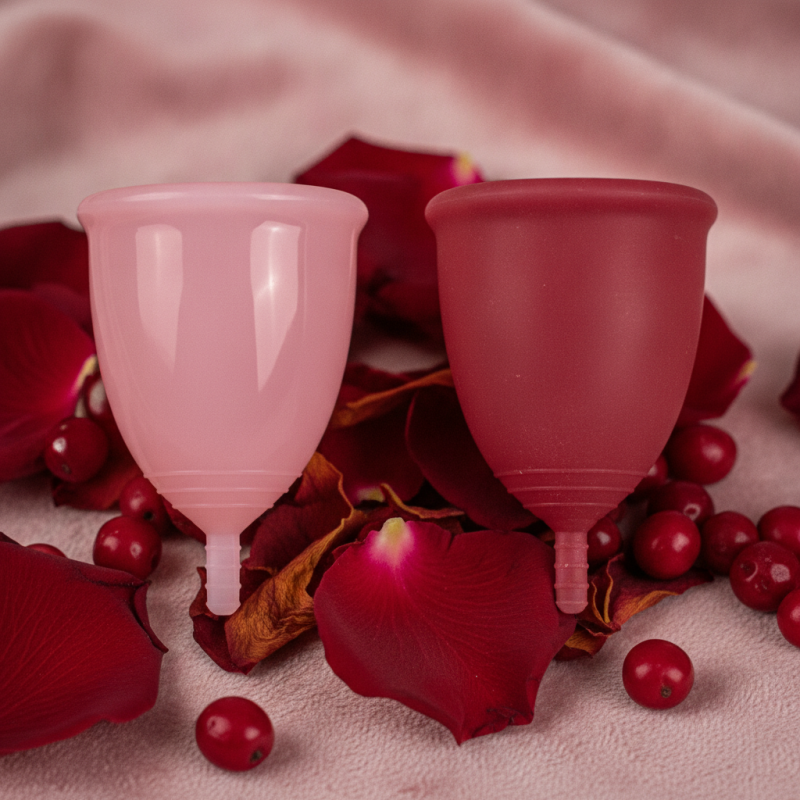
“I’ve had the same cup for three years, should I replace it now?” It’s a question we get often, and the honest answer is: it
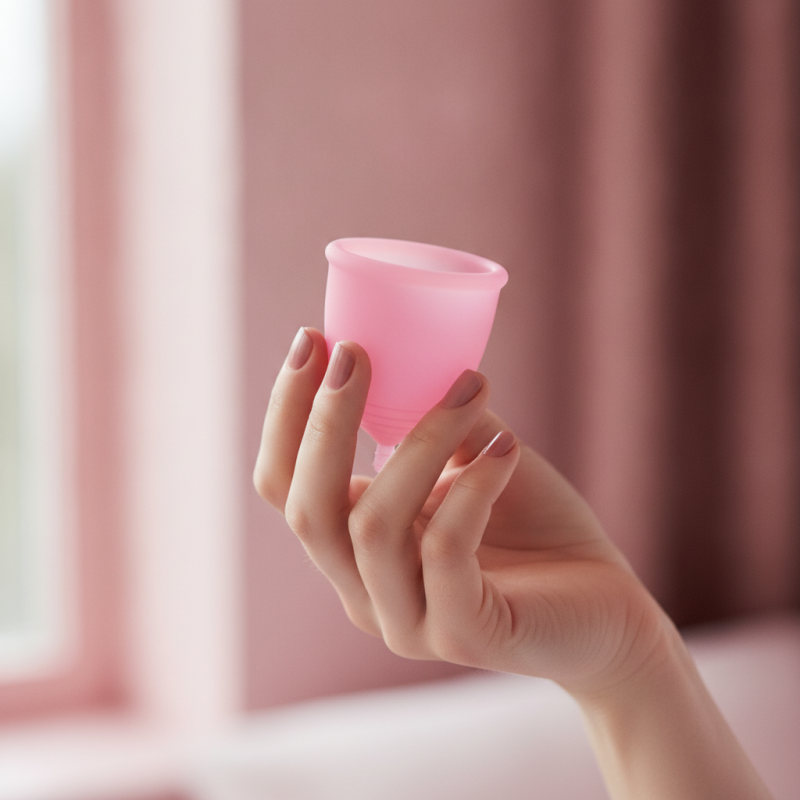
Vendemos copas menstruales, así que lo lógico sería que este artículo te dijera que la copa es perfecta para todo el mundo. No lo es,

