Guides for Use & Maintenance
How to Wash Period Panties So They Last for Years
“I washed them like any other underwear and within a few months they didn’t absorb the same”: it’s the number-one reason people are disappointed with

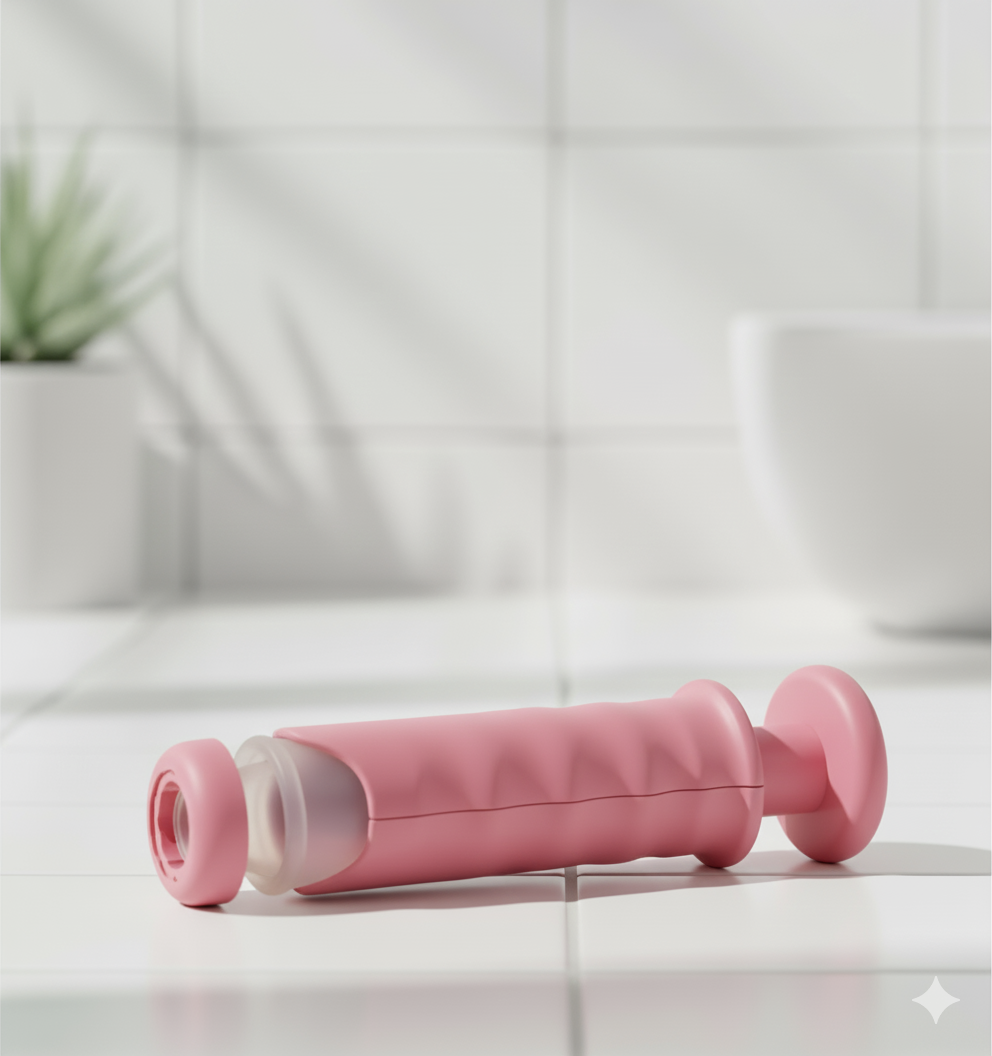
Some brands have tried to innovate by adding an applicator for the menstrual cup, aiming to shorten the learning curve and make getting used to the cup faster and easier, mimicking what applicator tampons do.
The idea sounds logical: if more people are willing to try the cup thanks to an accessory, maybe it eases the transition. However, real-world practice and countless user experiences point to a different conclusion: the applicator isn’t practical and, in some cases, actually makes things more complicated.
What’s most telling isn’t marketing brochures, but the opinions of people who’ve actually tried these products.
“Among the downsides, I think it’s worth mentioning that the applicator turned out to be useless for me — also, some people fall between two sizes, which can be confusing.”
lachicadelaslistas.wordpress.com
“Taking it out. Yes, sometimes things get complicated and it gets ‘stuck’… A real vacuum forms. And you have to ‘fight a little’, move it side to side or slip a finger in to break the seal…”
What this makes clear is that your fingers are always necessary, applicator or not.
esturirafi.com
“At first, and practically until a few months ago, I couldn’t get it positioned right, so I had leaks… by the third time, everything clicked and it stopped being any trouble to take out.”
Hands-on practice was the key, not an applicator.
copamenstrualmeluna.com
“Day one was a whole ordeal to put it in… I think the cup might just be too big for me, but I won’t give up, I’ll buy a smaller one…”
This shows that size and practice matter far more than using an applicator.
intimina.com
“Folding the cup inside the applicator and pushing it in correctly was a lot harder than expected. On several attempts, the cup got stuck.”
periodnirvana.com
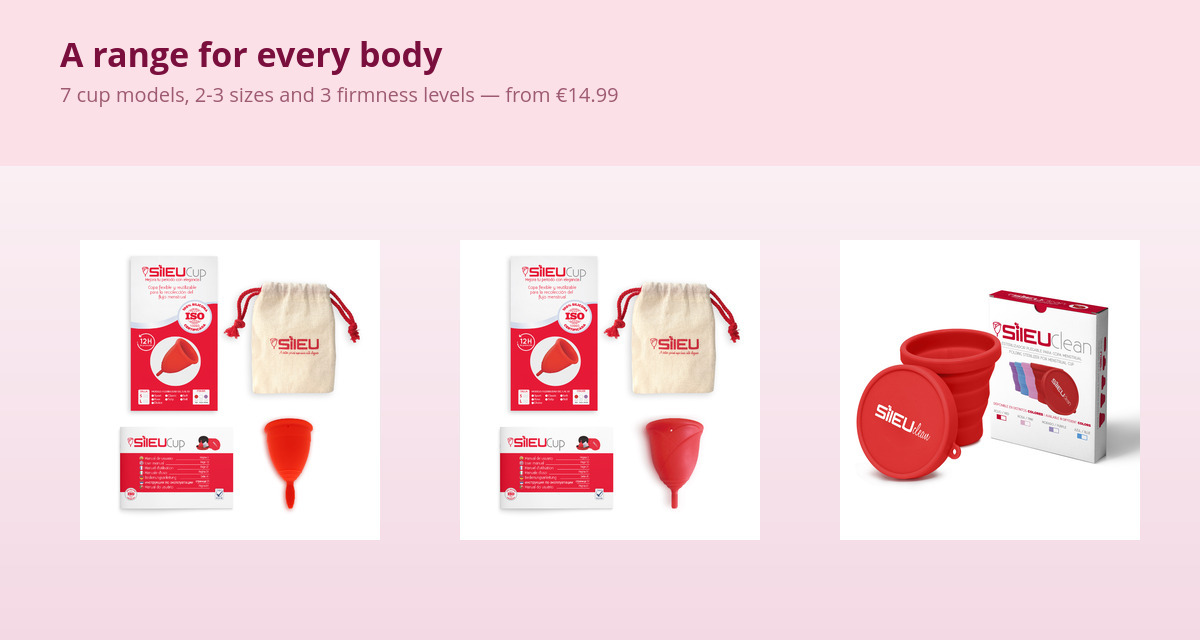
🌹 Just starting out with a cup? Sileu Rose — €19.99
The rose-shaped beginner model: three firmness options, XS/S/L sizes, and a cotton pouch included. The practical alternative to an applicator is simply a cup designed with beginners in mind.
To give you a clear picture, here’s a summary based on reviews and expert opinions:
Overall, the benefits of menstrual cups themselves (affordable, eco-friendly, safe, and higher capacity than tampons) hold regardless of the applicator — but the applicator itself often comes across as a “gimmick” or optional add-on rather than something essential.
For most people, it’s more practical and empowering to learn to use the cup with your hands: it builds a better connection with your body and simplifies your routine. Instead of an applicator, investing in a specialized carrying case, like Sileu’s (compact, hygienic and designed to carry your cup discreetly), is a great idea. These accessories keep your cup clean and ready to use without adding complexity. If you have a specific issue (like pain on insertion or a medical condition), an applicator might be worth trying — but always under professional guidance to avoid risks.
The menstrual cup applicator started out as an interesting idea to speed up the learning curve and reassure people coming from applicator tampons. But testimonials and real-world experience show that:
👉 So rather than an applicator, what’s actually useful is a good cup case or pouch, like the ones Sileu designs — it protects, organizes and adds comfort to your everyday routine.
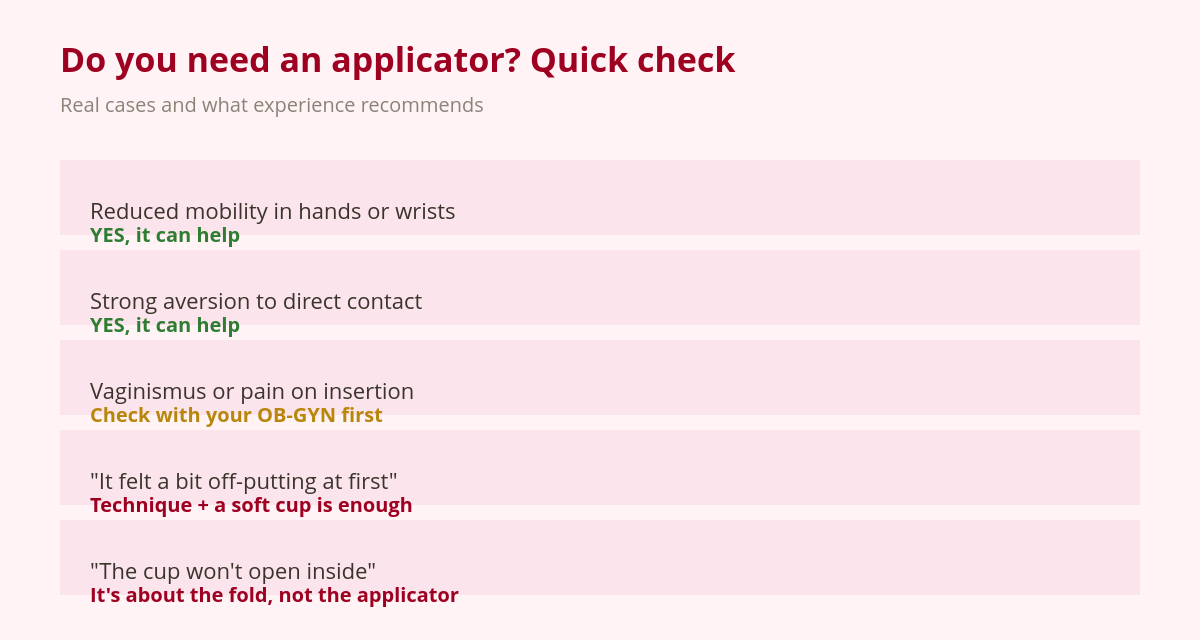
So you don’t walk away with an “it depends”: an applicator is a good tool if you have reduced mobility in your hands or wrists, or if direct contact triggers an aversion you’re not ready to work through right now — both completely valid reasons. If there’s real pain on insertion (not discomfort — pain), the right move isn’t an accessory but a visit to your gynecologist, since there could be vaginismus or another treatable cause behind it. And if your case is the most common one — initial hesitation, beginner clumsiness, a cup that “won’t open” — the solution is cheaper than any accessory: the right fold, a soft cup, and two cycles of practice.
Before investing in an accessory, try the shortcut: choose a small, soft cup (Sileu Rose in size S and Soft firmness is what we recommend most to beginners), use the punch-down fold to make the insertion tip as thin as possible, add a drop of water-based lubricant, and take your time — ideally in the shower the first few times. Our experience after thousands of cups sold is clear: the vast majority of people who thought they needed an applicator stop thinking about it by the second cycle. And if you still prefer mechanical help, that’s completely fine too — just make it an informed choice, not a €10 toll the brand presents as essential.
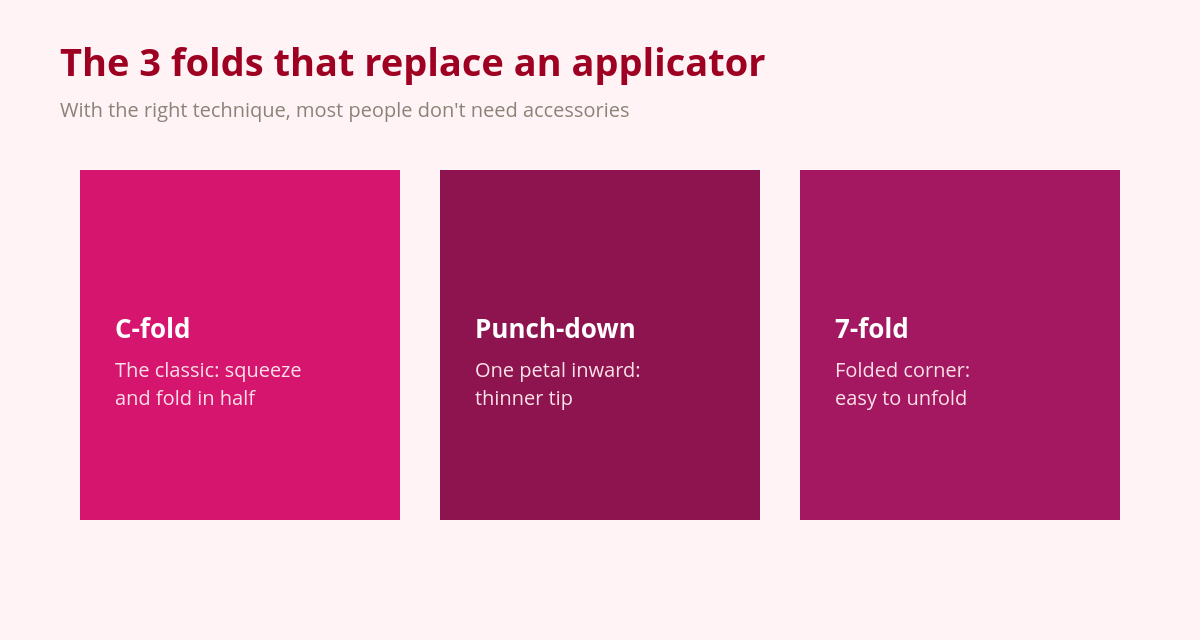
No. The vast majority of users insert the cup with their fingers using a fold (C-fold or punch-down) without any difficulty after 1-2 cycles of practice. An applicator can help in specific cases: reduced mobility, vaginismus, or a strong aversion to direct contact.
Choosing a soft, small beginner cup (like the Sileu Rose in Soft firmness), using a water-based lubricant, and practicing the folds outside the bathroom. The right technique almost always solves what the applicator promises to solve.
Yes, always water-based (like Sileu Lub): silicone or oil-based lubricants can degrade the cup’s silicone with repeated use.
Easier insertion, no applicator needed
Sileu Rose Soft (€19.99) + Sileu Lub water-based intimate lubricant (€4.99): the combination we recommend to anyone intimidated by insertion. And if you wear period underwear, the underwear + Rose pack is €26.99.
“I washed them like any other underwear and within a few months they didn’t absorb the same”: it’s the number-one reason people are disappointed with
“I’ve had the same cup for three years, should I replace it now?” It’s a question we get often, and the honest answer is: it
We sell menstrual cups, so you’d expect this article to tell you the cup is perfect for everyone. It isn’t, and we’d rather tell you

