Guides for Use & Maintenance
How to Wash Period Panties So They Last for Years
“I washed them like any other underwear and within a few months they didn’t absorb the same”: it’s the number-one reason people are disappointed with

Are you more worried about “how to remove the menstrual cup without staining anything” than about the removal itself? It’s a different question from the basic technique, and a very reasonable one: nobody wants to end up with stains on their hands, the sink, or their clothes. Here’s how to do it cleanly, with no tugging or surprises, and what to do if a drop ever does escape.
The good news is that, with the right technique, the real risk of staining is much lower than people who’ve never tried the cup imagine. Most of the “accidents” you hear about in forums and friend groups have the same origin: pulling the stem without first breaking the seal. Fix that one move and the problem almost completely disappears.
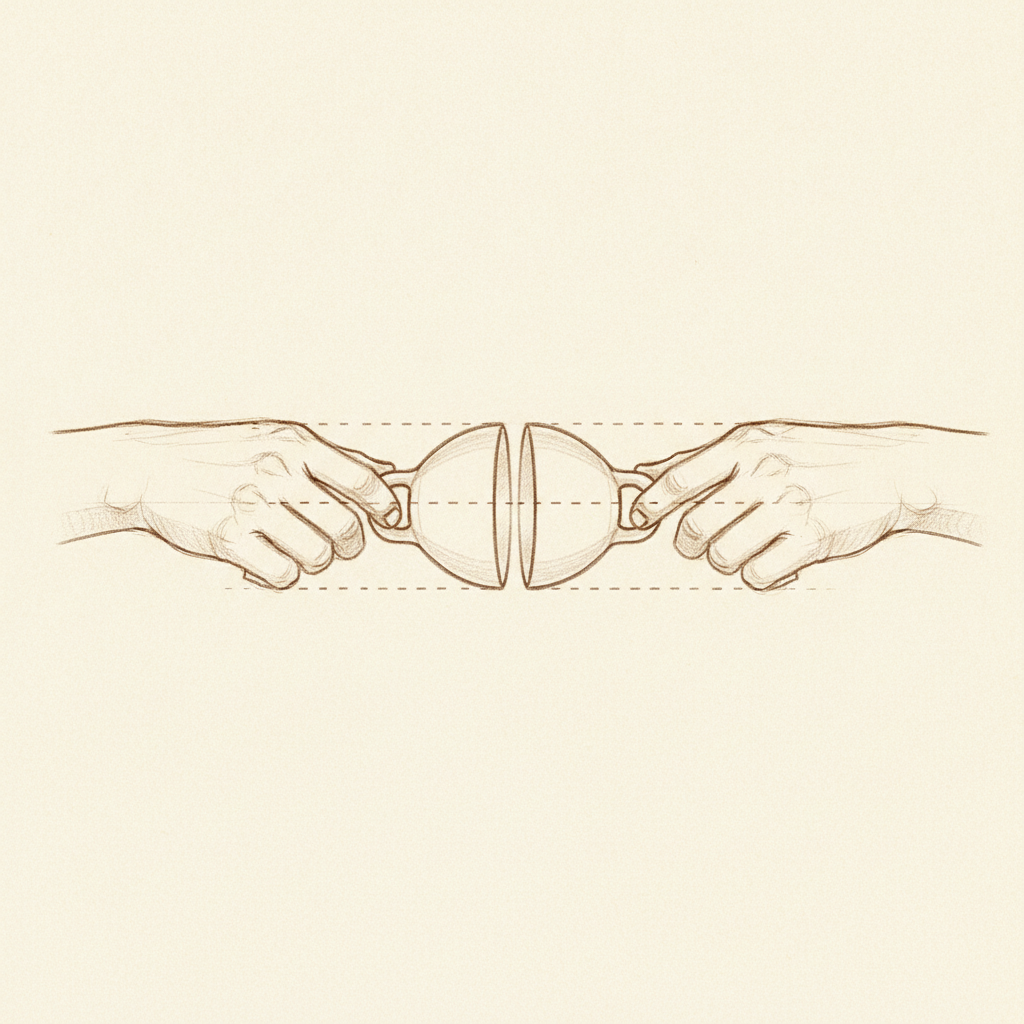
The mistake that causes the most stains is pulling directly on the stem without first breaking the vacuum seal that keeps the cup in place. Doing this makes the cup come out suddenly and under pressure, greatly increasing the risk of a splash. The correct sequence is: locate the base with your fingers, press gently to break the seal and let a bit of air in, and only then pull, horizontally and with no rush, keeping the cup upright like a small bowl the whole way so the contents don’t spill over the sides.
Besides breaking the seal, posture makes a big difference in whether you feel an unpleasant tug or not. With a tense pelvic floor — standing, rushed, or nervous — any removal feels rougher. Sit on the toilet or squat, breathe, and consciously relax that area before you start. Always remove horizontally, never straight downward or pulling to one side: a controlled, straight motion, holding the base with two fingers, is what makes the difference between a comfortable removal and an unpleasant tug.
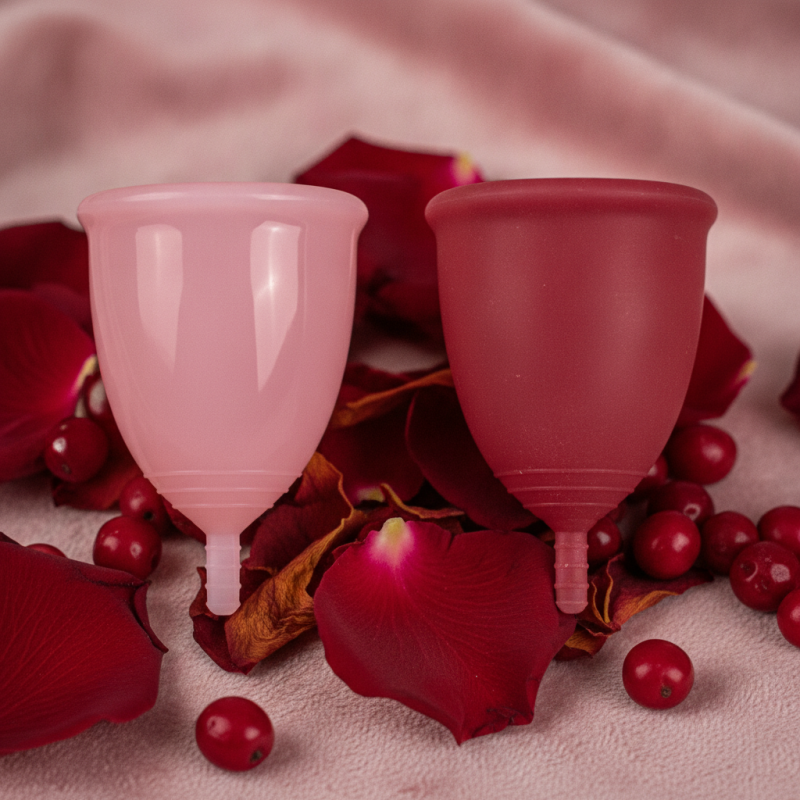
Designed for a gentle removal: Sileu Rose — €19.99
Softer silicone and a flexible base that make breaking the seal easier with no tugging, even for beginners. German Wacker silicone, ISO 10993 surgical-medical grade. Shipped from Spain in 24-72h.
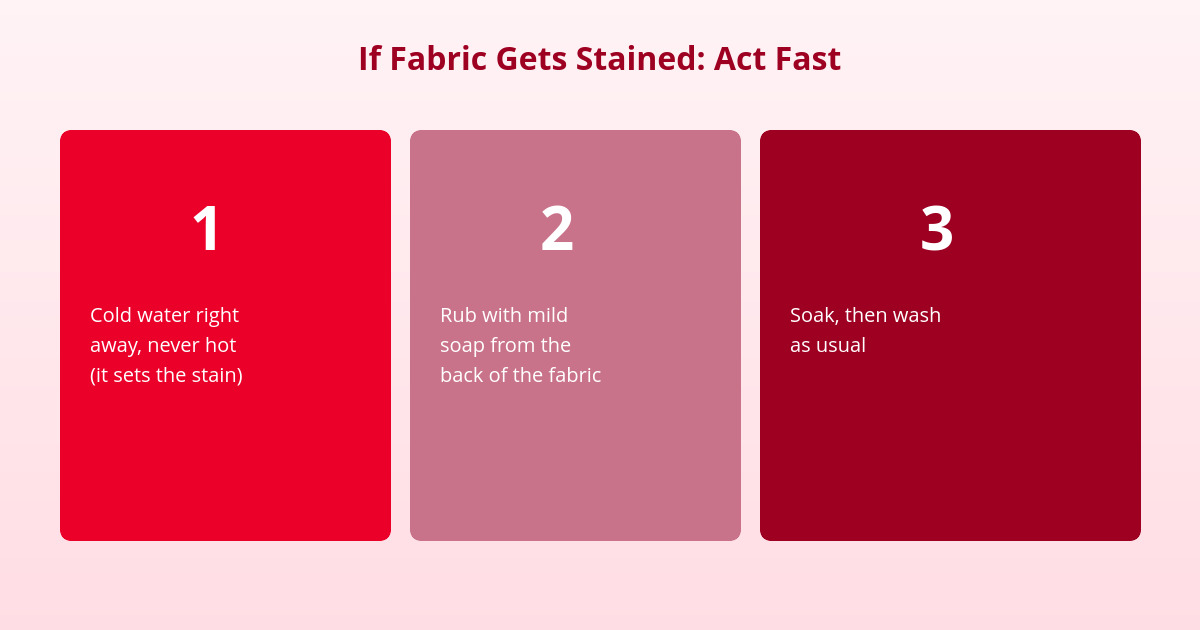
If, despite everything, a drop lands on fabric, speed is your best ally. Follow these three steps:
This same procedure works for underwear as well as sheets or towels. The sooner you act, the easier it’ll be for the stain to disappear completely without a trace.
When you’re away from home, there isn’t always a sink inside the bathroom stall itself. Carry a small bottle of water or unscented intimate wipes to clean the rim of the cup before reinserting it, and wash your hands afterward at the outer sink. Keeping a clean backup cup in its breathable cotton pouch is another convenient option if you’d rather not depend on washing it right then. If you want to go deeper into the full removal technique, step by step, we have a dedicated guide in how to remove the menstrual cup with no problems.
To always carry with you: SileuCase — €3.99
A discreet, elegant case to store your cup (or an already-clean backup) in your bag, unnoticed. Shipped from Spain in 24-72h.
Some small details make a real difference in daily practice. Keep your nails short or file them if you notice them catching when inserting your fingers, to avoid small scratches that sometimes get mistaken for cup stains. During the first few cycles with the cup, many women opt to wear dark-colored underwear as psychological backup while they build confidence, even though in practice the real risk of a stain with the right technique is minimal. Another comfortable option for those first learning days is combining the cup with organic cotton period panties as an extra safety layer, with no need to reach for a disposable liner.
If you’re out of the house for many hours and worry about not having anywhere to clean the cup before reinserting it, a rinse-free spray cleaner, like the Sileu Cleaner Spray, handles that step in seconds with no water needed, ideal to keep in the same bag as your backup cup.
Three mistakes explain almost every case: pulling on the stem without breaking the seal first (the number-one cause of stains), removing the cup in a rush out of nervousness or embarrassment in a public restroom, and not emptying the cup in time, letting it fill past capacity. If you notice it filling before the usual 8-12 hours on heavier-flow days, a higher-capacity model, like the Sileu Sport, might suit you better, letting you space out removals more. If you’re unsure about the right size for your anatomy, check our guide to vaginal length and which cup model fits you.
Mastering the insertion fold also helps, since a poorly folded cup on insertion can be harder to remove afterward: review the different options in ways to fold the menstrual cup: tips and tricks. And if at any point you struggle to reach it and can’t remove it with the usual technique, it isn’t a failure on your part: check menstrual cup stuck? What to do step by step, with no stress to solve it calmly.
Once emptied, a rinse with water and mild intimate soap is enough before reinserting it; save full sterilization in boiling water (or the microwave with a foldable sterilizer) for the beginning and end of your cycle. The full detailed routine is in how to clean your menstrual cup. A well-cared-for cup, with no built-up residue, is also easier to handle with your fingers, which also reduces the risk of tugging on future removals. This simple hygiene routine is consistent with what the scientific evidence supports: a systematic review published in The Lancet Public Health (van Eijk et al., 2019), covering 43 studies and over 3,300 participants, found no adverse effects on vaginal flora associated with menstrual cup use following basic hygiene guidelines. You can check the full review on PubMed.
By first breaking the vacuum seal, pressing the base with two fingers, then removing it horizontally, keeping the cup upright like a small bowl. Pulling directly on the stem without this step is the most common cause of stains.
With cold water right away, never hot (which sets the stain), rubbing with mild soap from the back of the fabric, and soaking for a few minutes before washing as usual.
Almost always from not breaking the vacuum seal before pulling, or from a tense pelvic floor during removal. Relaxing, sitting in a comfortable position, and breaking the seal first eliminates most tugging.
With bottled water or unscented intimate wipes to clean the rim before reinserting it, washing your hands afterward at the outer sink. Carrying a clean backup cup also solves the problem.
A model with softer silicone and a flexible base, like the Sileu Rose, makes breaking the seal gentler, especially recommended for anyone just starting out with the menstrual cup.
Keep reading:
“I washed them like any other underwear and within a few months they didn’t absorb the same”: it’s the number-one reason people are disappointed with
“I’ve had the same cup for three years, should I replace it now?” It’s a question we get often, and the honest answer is: it
We sell menstrual cups, so you’d expect this article to tell you the cup is perfect for everyone. It isn’t, and we’d rather tell you

