Guides for Use & Maintenance
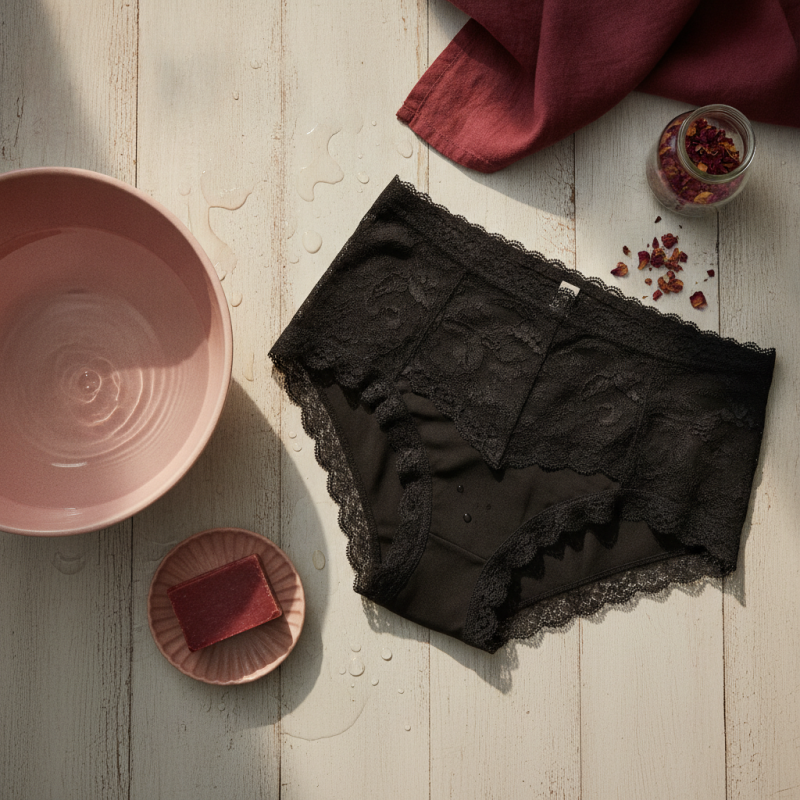
How to Wash Period Panties So They Last for Years
“I washed them like any other underwear and within a few months they didn’t absorb the same”: it’s the number-one reason people are disappointed with


Did you know that Kegel exercises aren’t just “a pregnant women’s thing”? They were designed in 1948 by a gynecologist to treat female urinary incontinence, yes, but today we know urologists also recommend them to men, for example after prostate surgery. Here’s how to do Kegel exercises properly, step by step, whether you’re a woman or a man.
Kegel exercises consist of consciously contracting and relaxing the pelvic floor muscles, the muscle group that supports the bladder, the uterus (in women) or the prostate (in men), and the rectum. In 1948, gynecologist Arnold H. Kegel published the study “Progressive Resistance Exercise in the Functional Restoration of the Perineal Muscles” in the American Journal of Obstetrics & Gynecology, documenting how actively training these muscles helped restore their function after the weakening caused by childbirth. Almost 80 years later, it remains the basis of non-invasive treatment for urinary incontinence, in both women and men. If you’d like to understand how this muscle group works in general first, start with what the pelvic floor is, how it works and how to strengthen it.
The most common mistake when starting Kegel exercises is contracting the abdomen, buttocks or thighs instead of the pelvic floor. There are two simple ways to identify the right muscle:
In men, the usual reference is the same feeling of stopping the urine stream, together with a slight lift at the base of the penis without moving the buttocks or abdomen.
Feel your progress physically: Sileu Kegel — €39.90
A set of 3 semi-precious stones of progressive weight that help you identify the right muscle and progress measurably, without guessing whether you’re doing it right. Shipped from Spain in 24-72h.
Practiced regularly, Kegel exercises offer documented benefits: they reduce urine leaks when you cough, laugh or exercise; they speed up pelvic floor recovery after pregnancy and childbirth (we cover this in detail in the pelvic floor in pregnancy and postpartum: safe exercises); they improve sensation and control during sex, in both women and men; and in some cases they’re recommended as preparation before pelvic surgery to speed up recovery afterwards. None of these benefits is immediate: consistency over several weeks is what makes the difference.
Although historically they’ve almost always been associated with women, Kegel exercises are a routine part of male urological rehabilitation, especially after prostate surgery, where they help restore bladder control. They’re also recommended for erectile dysfunction related to pelvic floor weakness and as general prevention from a certain age. The contraction technique is practically the same as for women: identify the muscle by stopping the urine stream as a one-off test, then practice sets of contract-relax without tensing other muscle groups. If you have specific medical questions, your urologist can confirm the technique and adapt the routine to your case.

Once you’ve mastered the basic contraction, a pelvic floor trainer with progressive weight, such as the Sileu Kegel, lets you progress in a controlled way: you start with the lightest stone and increase the weight as you gain strength, just as you’d progress in any other muscle training. Before inserting it, wash the accessory well with warm water and mild soap, use a water-based lubricant to make insertion easier and always find a relaxed position. If you’re comparing this type of trainer with other options on the market, we have a specific analysis in Kegel balls vs. Kegel trainer: what the evidence says.
For days with light leaks: Sileu period underwear — €9.99
Organic cotton certified to OEKO-TEX Standard 100 (free from harmful substances), discreet and absorbent, while you train your pelvic floor and notice the improvement. Shipped from Spain in 24-72h.
Three mistakes explain most cases where someone “doesn’t notice any improvement” after weeks of practice: contracting the wrong muscles (abdomen or buttocks instead of the pelvic floor), holding your breath during the contraction instead of breathing normally, and lack of consistency, doing the exercises only on some days instead of building them into your daily routine. If you’re unsure whether you’re activating the right muscle, a weighted trainer gives you immediate physical feedback: if you feel the weight of the accessory and manage to hold it, you know the contraction is right.
Keep the accessory’s hygiene as part of the routine too: wash the trainer with water and mild soap after each use, or with a specific cleaner such as the Sileu Cleaner Spray, and store it dry in a clean place until the next session.
With consistent practice, many people notice fewer urine leaks within the first 2-3 weeks of training, although full improvement usually takes several months to consolidate. The evidence supports this routine: a Cochrane review (Woodley et al., 2020) of 46 trials and 10,832 women found that pelvic floor training significantly reduces the risk of urinary incontinence in pregnancy and postpartum, with very few adverse effects described. You can read the full review on PubMed. If you already have frequent urine leaks and want to understand the causes, see mild urinary incontinence: why it happens and how to improve it, and if you’re not sure whether your pelvic floor is weakened, check the signs in signs of a weak pelvic floor (and what to do).
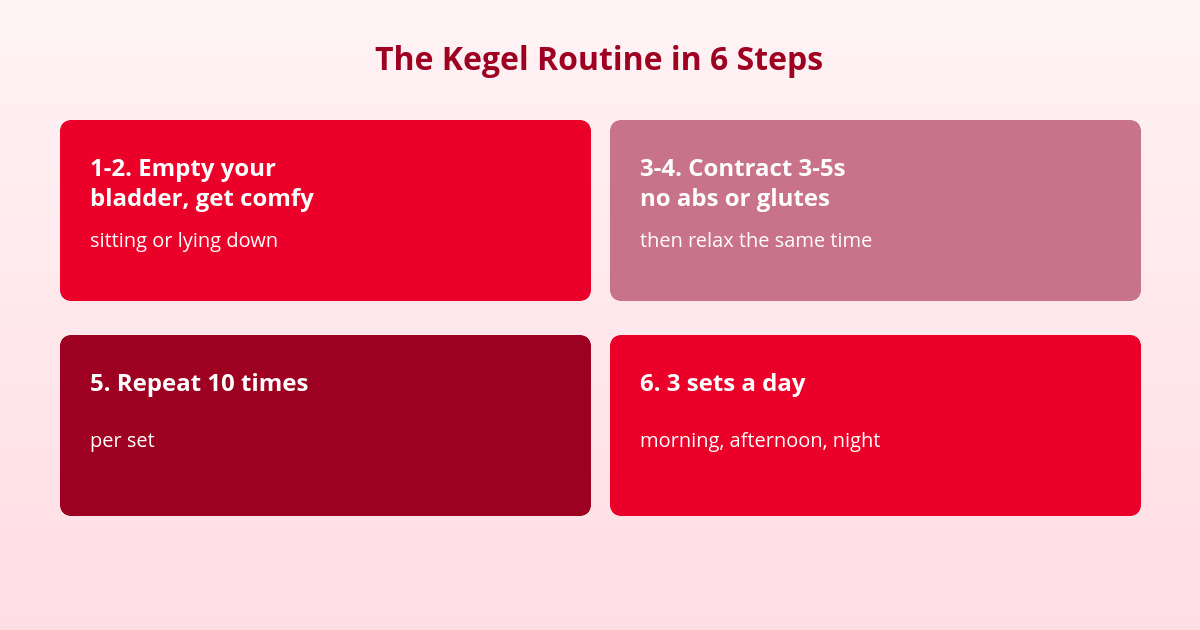
The key, as with any muscle training, is consistency over intensity: three short, well-done sets every day far outperform one long, occasional session. You don’t need equipment, extra time or to go anywhere: you can practice them on the bus, watching TV or waiting for the kettle to boil.
By stopping your urine stream just once (as a test) or contracting as if holding in gas. That feeling of lifting inward, without tensing your abdomen or buttocks, is the right pelvic floor muscle.
Yes. They’re routinely recommended in male urological rehabilitation, especially after prostate surgery, and also as support for erectile dysfunction related to the pelvic floor. The contraction technique is very similar to women’s.
Many people notice fewer urine leaks after 2-3 weeks of consistent practice, although the improvement consolidates over several months. Scientific evidence supports a significant reduction in the risk of incontinence with regular training.
It isn’t essential, but a pelvic floor trainer with progressive weight helps you physically feel the muscle and progress in a controlled way, which is especially useful if you find it hard to identify the right contraction with the manual technique alone.
The usual routine is three sets of 10-15 repetitions a day, for example morning, afternoon and evening, holding each contraction for 3 to 5 seconds and relaxing for the same time.
Keep reading:
“I washed them like any other underwear and within a few months they didn’t absorb the same”: it’s the number-one reason people are disappointed with
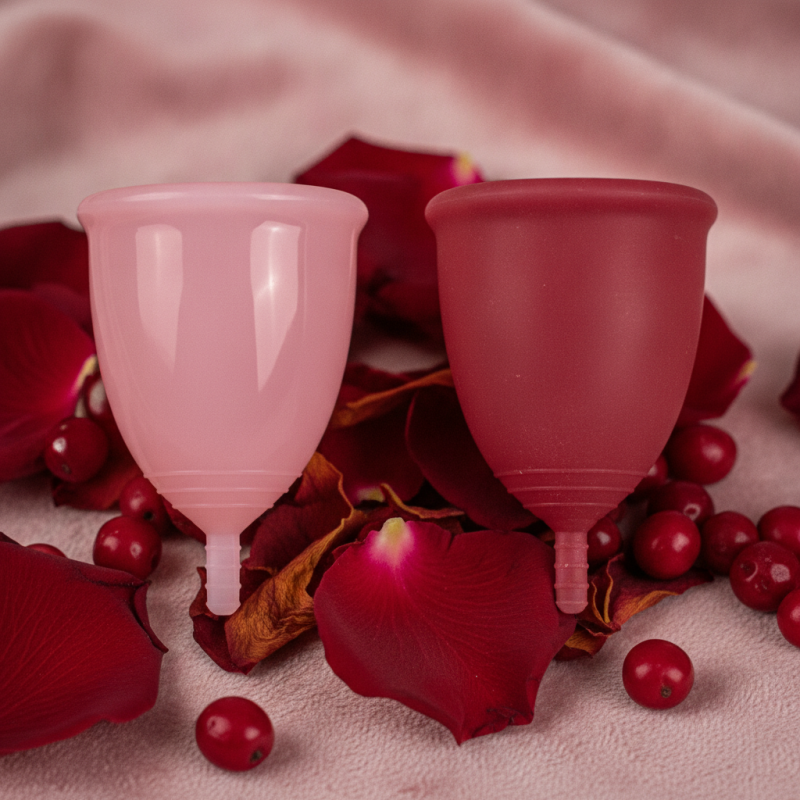
“I’ve had the same cup for three years, should I replace it now?” It’s a question we get often, and the honest answer is: it
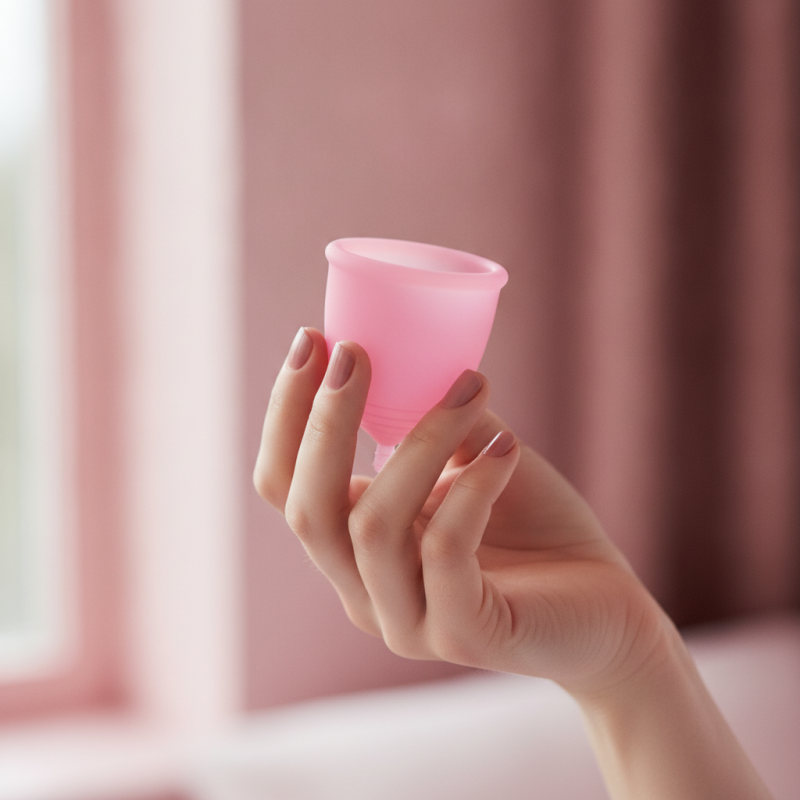
We sell menstrual cups, so you’d expect this article to tell you the cup is perfect for everyone. It isn’t, and we’d rather tell you

