Guides for Use & Maintenance
How to Wash Period Panties So They Last for Years
“I washed them like any other underwear and within a few months they didn’t absorb the same”: it’s the number-one reason people are disappointed with


Did you know that a menstrual disc doesn’t work by suction like a cup, but stays in place thanks to its shape and position? It’s the most common confusion about this product, and also the key to understanding its real advantages. We’ll explain what it is, how it works and exactly how it differs from the menstrual cup, with complete honesty: at Sileu we don’t sell discs, so you can read this comparison without us trying to sell you one.
The menstrual disc is a reusable or disposable (depending on the model) intimate hygiene product, shaped like a flexible ring with a central membrane that collects the flow. Unlike the cup, it doesn’t sit below the cervix, but in the vaginal fornix, the deepest part of the vagina, right around the cervix. This difference in position explains almost all its particular features.
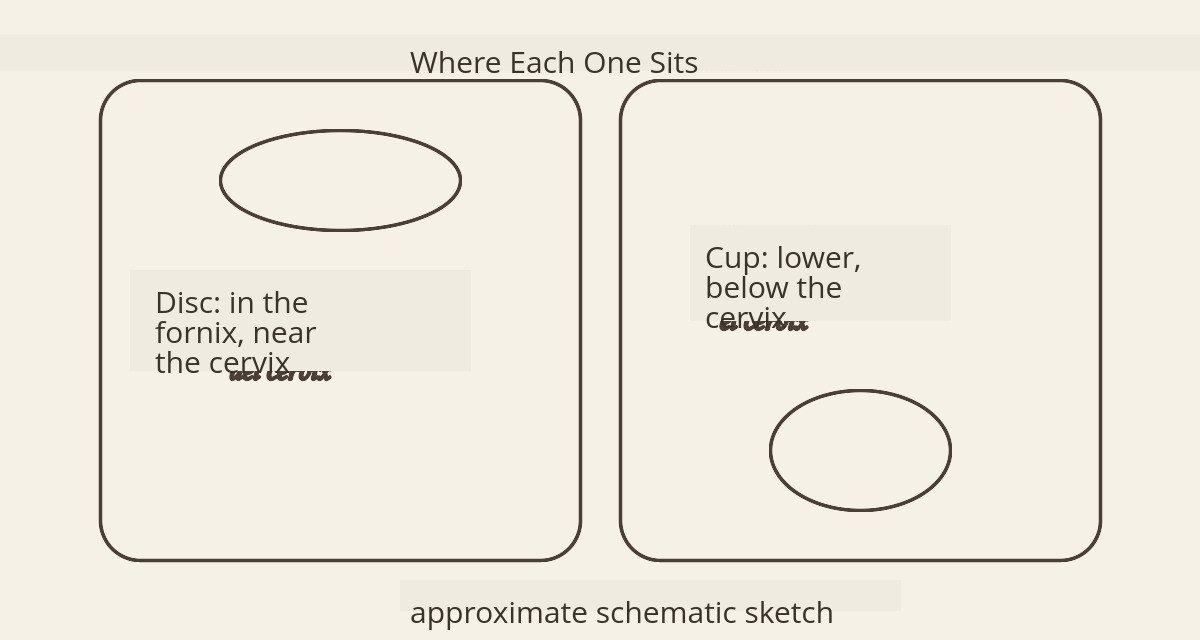
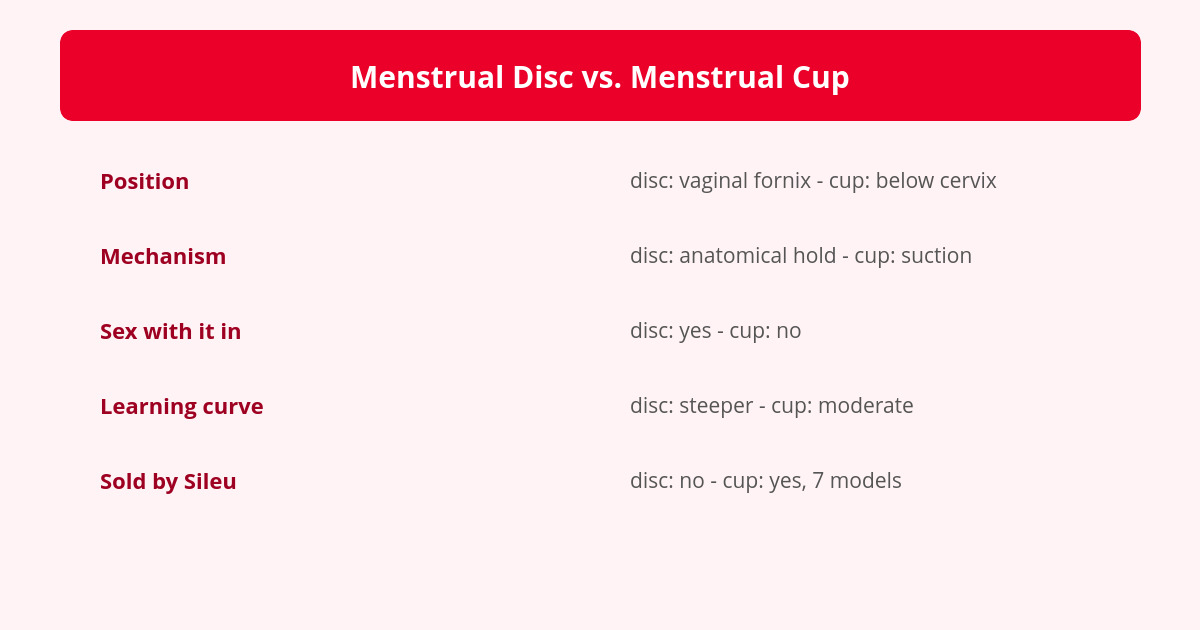
The menstrual cup works by suction: when it opens inside the vagina it creates a vacuum seal that prevents leaks. The menstrual disc, by contrast, is held by its shape and by the anatomical space of the vaginal fornix, tucking in behind the pubic bone, with no suction. This mechanical difference has an important practical consequence: since it doesn’t seal by suction and sits above the vaginal canal, in theory it allows penetrative sex with the disc in place, something the cup doesn’t. That is, in fact, the reason many people become interested in the disc in the first place.
The general process resembles the cup’s in the first steps, but changes at the end:
This last step is by far the one that takes the most practice: unlike the cup, where you just break the suction seal, here the whole maneuver depends on manual dexterity, which is why many people recommend practicing the first time in the shower. We go through it in detail in how to use a menstrual disc.
Reusable models are usually made of medical silicone or TPE, just like cups, so the usual questions apply: insist that the manufacturer specifies a real biocompatibility certification, such as ISO 10993, and not just the generic “medical grade” label. Disposable models, on the other hand, are usually made of a single-use flexible polymer, not meant to be reused between cycles — worth bearing in mind if your priority is reducing waste: in that case, a certified reusable disc or a menstrual cup is still the option with the lowest long-term impact.
If you were looking at a disc because of a low cervix: Sileu Bell — €14.99
Our shortest cup, with a body of just 30-35 mm, designed for a low cervix. And if what you want is a slim cup that folds small, the Sileu Tulip is the most streamlined in the range. Medical-grade silicone certified to ISO 10993. Shipped from Spain in 24-72h.
We’d rather be honest: we don’t have a menstrual disc in our range today. We’ve specialized in cups —seven different models, to suit each user’s anatomy and needs— and in complementary alternatives such as the sea sponge and period underwear, rather than adding a new product category without the same level of assurance we offer across the rest. It’s a range decision, not a negative opinion about the disc: it’s a legitimate product, and for certain uses —above all, compatibility with penetrative sex during your period— none of our cups is an exact substitute.
If that specific use is what you’re after, the most honest alternative in our range is the Sileu Sea sea sponge: being a soft, absorbent material rather than a rigid suction cup, it’s also compatible with sex, although its mechanism (absorption, not collection) is different from the disc’s. You can read more in our guide to sex on your period: benefits and tips to avoid stains and in sex on your period: mess-free options.
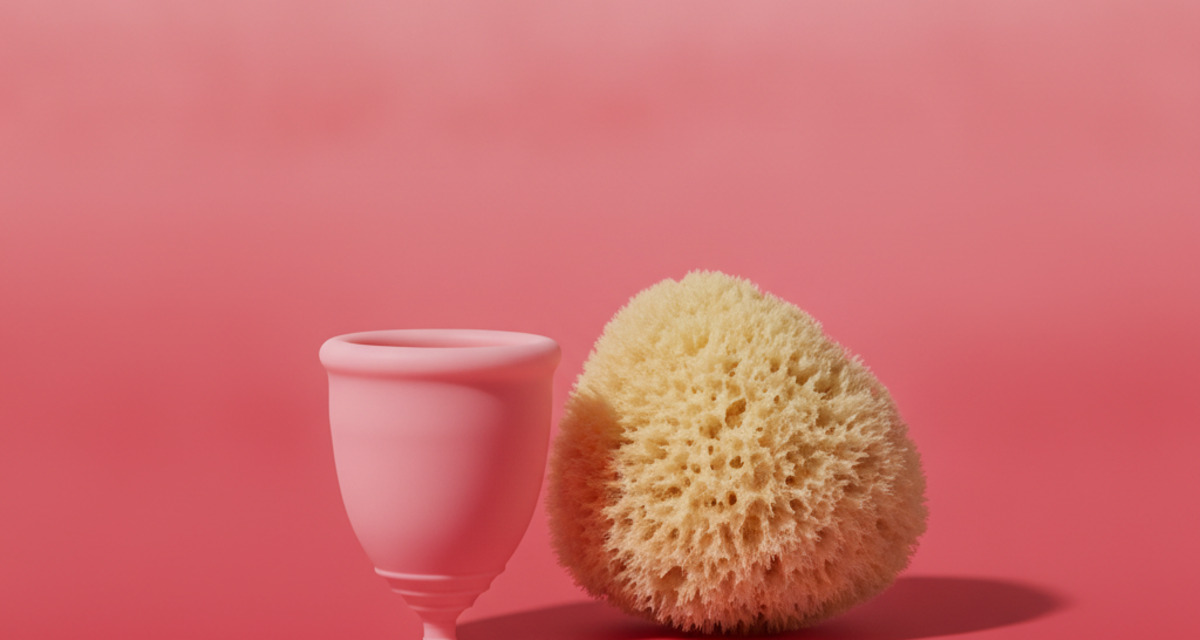
Compatible with period sex: Sileu Sea sponge — €9.99
100% natural and biodegradable, a real alternative in our range for anyone looking for what a menstrual disc offers in terms of use during sex. Shipped from Spain in 24-72h.
Several inaccurate ideas are going around that are worth clearing up before you decide:
The menstrual disc can be a good option if your priority is not interrupting your sex life during your period and you don’t mind a somewhat longer learning curve than the cup’s. If, on the other hand, you prioritize ease of use, a material with a longer track record of safety studies and a wide range of certified sizes and firmnesses, the menstrual cup is usually the easiest way in. Our guide to choosing your first cup helps you decide if that’s you.
It’s an intimate hygiene product shaped like a flexible ring with a central membrane, which sits in the vaginal fornix, around the cervix. Unlike the cup, it doesn’t work by suction but is held in place by its shape and anatomical position.
The disc sits higher, in the vaginal fornix, and doesn’t seal by suction, which allows penetrative sex with the disc in place. The cup sits below the cervix and does work by suction.
No, Sileu doesn’t currently have a menstrual disc in its range. We specialize in menstrual cups (7 models) and in alternatives such as the Sileu Sea sea sponge, which is also compatible with sex.
Generally yes, especially when removing it: with no stem and no clear signal from suction, you have to hook the rim with your finger, which usually takes more practice than removing a menstrual cup.
Keep reading:
“I washed them like any other underwear and within a few months they didn’t absorb the same”: it’s the number-one reason people are disappointed with
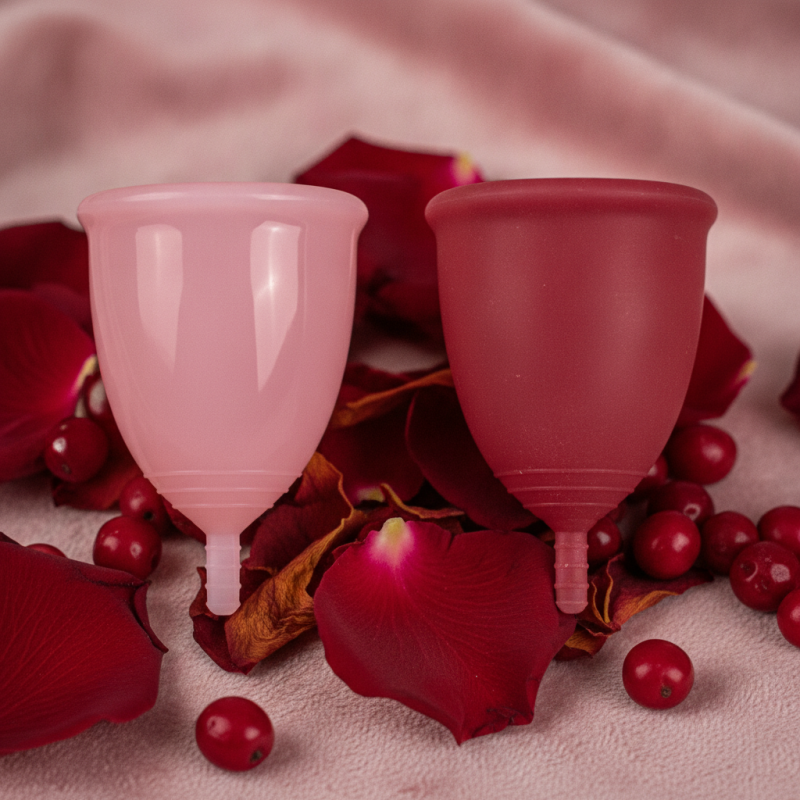
“I’ve had the same cup for three years, should I replace it now?” It’s a question we get often, and the honest answer is: it
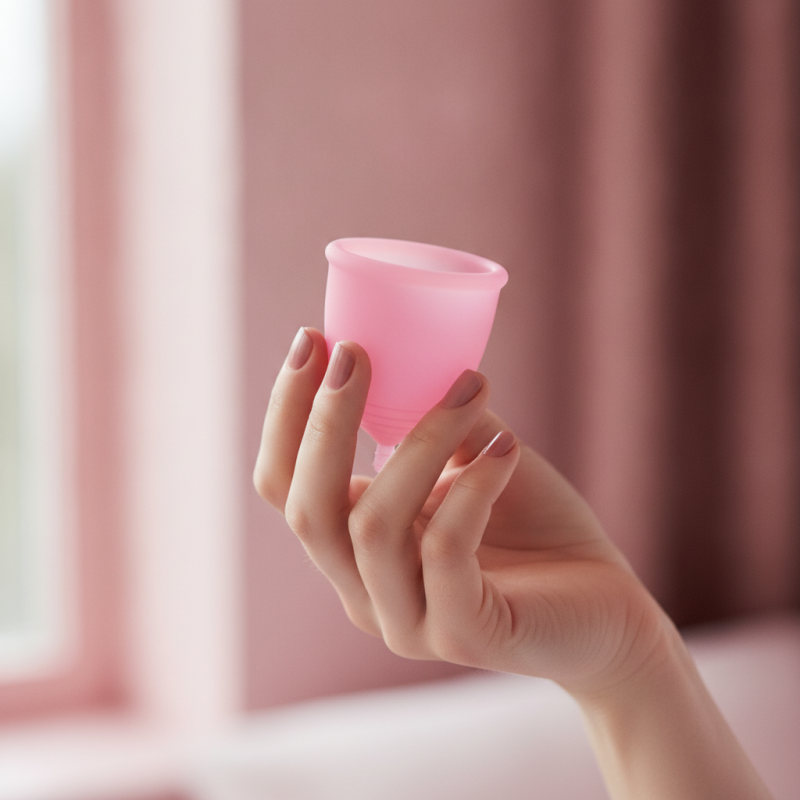
We sell menstrual cups, so you’d expect this article to tell you the cup is perfect for everyone. It isn’t, and we’d rather tell you

