Guides for Use & Maintenance
How to Wash Period Panties So They Last for Years
“I washed them like any other underwear and within a few months they didn’t absorb the same”: it’s the number-one reason people are disappointed with


Did you know you don’t have “one” hormonal cycle a month, but four different bodies within the same month? Energy, skin, libido, and mood really do shift depending on which phase you’re in, and it isn’t in your head: it’s hormones. Understanding the phases of the menstrual cycle lets you get ahead of symptoms instead of being caught off guard by them every month.
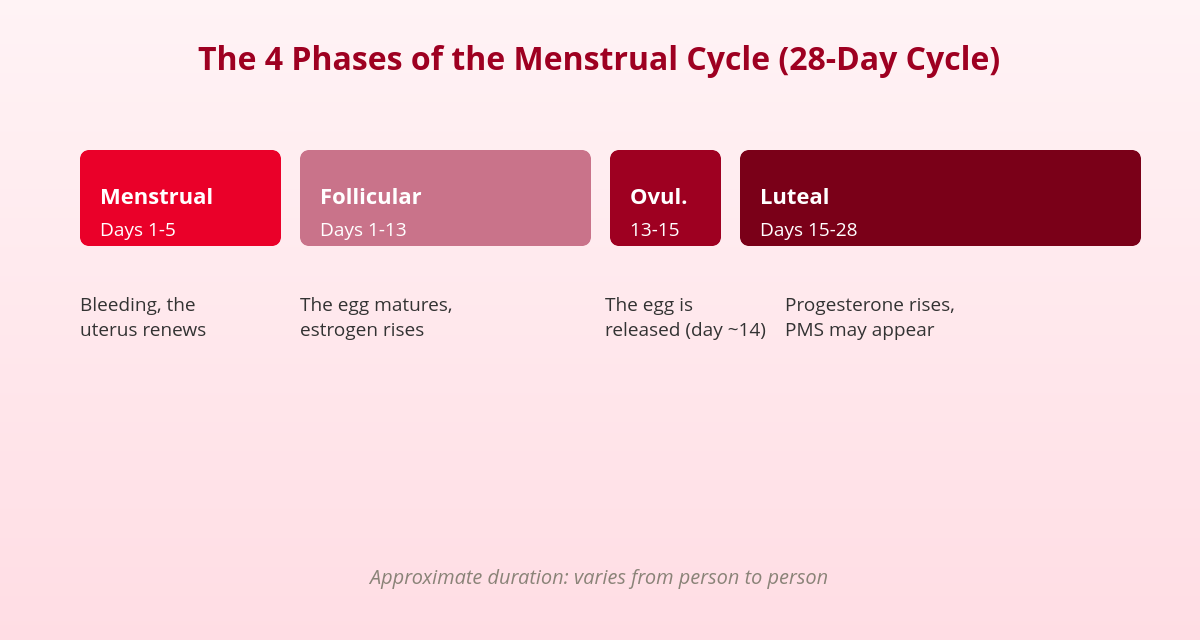
A full menstrual cycle lasts, on average, between 21 and 35 days (28 is just the textbook reference, not the universal norm), and it’s divided into four phases that partly overlap. Let’s go through each one.
It begins on the first day of bleeding. If there’s no pregnancy, estrogen and progesterone levels drop sharply, which causes the uterine lining (endometrium) to shed and leave the body as menstrual flow. It’s common to feel cramp-like abdominal pain, fatigue, and, in some cases, lower back pain. It’s also the phase where you choose your protection method: cup, period panty, or both combined if flow is heavier during the first two days.
It technically starts on day 1 itself, but it’s more noticeable once bleeding ends. The pituitary gland releases FSH, which stimulates the ovaries to mature several follicles, each containing an egg. Estrogen starts rising progressively, and with it often comes a sense of more energy, better mood, and more radiant skin for many women. Broadly speaking, it’s the phase where the body “feels better” for most people.
The peak in LH triggers the release of the mature egg (ovulation), which stays available to be fertilized for about 24 hours. It’s the shortest phase, and many women notice a slight twinge in the lower abdomen (mittelschmerz), increased libido, and cervical fluid that becomes clearer and stretchier, similar to egg white. If you’re trying to conceive or avoid pregnancy, this is the cycle’s key fertile window.
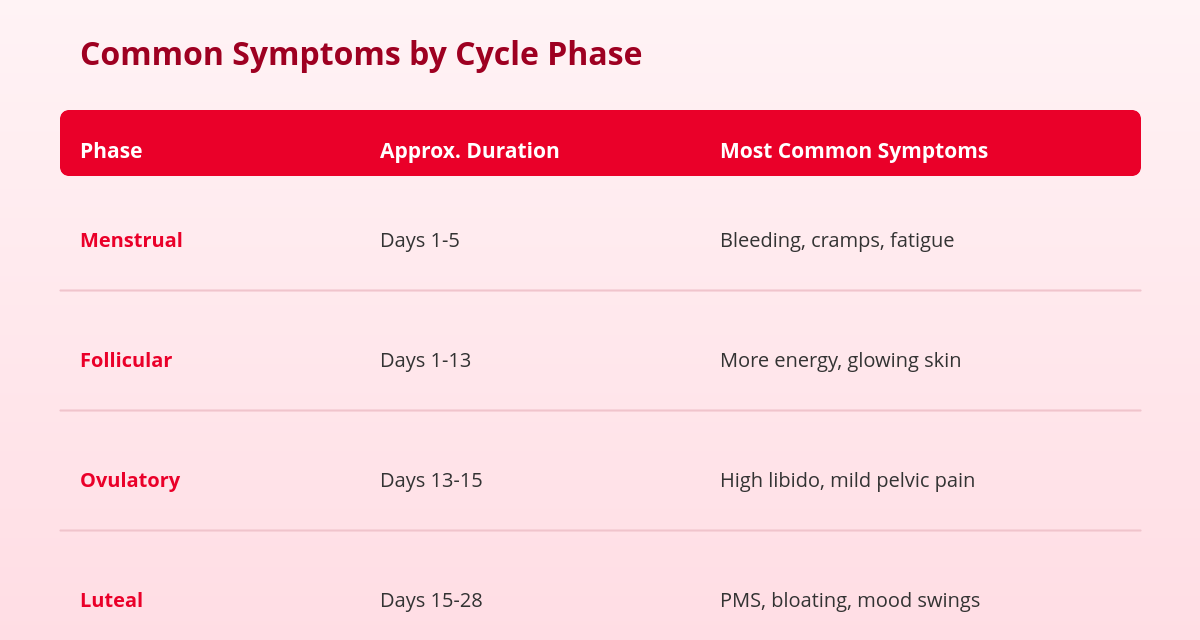
After ovulation, the empty follicle turns into the corpus luteum, which produces progesterone to prepare the uterus in case of pregnancy. If there’s none, hormone levels drop again toward the end of this phase, which triggers premenstrual syndrome (PMS) in many women: bloating, breast tenderness, mood swings, cravings, and, in the final days, the start of new bleeding that closes the cycle. If PMS hits you hard, in premenstrual syndrome: symptoms and how to ease it we go deeper into specific strategies.
🩸 Be ready for every phase: panty + Sileu Classic — from €24.98
Certified OEKO-TEX Standard 100 organic cotton period panty + Sileu Classic cup, so you’re ready for the menstrual phase with no surprises. Shipped from Spain in 24-72h.
An important clarification is worth making: if you use hormonal contraception (combined pill, ring, patch), the phase pattern described above doesn’t apply the same way, because these methods deliberately suppress ovulation and keep hormone levels more stable throughout the cycle. The bleeding that happens during the break week isn’t a true period in the strict sense, but withdrawal bleeding from the hormone drop. If you have questions about how your contraceptive method affects your cycle, check with your gynecologist, because each type of contraceptive behaves differently.
Beyond biological curiosity, knowing which phase you’re in has practical uses: you can plan more demanding workouts during the follicular phase, when the body tends to perform better; anticipate the days of greater emotional sensitivity in the luteal phase to avoid making big decisions right then; and, above all, always have your period panty or your cup on hand before bleeding starts, instead of being caught off guard.
That’s the most common case, not the exception: the length of each phase varies from woman to woman, and also from cycle to cycle in the same person, especially the follicular phase, which is the most variable. A cycle is considered within the normal range between 21 and 35 days. If you want to track your own phases precisely, in the menstrual cycle explained and in menstrual cycle and ovulation we go deeper into how to calculate your fertile window and dates more precisely.
You don’t need any fancy app to get started: just note the first day of bleeding of each cycle on a calendar for 2-3 months. With that data you can already calculate your average cycle length and estimate which day ovulation usually happens on (roughly 14 days before the start of your next bleeding, not the previous one, which is the most common calculation mistake). If you also note physical and mood symptoms each day, you’ll start seeing patterns that repeat cycle after cycle: it’s the simplest way to get ahead, for example, of when your period is about to start so you can have your panty or cup ready in advance.
Physical signs you can also watch to refine the calculation: basal temperature rises slightly after ovulation (due to increased progesterone), and cervical fluid changes texture throughout the cycle, becoming stretchier and clearer on fertile days. None of these methods replaces contraception if you’re not trying to conceive, but they do help you understand your own pattern better.
“Every woman ovulates on day 14”: false as a general rule, that’s only true in a perfectly regular 28-day cycle, which isn’t the real population average. “The cycle always lasts 28 days”: false, the normal range runs from 21 to 35 days and can vary from month to month in the same person without it meaning any problem. And “you can’t get pregnant during your period”: unlikely but not impossible, especially in short cycles where the follicular phase is brief and ovulation can come earlier.
Cycles that suddenly become much shorter, persistently stretch beyond 35 days, disappear (amenorrhea) with no pregnancy, or PMS so intense it interferes with daily life are reasons to see your gynecologist. The same goes if you notice a repeated, unexplained late period. The phases of the cycle are a general guide, not a diagnosis, and every body has its own normal.
The menstrual phase (bleeding, days 1-5), the follicular phase (the egg matures, days 1-13), the ovulatory phase (the egg is released, around day 14), and the luteal phase (the body prepares for a possible pregnancy, days 15-28).
Generally in the follicular phase, when estrogen starts rising. Many women notice better mood, more energy, and more radiant skin in those days, right after their period.
Because toward the end of the luteal phase, progesterone and estrogen levels drop if there’s no pregnancy, which triggers symptoms like bloating, breast tenderness, and mood swings, known as PMS.
Yes, it’s the most common case. Total cycle length can normally vary between 21 and 35 days, and the follicular phase varies the most from cycle to cycle in the same person.
This information on the phases of the menstrual cycle aligns with MedlinePlus’s official documentation on menstruation. If you have specific questions about your cycle or notice changes that worry you, always check with your gynecologist: every body has its own normal pattern, and only a professional can accurately evaluate yours.
🌹 Be ready for every phase — Period panty, €9.99
Certified OEKO-TEX Standard 100 organic cotton. Keep it ready for when the menstrual phase begins, no surprises. Shipped from Spain in 24-72h.
Keep reading:
“I washed them like any other underwear and within a few months they didn’t absorb the same”: it’s the number-one reason people are disappointed with
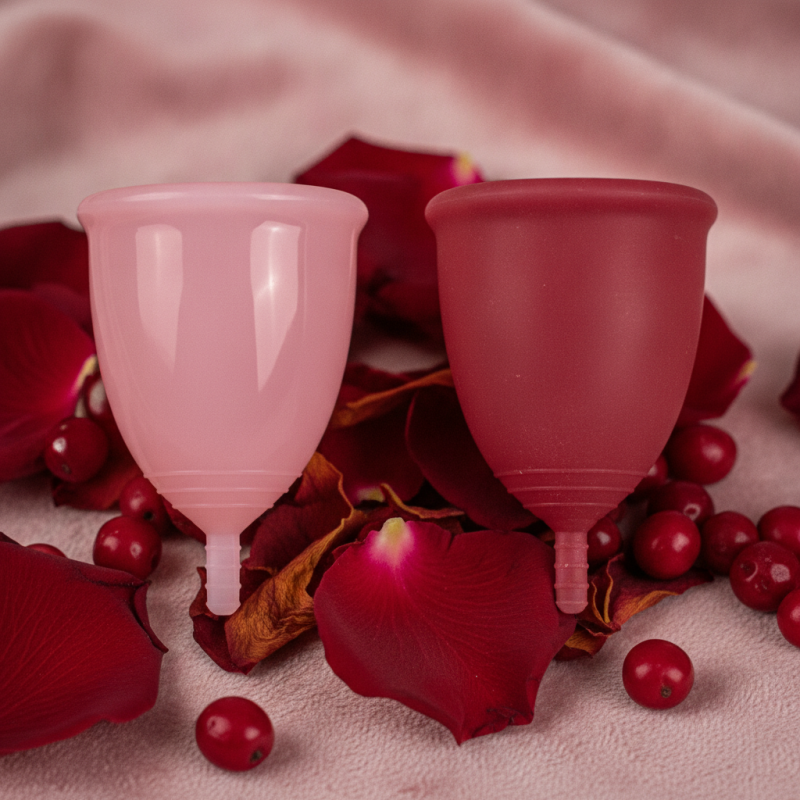
“I’ve had the same cup for three years, should I replace it now?” It’s a question we get often, and the honest answer is: it
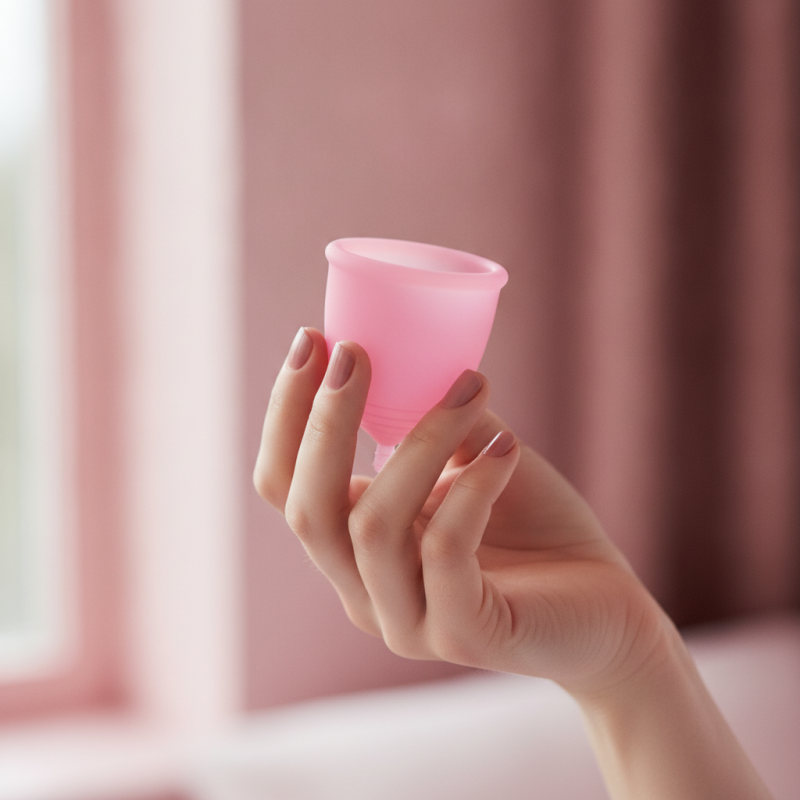
We sell menstrual cups, so you’d expect this article to tell you the cup is perfect for everyone. It isn’t, and we’d rather tell you

