Guides for Use & Maintenance
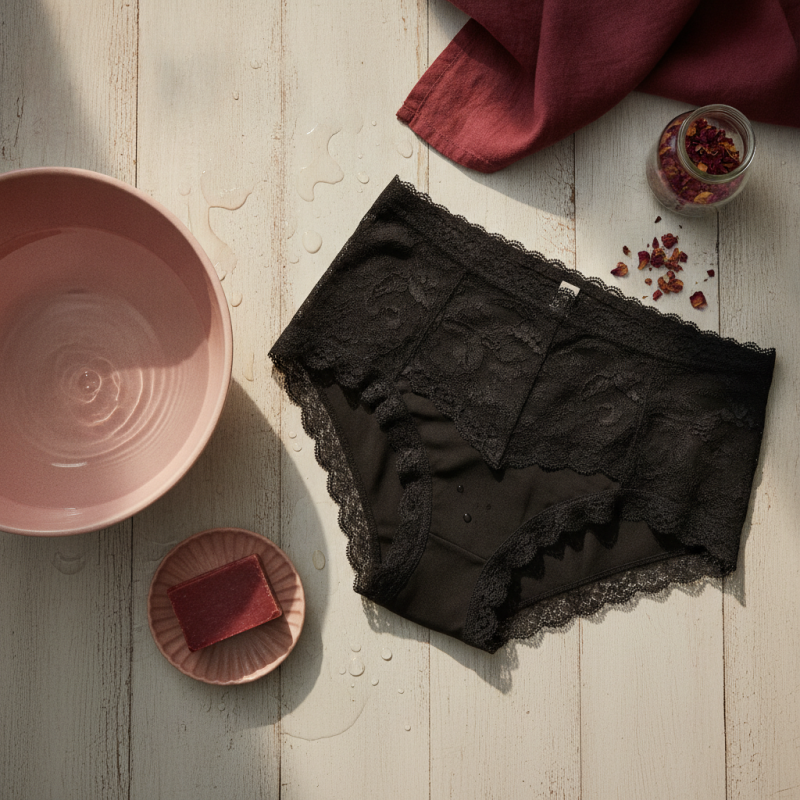
How to Wash Period Panties So They Last for Years
“I washed them like any other underwear and within a few months they didn’t absorb the same”: it’s the number-one reason people are disappointed with


The whole point of the sex hormones in your body is to drive your menstrual cycle and, ultimately, ovulation — but do you really know the mechanisms behind ovulation? Which hormones are involved in your cycle and ovulation? And why is it useful to actually know your cycle and the day ovulation happens?
We’ll answer this and other questions in this article.
The menstrual cycle is the coordinated work of your hypothalamic-pituitary-ovarian-uterine axis. What does that mean? There are hormones in your body acting along a chain: some hormones stimulate others, which in turn act back on them, sometimes inhibiting them.
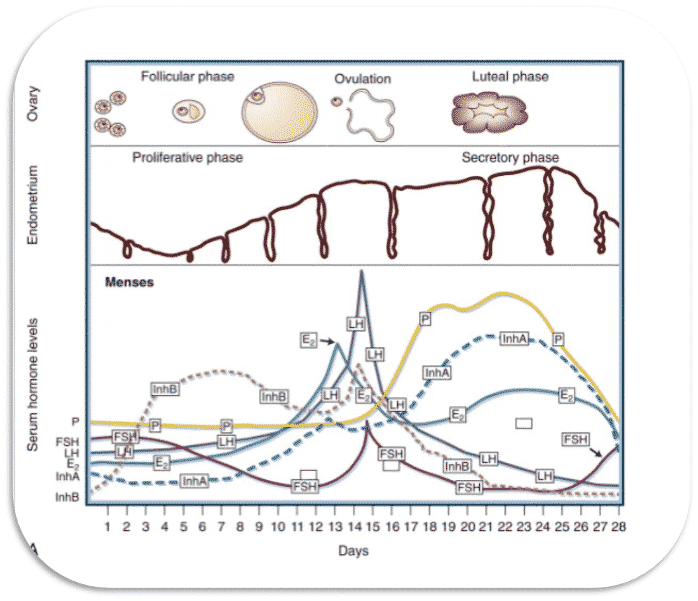
Its main purpose is to release a germ cell from your ovaries — the long-awaited egg — so that ovulation can happen and that egg can potentially be fertilized.
It’s an interval with a variable length, but a normal cycle falls between 24 and 38 days, with ovulation happening roughly in the middle of that window. Variations outside this range are considered abnormal and can cause a late period, an early one, or even be influenced by medication that can delay or bring your period forward.

To fully understand your ovulation, you first need to know a bit about the systems and hormones involved, including these anatomical structures:
A brain structure that’s part of the central nervous system, it acts as the body’s endocrine control center while also handling other functions:
It’s also part of several nerve networks, including the emotional system (the limbic system) and the autonomic nervous system, which lets you control heart rate, blood pressure and bladder contractions when you urinate.
Also called the hypophysis, it’s an endocrine gland whose main job is to release the hormones that regulate your body. For this gland to work, it needs to stay in communication with the hypothalamus through a stalk that bridges both structures.
The pituitary is divided into two parts: the anterior pituitary, which releases several hormones including the gonadotropins (FSH and LH, the ones involved in your ovulation), and the posterior pituitary, which doesn’t produce hormones itself but stores ACTH and oxytocin, both of which come from the hypothalamus.
Two paired, almond-shaped organs. Their surface holds millions of follicles, where immature eggs sit until, each month, hormones select one to mature and be released at ovulation.
Their job is to produce estrogen and progesterone, hormones with multiple roles in the body, which each month turn an immature egg into a mature one so ovulation can happen.
The female reproductive organ, a hollow, pear-shaped muscular structure located in the pelvis, responsible for housing the fetus during pregnancy. Its inner lining, the endometrium, changes throughout the cycle and is what sheds as your period.
Once ovulation happens, the egg travels through the fallopian tube where it can be fertilized (if sex happens without any form of contraception) and finally reaches the uterus, where it implants.
Now that you know the organs and structures involved in ovulation, let’s move on to the hormones:
Gonadotropin-Releasing Hormone is secreted by the hypothalamus and acts directly on the pituitary to stimulate the production of the gonadotropins LH and FSH.
FSH and LH are both regulated by GnRH, and their levels shift throughout the menstrual cycle.
Other substances also play a role in your cycle and ovulation, including activins and inhibins A and B — as the names suggest, some activate and others inhibit, and that’s exactly their job in this hormonal mix.
Now that you know the structures and hormones involved in your cycle, let’s continue.
As we mentioned, your body runs on an ocean of hormones — but here we’ll focus mainly on your sex hormones: GnRH, FSH and LH, the main players in ovulation. But first, let’s look at what happens in your ovaries.
While we’re still in our mother’s womb, millions of follicles form in our ovaries; by birth, that number is already cut in half. When puberty hits — around age 10 or 11, though this varies a lot from person to person — the endocrine system starts activating, beginning with the hypothalamus and its production of GnRH.
Let’s look more closely at GnRH and how the other hormones act throughout the cycle:

These are:
A phase of variable length, where the follicles are ready to respond to FSH, which selects the best candidate for ovulation out of the millions of follicles in the ovary.
FSH stimulates the ovary to produce estrogen, the hormone that gradually raises LH levels right before ovulation.
This phase happens 14 days before your next period. Here, high estrogen levels trigger LH to reach its peak, causing ovulation: the follicle ruptures and releases the now-mature egg, ready to be fertilized.
Sometimes ovulation doesn’t happen, which is when ovarian cysts can form.
Estrogen, FSH and LH levels then gradually decline.
After ovulation, the ruptured follicle starts forming the corpus luteum, which synthesizes another hormone: progesterone. About 9 to 11 days after ovulation, the corpus luteum breaks down and progesterone levels drop. This phase lasts 14 days total and is the only stable phase of the entire cycle.
As progesterone levels fall, a positive feedback mechanism kicks in, raising FSH again — and your period arrives, starting a new cycle.
Just 24 hours. As surprising as it sounds, that whole hormonal machine works every single day of the month, and the egg is only viable for 1 day — though that takes nothing away from how remarkable the process is.
The fact that ovulation only lasts 24 hours doesn’t mean you can only get pregnant that one day: sperm can survive up to 72 hours inside the uterus, which means your fertile window isn’t 1 day, but 4.
This is exactly why contraceptive methods matter, along with emergency contraception like the morning-after pill, which help prevent an unwanted pregnancy.
Your period sets the pace — it’s both the start and the end. Here’s the simple version: the first day your period arrives marks the start of a new cycle, and that cycle ends when your next period shows up.
🌹 Get to know your cycle, and let your period care follow it
Once you know roughly when your period is due, a Sileu menstrual cup means you’re never caught off guard — up to 12 hours of protection, reusable for years. From €14.99, shipped from Spain in 24-72h.
False. Ovulation happens 14 days before your period, and since cycles can run anywhere from 24 to 38 days, a woman with a 34-day cycle will actually ovulate around day 20.
Another example: with a 26-day cycle, ovulation would happen around day 12.
Also false. During your first cycles, you’ll notice they’re pretty irregular and your period takes longer to arrive — that’s because ovulation isn’t happening yet; your hormonal axis is still maturing.
False. Some women ovulate two or even three eggs in a single month, which is how fraternal twin or triplet pregnancies happen. It’s uncommon, but it does happen.
There’s even superfetation — getting pregnant while already pregnant. Only about 10 cases have ever been documented worldwide, including Jessica Allen, a 31-year-old from California who underwent IVF in April 2016 after agreeing to be a surrogate for a Chinese couple.
Shortly after the procedure, doctors discovered she was pregnant with twins. When the babies were born, they looked different, and a DNA test confirmed one baby was Allen’s biological child while the other was the Chinese couple’s.
True — as you’ve seen, it’s a monthly process driven by your body’s various hormones.
True. There are at-home tests designed to detect LH levels and confirm whether or not you’re ovulating.
Fortunately, yes. By getting to know your cycle and your body, you’ll pick up on signs that ovulation is near. Many women notice spotting, changes in cervical mucus, a slight rise in body temperature, feeling more attractive, or even a boost in libido and attraction toward others.
It depends on your cycle length, not a fixed date. Ovulation happens 14 days before your NEXT period — so with a 28-day cycle that’s around day 14, but with a 34-day cycle it would be closer to day 20.
Around 4 days. The egg itself is only viable for about 24 hours, but sperm can survive up to 72 hours inside the uterus, so intercourse in the days before ovulation can still lead to pregnancy.
GnRH (released by the hypothalamus) stimulates the pituitary to release FSH and LH. FSH matures a follicle and triggers estrogen production; the estrogen surge then triggers an LH spike, which causes the mature egg to be released.
Yes, though it’s uncommon. Some women release two or three eggs in a single cycle, which is how fraternal twin or triplet pregnancies happen.
Keep reading:
“I washed them like any other underwear and within a few months they didn’t absorb the same”: it’s the number-one reason people are disappointed with
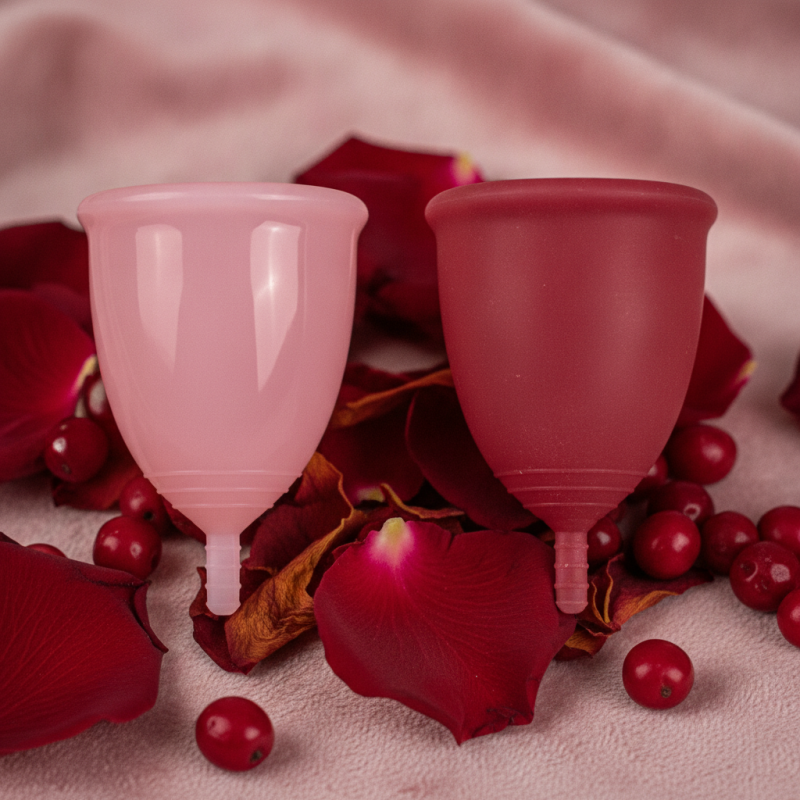
“I’ve had the same cup for three years, should I replace it now?” It’s a question we get often, and the honest answer is: it
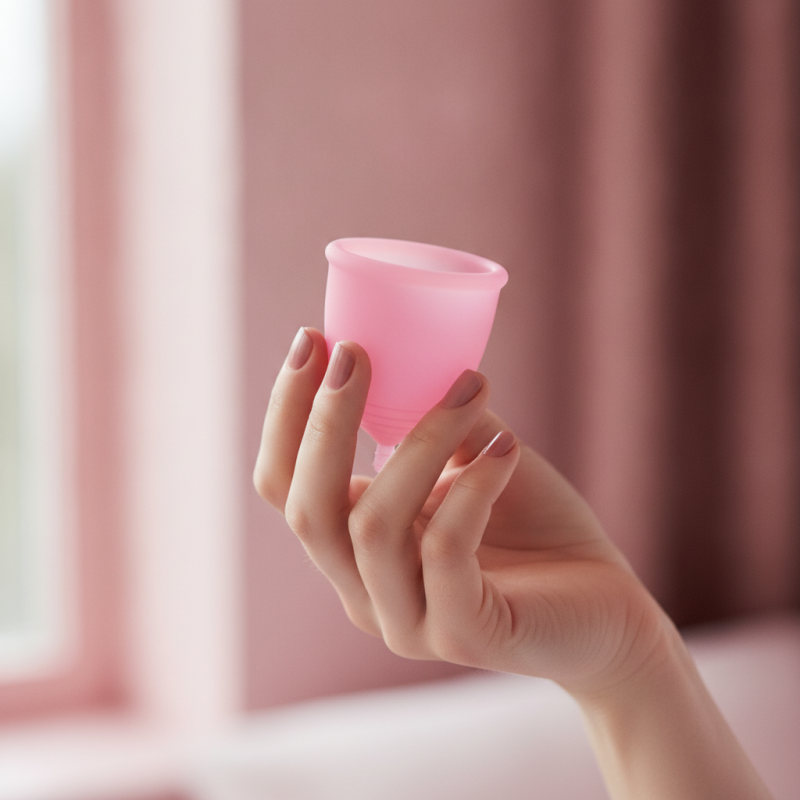
We sell menstrual cups, so you’d expect this article to tell you the cup is perfect for everyone. It isn’t, and we’d rather tell you

