Guides for Use & Maintenance
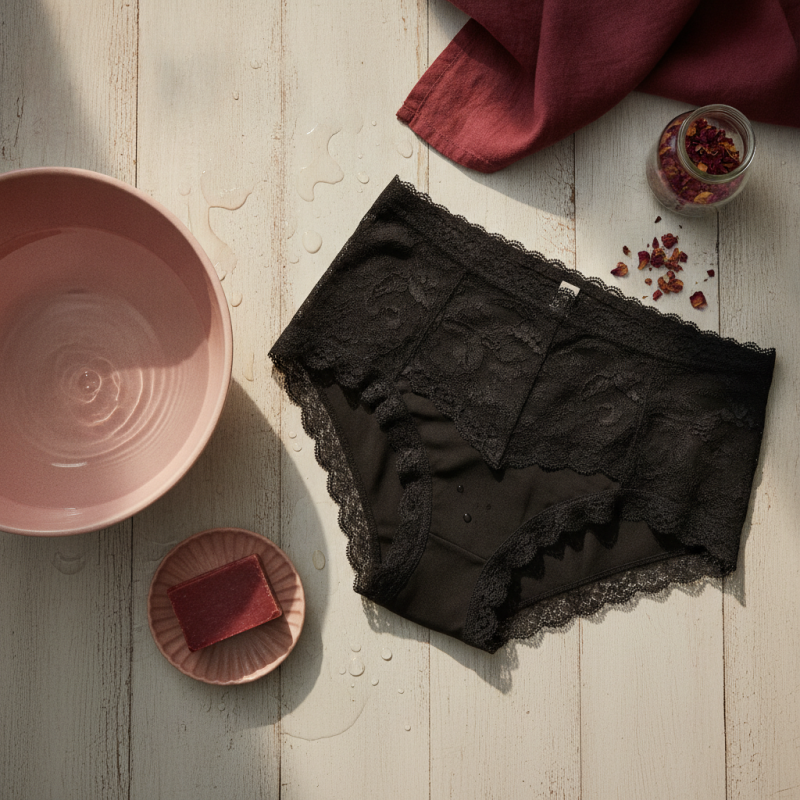
How to Wash Period Panties So They Last for Years
“I washed them like any other underwear and within a few months they didn’t absorb the same”: it’s the number-one reason people are disappointed with


“Can you use a menstrual cup during penetration?” is one of the questions we get most in private messages, and it’s almost never answered honestly. The short answer is no, and in this article we explain why, plus which options do work if you want to have sex on your period without stains ending the story.
Let’s be clear, with no beating around the bush and no promises that fall apart in bed: each menstrual product has its own design and its own place in the body, and they don’t all do the same job. If you already know about the relationship between sex and periods in general, here we’ll focus on something more specific: what to wear (or not) during penetration.
No, at least not during penetration. It’s important to be honest about this because there’s a fair amount of misinformation around: the menstrual cup sits in the lower part of the vaginal canal, just below the cervix, forming a suction seal with the vaginal walls. That’s precisely its strength for normal menstruation, but also the reason it gets in the way during penetration: it takes up space a penis or toy needs, and it can shift, hurt, or even lose its seal and leak.
That doesn’t mean the cup is “worse” than other methods, only that it wasn’t designed for that use. The systematic review in The Lancet Public Health (van Eijk et al., 2019, 43 studies and more than 3,300 participants) confirms that the menstrual cup is a safe method with leakage rates equal to or lower than tampons and pads for normal use — but that study, like the product’s own design, doesn’t validate it for penetration. If you’d like to learn more about choosing one for everyday use, we have a complete guide to choosing your first menstrual cup.

The good news is that there are products designed specifically for this. Here are the three real alternatives, with no marketing in between:
Looking for something designed for these days? Sileu Soft Tampons cost €8.99 and arrive in 24-72h from Spain. If you also want to reduce friction on those days, pair them with Sileu Lub (€4.99), a water-based lubricant that’s safe with condoms.

Soft Tampons are probably the least known and most practical option for this specific situation. They’re made of hypoallergenic polyurethane foam, have no string or rigid applicator, and their compressed shape expands on contact with moisture, adapting to your anatomy without the bulk or resistance you can feel with a cup.
You insert them with your fingers, like a tampon without an applicator, and remove them by pulling gently. With no rigid structure, they don’t interfere with penetration the way a cup does. Like any absorbent product inserted in the vagina, though, it’s best not to leave them in for more than 6-8 hours and to change them after sex if there’s been heavy bleeding. We explain more in soft tampons: when and how to use them.
If you’d rather have something reusable than disposable, the menstrual disc is the alternative closest to the cup in concept, but with a different placement that does allow penetration. It takes a bit more practice at first because you insert it at an angle and tuck it behind the pubic bone, but once you get the knack, many users prefer it precisely for these days. If you’d like to learn to use it step by step, we have a complete guide to the menstrual disc with the whole process in detail, and another on how to use a menstrual disc.

A simple trick that makes a difference: have what you’ll need afterwards ready beforehand. A dark towel on the bed, water for intimate hygiene and, if you use a menstrual cup for the rest of the day, have it clean and ready to put back in when you’re done. If you’re wondering how to clean it properly between uses, we explain it in detail in how to clean your menstrual cup.
For intimate hygiene after sex, avoid harsh soaps: vaginal pH is delicate and douches or perfumed gels can upset it. MedlinePlus information on feminine intimate hygiene recommends lukewarm water and, at most, a specific mild soap for the area.
Here’s a curious pattern: most content about menstrual cups and sex avoids saying that the cup doesn’t work for penetration, because admitting it means talking about another product. It’s easier to sell “the cup does it all” than to admit you need two different solutions depending on the moment. We’d rather you knew in advance what to expect, even if it means recommending you buy two things instead of one: in the end it’s your comfort at stake, not our sale.
The same goes for planning. If you know there may be sex during your period, planning ahead avoids surprises: change your cup or disc just before, keep a spare Soft Tampon in your bedside drawer, and don’t let embarrassment about stains make the decision for you. With a little preparation, period sex doesn’t have to be different from any other day of the month.
If you normally use a menstrual cup, there’s no need to give it up for the rest of the day just for these occasional moments. You can keep using it in your usual routine and save Soft Tampons or the disc for when you know there’ll be penetration. In fact, many users combine several models depending on the moment: check the differences between the Sileu menstrual cup models to see which one best suits your day-to-day.
Try it without risking too much: if you’re still torn between a cup, a disc or Soft Tampons, the Sileu Starter Pack (€21.99, sizes S and L) lets you try the cup for the rest of your cycle, and you can add Soft Tampons for those specific days. Shipped from Spain in 24-72h.
It isn’t recommended. The menstrual cup sits in the vaginal canal, just below the cervix, and that’s the same space penetration uses, so it can be uncomfortable, shift or leak. For period sex there are alternatives designed for it, such as the menstrual disc or Soft Tampons.
The menstrual disc sits behind the pubic bone, at the back of the vaginal vault, outside the canal where penetration happens, so it’s compatible with sex. The menstrual cup, on the other hand, sits in the vaginal canal itself and isn’t designed for that use.
Soft Tampons are hypoallergenic foam tampons with no string or rigid applicator, designed specifically for use during period sex. You insert and remove them with your fingers, and they adapt to your anatomy without interfering with penetration.
Yes. According to the available medical evidence, there’s no added risk from having sex on your period beyond the usual precautions (using condoms to prevent infections and pregnancy). It’s a personal decision about comfort, not a health issue.
Some people use one during penetration because of its soft texture, although it isn’t the most widespread product for this purpose. As with any product inserted in the vagina, proper hygiene and regular replacement are important.
Keep reading:
“I washed them like any other underwear and within a few months they didn’t absorb the same”: it’s the number-one reason people are disappointed with
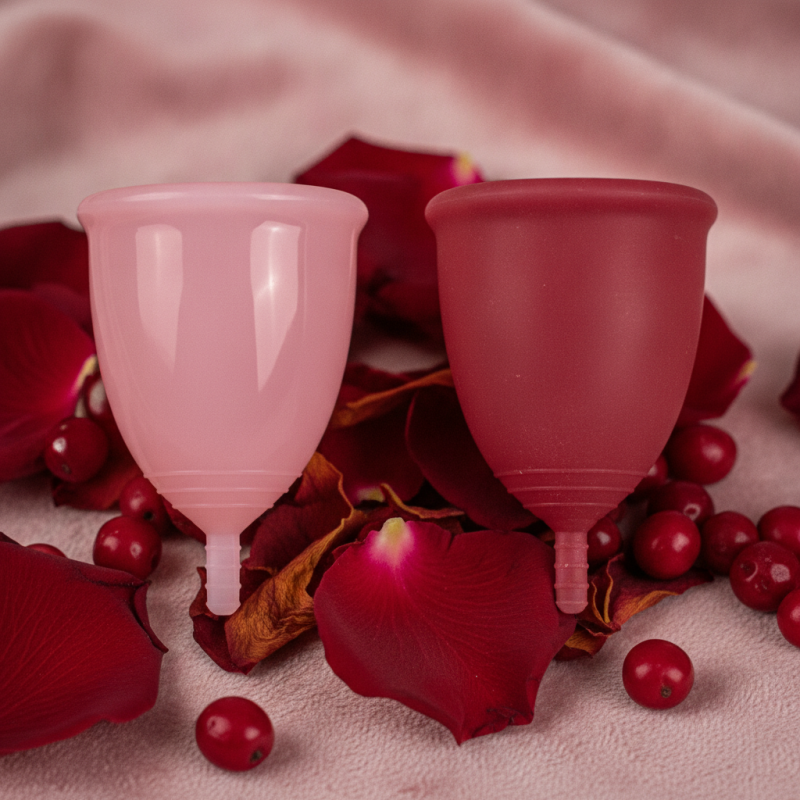
“I’ve had the same cup for three years, should I replace it now?” It’s a question we get often, and the honest answer is: it
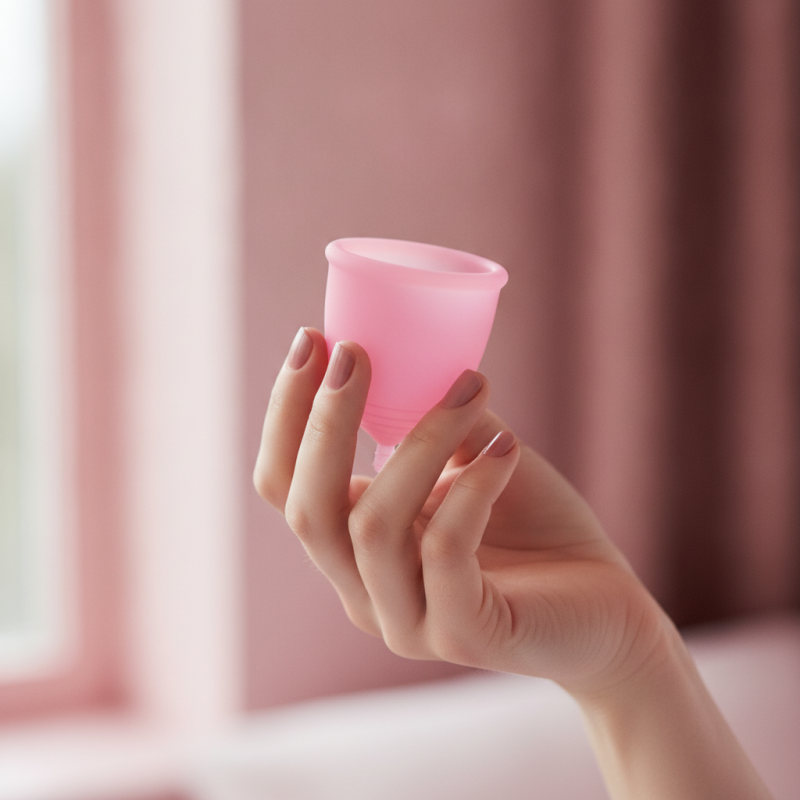
We sell menstrual cups, so you’d expect this article to tell you the cup is perfect for everyone. It isn’t, and we’d rather tell you

