Guides for Use & Maintenance
How to Wash Period Panties So They Last for Years
“I washed them like any other underwear and within a few months they didn’t absorb the same”: it’s the number-one reason people are disappointed with


What if we told you that the “clean smell” of many gels is exactly what ends up causing odor? Something curious happens with intimate gel: it’s one of the most-bought feminine hygiene products and, at the same time, one of the most misused. The golden rule fits in a sentence — you wash the vulva, not the vagina — and understanding it will save you irritation, recurring infections and a few euros. Here’s what pH has to do with it, when an intimate gel makes sense and when the healthiest option is simply water.
Let’s start with the map, because 90% of the confusion is here: the vulva is the external part (labia, clitoris, opening) and the vagina is the internal canal. If you need a refresher, we have a complete guide to female genitals: vulva and vagina (and another on the types of vulva, all of them normal).
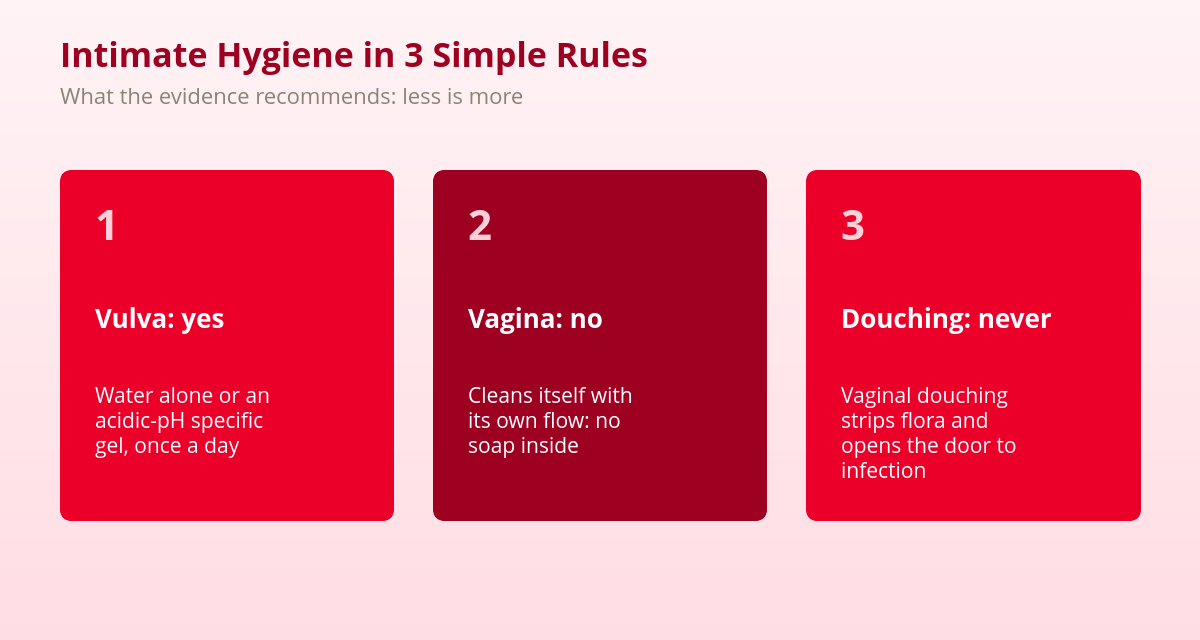
You do wash the vulva: once a day, with water alone or with a specific acidic-pH gel, drying well afterwards. More than two washes a day dry out the skin and are counterproductive.
You never wash the vagina: it’s a self-cleaning organ. Its discharge constantly carries away cells and microorganisms, and its ecosystem of lactobacilli keeps an acidic environment that holds pathogens back. Putting soap in — or worse, douching — wipes out that protective flora and is linked to more bacterial vaginosis and more thrush and other vaginal infections. Any serious medical source confirms it: you can read it on MedlinePlus, the information service of the U.S. National Library of Medicine. We explain it in depth in why gynecologists advise against vaginal douching.
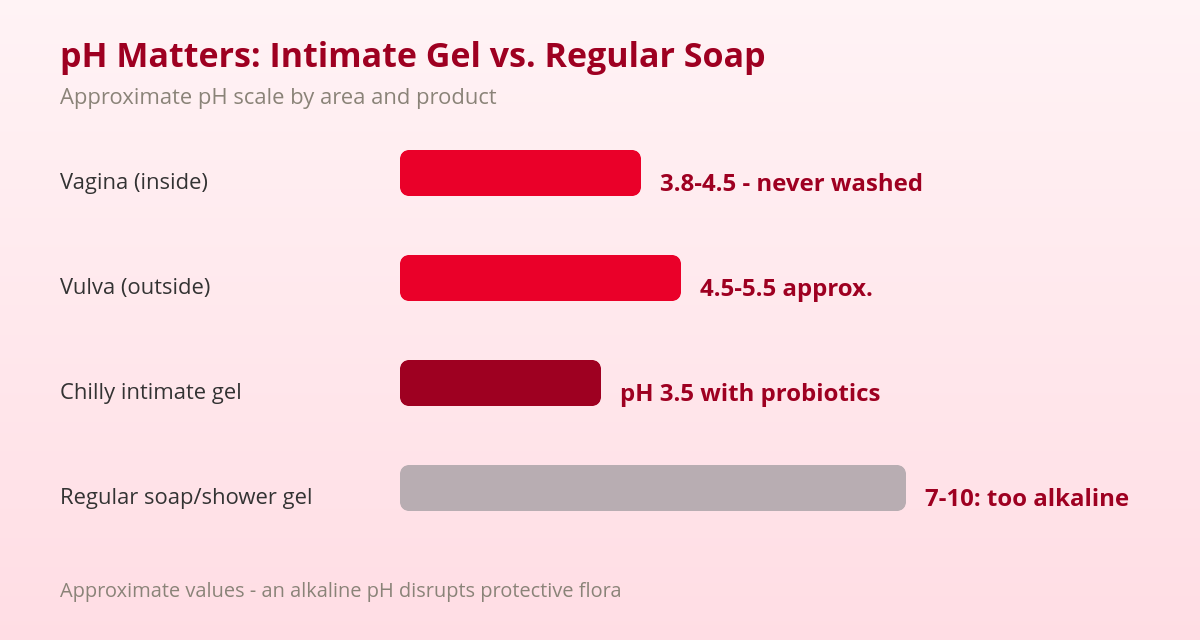
A healthy vagina sits at a pH of 3.8-4.5 — as acidic as a tomato — and the skin of the vulva is around 4.5-5.5. Ordinary soaps and shower gels have a pH of 7-10: every wash with them is a small alkaline earthquake that weakens the natural barrier. Hence the first rule when buying a real intimate gel: a clearly acidic pH (around 3.5-5), no harsh fragrances and no “kill-everything” antiseptics that also wipe out the good lactobacilli.
Signs your current gel isn’t doing you any favors: tightness or itching after showering, an odor that quickly comes back (foul-smelling discharge has causes a gel can’t fix, and sometimes makes worse) and infections that keep recurring. With any of these, use less product and, if they persist, see your gynecologist.
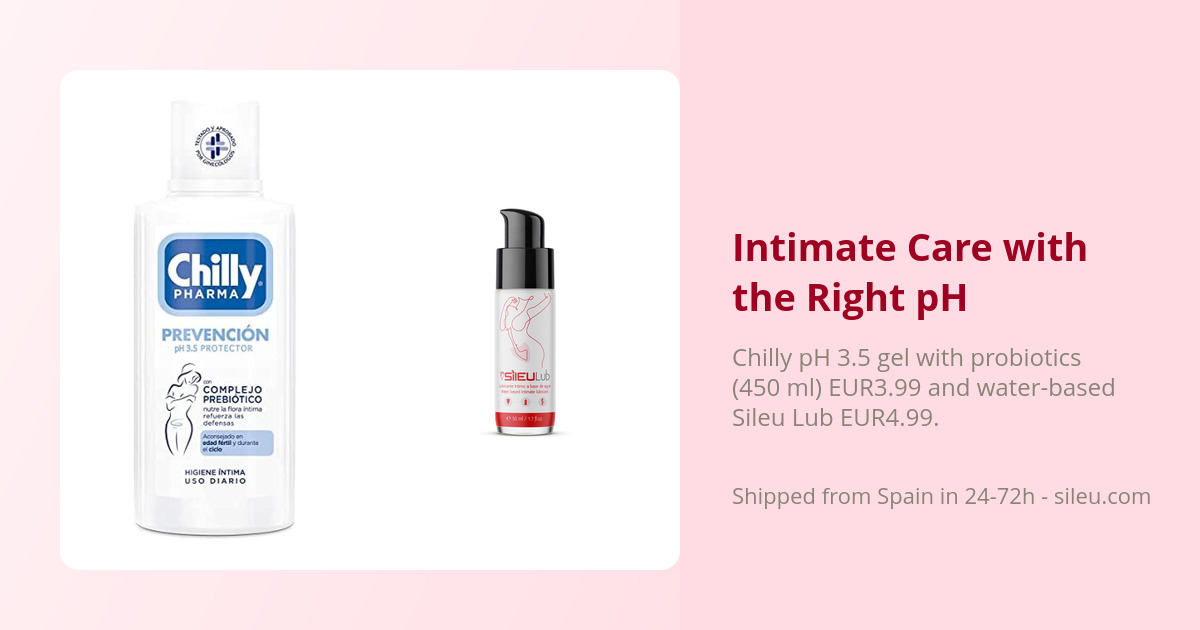
A gel with the right pH: Chilly pH 3.5 with probiotics — €3.99
450 ml format with a probiotic complex that respects and supports your intimate flora. pH 3.5, the pH of the area it’s caring for — not that of a shower gel. Shipped from Spain in 24-72h.
Water alone is enough day to day if your skin isn’t causing problems: it’s the option many professionals recommend, free and with no risk of irritation. We’ll say it again: we’re talking about the vulva; the vagina gets neither water nor anything else.
An acidic-pH intimate gel adds value in specific situations:
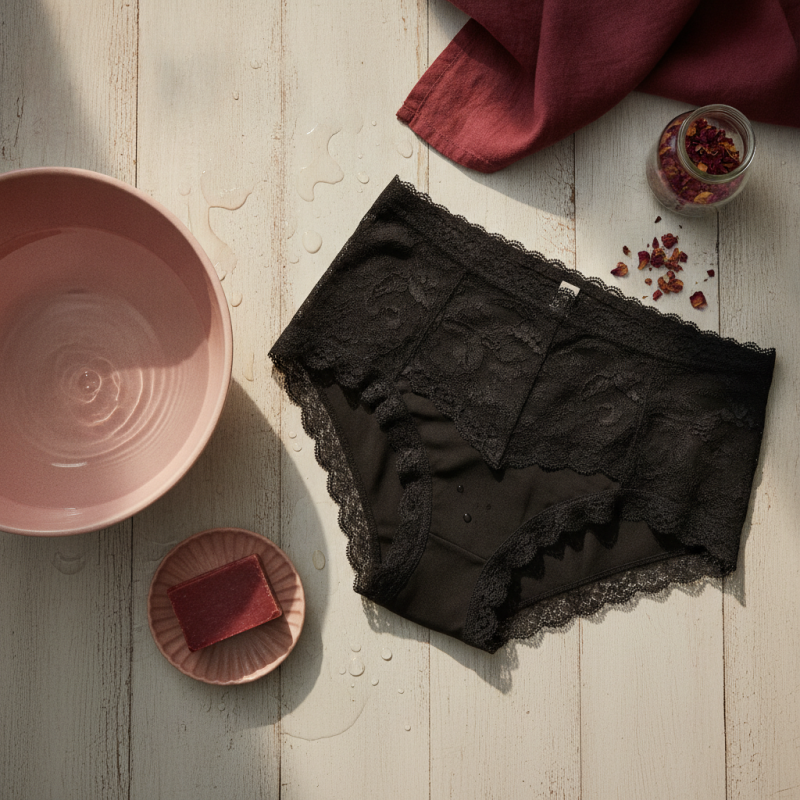
A common question with a short answer: that isn’t its job. A menstrual cup is washed with water and mild, unscented soap — intimate gels often contain light fragrances and conditioning agents that leave residue on silicone — and sterilized at the end of each cycle, as we explain in the guide to how to sterilize a menstrual cup. Period underwear, for its part, is rinsed in cold water and machine washed with ordinary detergent, without fabric softener. Intimate gel has just one recipient: your vulva. The right product for each thing, and everyone’s happy — including your flora.
They deserve their own section because they’re still sold and still recommended by word of mouth. Vaginal douches — putting water or “cleansing” solutions into the vagina — don’t clean: they wash away the protective flora, upset the pH for days and are linked to more vaginosis, more thrush and more discomfort than they were meant to solve. Not with “natural” products, not with vinegar, not after your period “to get the last bits out”: the cup and your own discharge take care of that on their own. If you notice remnants, odor or discomfort that tempt you to “clean inside”, that’s precisely the moment to see a doctor, not to lather up. And watch out: a poorly cleaned cup can also cause trouble, as we explain in vaginal infection and the menstrual cup and in our guide on how to clean your menstrual cup.
Notice the pattern: almost every mistake comes from the idea that the intimate area is “dirty” and needs strong products. It’s exactly the opposite — it needs to be left alone, with minimal, well-chosen maintenance. Your body has been doing the hard part on its own all along.
A 30-second checklist in the aisle: stated pH between 3.5 and 5 — if it isn’t stated, that’s a bad sign —; fragrance-free or lightly fragranced and hypoallergenic; no antiseptics for daily use (chlorhexidine and similar only if a professional prescribes them); and ideally with probiotics or prebiotics that feed your lactobacilli. A bit of extra honesty: the big bottle is better value because an intimate gel used properly — vulva only, once a day — lasts months. The 450 ml Chilly at €3.99 is one of the least heroic purchases you can make for your intimate health; combined with habits such as cotton underwear — our period underwear (€9.99) is made of organic cotton certified to OEKO-TEX Standard 100 (free from harmful substances), designed for your period and heavy-flow days — it makes life very hard for irritation. You’ll find the complete guide to this essential in period underwear: the definitive guide.
Day to day, water alone is enough and is the most recommended option if your skin isn’t causing problems. An acidic-pH intimate gel (3.5-5) adds value during your period, after sport or the pool, and for sensitive skin. Either way, you only wash the vulva: the vagina is self-cleaning and should never be washed.
Acidic, between 3.5 and 5, close to that of the area it cares for: a healthy vagina has a pH of 3.8-4.5 and the vulva 4.5-5.5. Ordinary soaps and shower gels (pH 7-10) are too alkaline and weaken the protective flora.
Because the vagina cleans itself: its discharge and its lactobacilli flora keep a protective acidic environment. Douching washes away that flora, upsets the pH and is linked to more bacterial vaginosis and thrush. No serious medical source recommends it as routine hygiene.
Yes, and in fact they go very well together: during your period vaginal pH rises temporarily, and an acidic intimate gel on the vulva helps rebalance it. The cup is washed separately with mild unscented soap, never with perfumed intimate gel, and period underwear is rinsed cold and machine washed.
The intimate care duo: Chilly + Sileu Lub — under €9
Chilly pH 3.5 intimate gel with probiotics (450 ml, €3.99) for daily washing and water-based Sileu Lub (€4.99), hypoallergenic and medical grade, so friction is never the problem. Shipped from Spain in 24-72h.
Keep reading:
“I washed them like any other underwear and within a few months they didn’t absorb the same”: it’s the number-one reason people are disappointed with
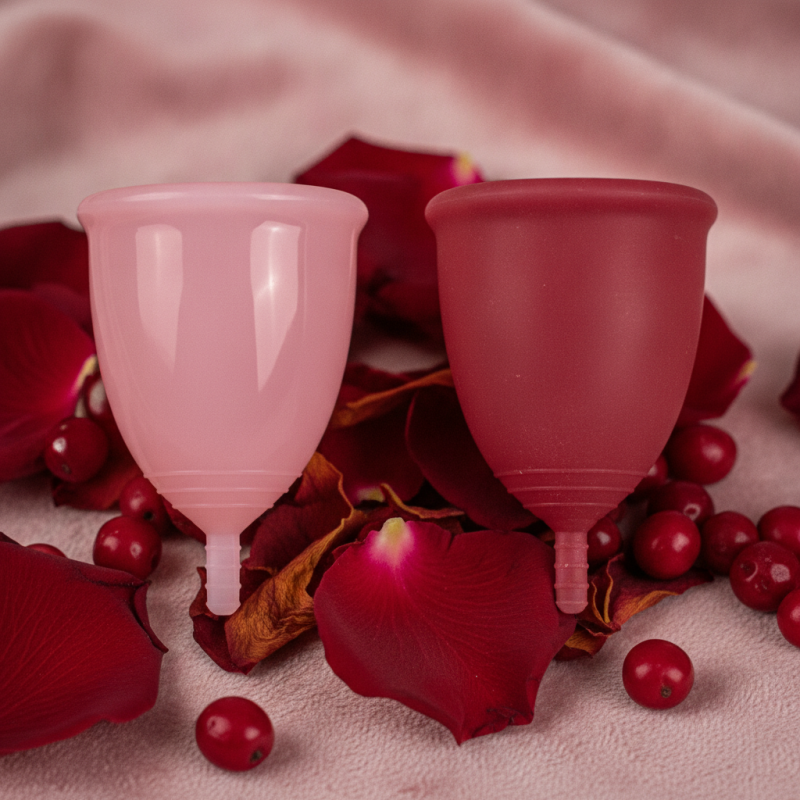
“I’ve had the same cup for three years, should I replace it now?” It’s a question we get often, and the honest answer is: it
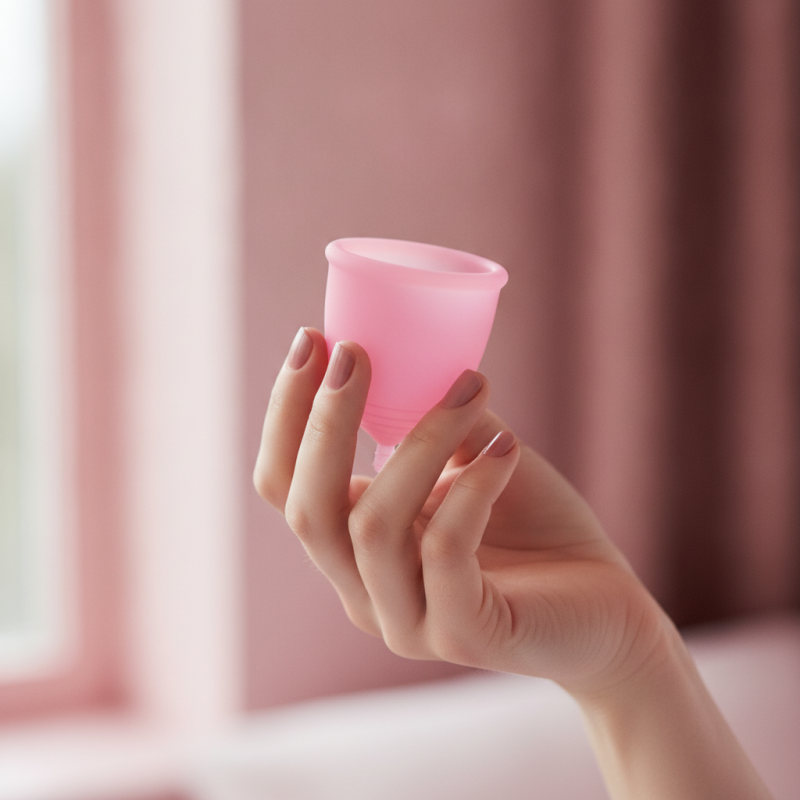
We sell menstrual cups, so you’d expect this article to tell you the cup is perfect for everyone. It isn’t, and we’d rather tell you

